Cleaning & Care

  1. Home
  2. PRODUCTS
  3. CLEANING & CARE ARCHITECTURAL

ARCHITECTURAL CERAMICSTEEL

  • A first thorough cleaning is necessary upon removal of the protective film that covers the side surface : residual film adhesive will make dirt stick to the surface and will make regular maintenance more difficult. For external panels, do not allow direct UV sunlight to harden the foil adhesive but remove film soon after installation.

    Clean entire panel surface with degreasing detergent. Rinse with clear and clean water. After first thorough cleaning, a regular cleaning is recommended (minimum 2x per year, or more frequent as needed) with mild detergent similar to the products used for glazed screens cleaning.

  • For tunnel environments, more frequent cleaning may be necessary. The use of appropriate cleaning agents should allow for medium pressure wet cleaning. Brush cleaning to be used only if necessary. Do not use abrasive brushes. Do not use strong or highly concentrated (>20%) acids or alkalics.

    Polyvision will, upon request, analyze the cleaning agent proposed by the tunnel maintenance contractor in our laboratory and advise on its suitability for long term cleaning. All safety measures as mentioned by the cleaning agent should be followed, especially in low ventilated spaces.
  • Contamination like dust, dirt, traces, etc. can be removed with (warm) water and a solution of a synthetic detergent.

  • Preferably do not use (hard) soap : it leaves a dry film that is hard to remove.

  • If hard soap has been used the surface needs extra cleaning with a solution of ammonia in water.


    FINISH CLEANING :
    Rinse thoroughly with clean water and wipe dry as needed.

  • Vandalism with permanent markers is easily removable using alcohol and a clean cloth or tissue.

  • Soak if needed to dissolve the pigments and wipe off with a clean cotton cloth or tissue.
    Repeat until all pigments are removed.

  • Should normal alcohol be inappropriate, propanol or acetone can be used.

  • Polyvision CeramicSteel is resistant to all commercial solvents : they will not affect the surface.


    FINISH CLEANING : Rinse thoroughly with clean water and wipe dry as needed.

  • Attack by vandals using metal objects can cause traces of those metals onto the surface.
    These are no scratches but deposit of metals.

  • Such persistent traces can be removed using commercial abrasive cream (domestic).
    Apply with normal sponge and scrub intensively. The excellent scratch and wear resistant CeramicSteel surface will not be damaged.

  • Do not use scouring pad or nylon sponge containing abrasive grain.

  • For interior grade printed surfaces it is advised not to use stronger acidcontaining agents nor abrasive cleaning products.


    FINISH CLEANING : Rinse thoroughly with clean water and wipe dry as needed.

  • Calcareous deposit as a result of long-lasting contact with hard water can be removed using acidic solution or acidic commercial abrasive cream (e.g. Vitrolin).

  • Polyvision CeramicSteel has an excellent resistance to acids and commercial acidic detergents.

  • When strong industrial acidic solutions are used contact is only allowed shortly.

  • For interior grade printed surfaces it is advised not to use acidcontaining agents nor abrasive cleaning products.


    FINISH CLEANING : Rinse thoroughly with clean water and wipe dry as needed.

  • Traces of corrosion can be removed using acidic solutions and a nylon scouring pad (not containing abrasive grain).

  • Alternatively industrial corrosian dissolver can be used (e.g. Vosimex).

    FINISH CLEANING : Rinse thoroughly with clean water and wipe dry as needed.

  • Glue and grease can be removed using strong solvents like aceton, methylethylketon,
    other solvents. Use on a clean cloth or tissue and soak if needed.

  • Repeat with clean solvent and clean cotton cloth or tissue.

  • Remove cleaning stripes or traces or solvent residues with alcohol.


    FINISH CLEANING : Rinse thoroughly with clean water and wipe dry as needed.

  • These contaminations can be mechanically removed to the maximum using cutter blade or razor blade. Do not scrape but instead cut, pushing the blade under a sharp angle almost flat to the surface.

  • Clean using strong solvents like aceton, methylethylketon, other solvents. Use on a clean cloth or tissue and soak if needed.

  • Repeat with clean solvent and clean cotton cloth or tissue.

  • Remove cleaning stripes or traces or solvent residues with alcohol.


    FINISH CLEANING : Rinse thoroughly with clean water and wipe dry as needed.

Architectural CeramicSteel Cleaning & Care​

Polyvision Architectural CeramicSteel is designed for demanding environments where durability, cleanability and long-term performance matter. The surface is used in interior, public space, transport, education, healthcare, and architectural applications. This guide explains how to clean and maintain Architectural CeramicSteel panels and how to remove common types of residue.

Regular cleaning

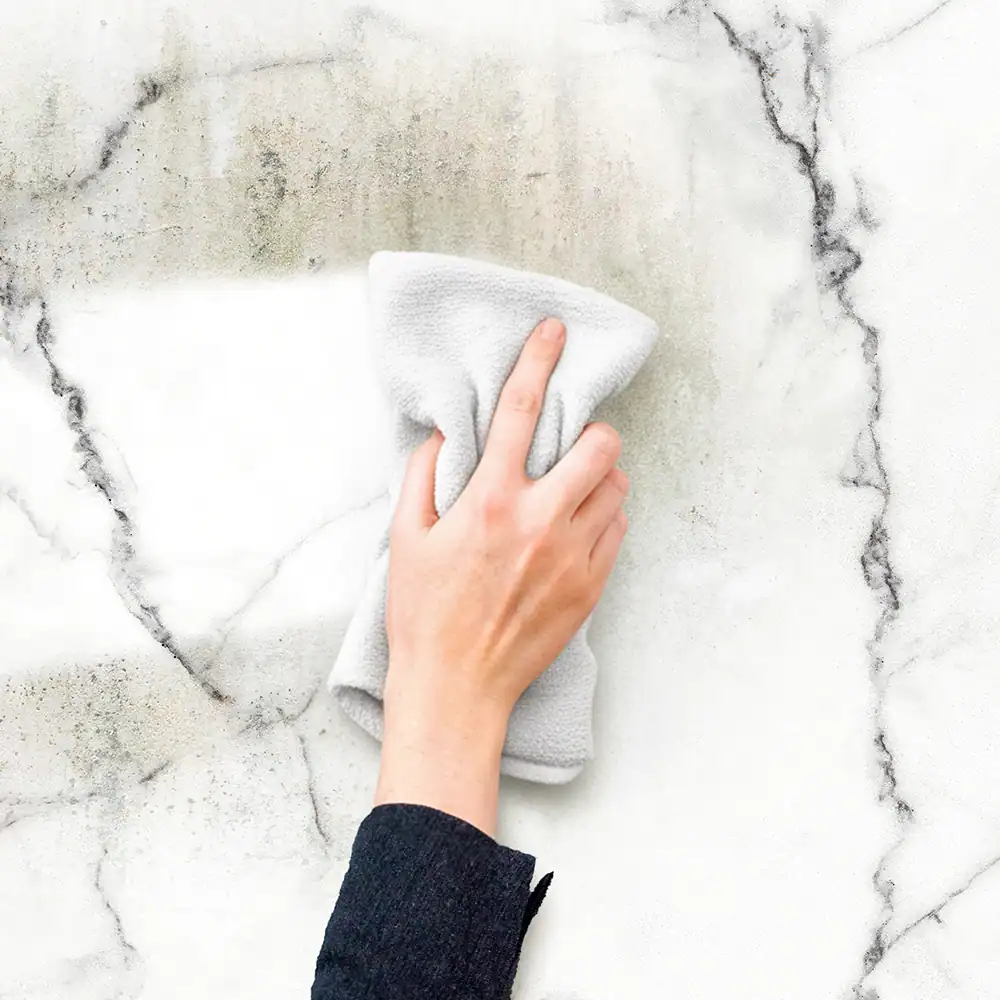
For regular maintenance, clean the surface with water and a soft cloth or sponge. For more visible dirt, use a mild detergent diluted in water. Wipe the surface evenly and rinse with clean water when needed. Dry the surface with a clean cloth to avoid streaks or water marks. Regular cleaning helps maintain the panel’s appearance and prevents dirt from building up over time.

Cleaning in high-use environments

In high-traffic spaces, surfaces are exposed to fingerprints, dust, dirt, grease, and occasional marks. Cleaning frequency should be based on the environment and the level of use. Public corridors, transport areas, classrooms, sanitary spaces, and healthcare environments may require more frequent cleaning than low-traffic interior areas.

Removing grease, oil and fingerprints

Grease, oil, and fingerprints can usually be removed with a mild detergent and warm water. Use a soft cloth and clean the surface gently. Rinse with clean water, then dry the panel. For stubborn grease or oil, use a cleaning product compatible with CeramicSteel. Always follow the cleaning product’s instructions and test on a small area when needed.

Removing adhesive residue

Adhesive residue from labels, tape, or protective materials should be removed carefully. Do not scrape the surface with sharp tools. Start with warm water and a soft cloth. If any residue remains, use a suitable adhesive remover compatible with the surface. After removing the residue, clean the area with water and dry it with a clean cloth.

Removing paint, ink or spray paint

CeramicSteel is a durable, non-porous surface that makes many marks easier to remove than on porous materials. For paint, ink or spray paint, use a suitable cleaning product based on the type of residue. Apply the cleaner with a soft cloth and wipe the area gently. Avoid abrasive tools. After cleaning, rinse the surface with clean water and dry it completely. For large areas, repeated spray paint, or sensitive environments, contact the Polyvision team for product-specific advice.

Removing mineral deposits or water marks

In areas where water dries on the surface, mineral deposits or water marks may appear. Clean the surface with water and a mild detergent. If deposits remain, use a suitable descaling cleaner that is compatible with CeramicSteel. Rinse the surface thoroughly after cleaning and dry it with a clean cloth.

What not to use on Architectural CeramicSteel

Do not use abrasive pads, steel wool, scouring powders, or sharp scraping tools. These products are not needed for regular CeramicSteel maintenance and can affect the surface appearance. Avoid cleaning products that are not suitable for the environment or application. Always follow local safety guidelines and the instructions of the cleaning product.

Long-term maintenance

Architectural CeramicSteel is selected for projects where surfaces need to remain functional and visually consistent over time. A regular cleaning routine helps preserve the appearance of the panels and supports long-term performance. For project-specific maintenance instructions, download the Polyvision Architectural Cleaning & Care Guide or contact the Polyvision team.

FAQ

How do I clean Architectural CeramicSteel panels?

Use water and a soft cloth for regular cleaning. For more visible dirt, use a mild detergent diluted in water. Rinse and dry the surface afterward.

Can graffiti be removed from CeramicSteel?

Many types of ink, paint, and spray paint can be removed with suitable cleaning products. Avoid abrasive tools and rinse the surface after cleaning.

Can I use solvents on CeramicSteel?

Some residues may require a suitable solvent or specialized cleaner. Always follow product instructions and test when needed.

How often should Architectural CeramicSteel be cleaned?

Cleaning frequency depends on the environment. High-traffic or public areas usually need more frequent cleaning than low-use interior spaces.

How do I remove adhesive residue from CeramicSteel?

Start with warm water and a soft cloth. If residue remains, use a suitable adhesive remover and clean the surface with water afterward.