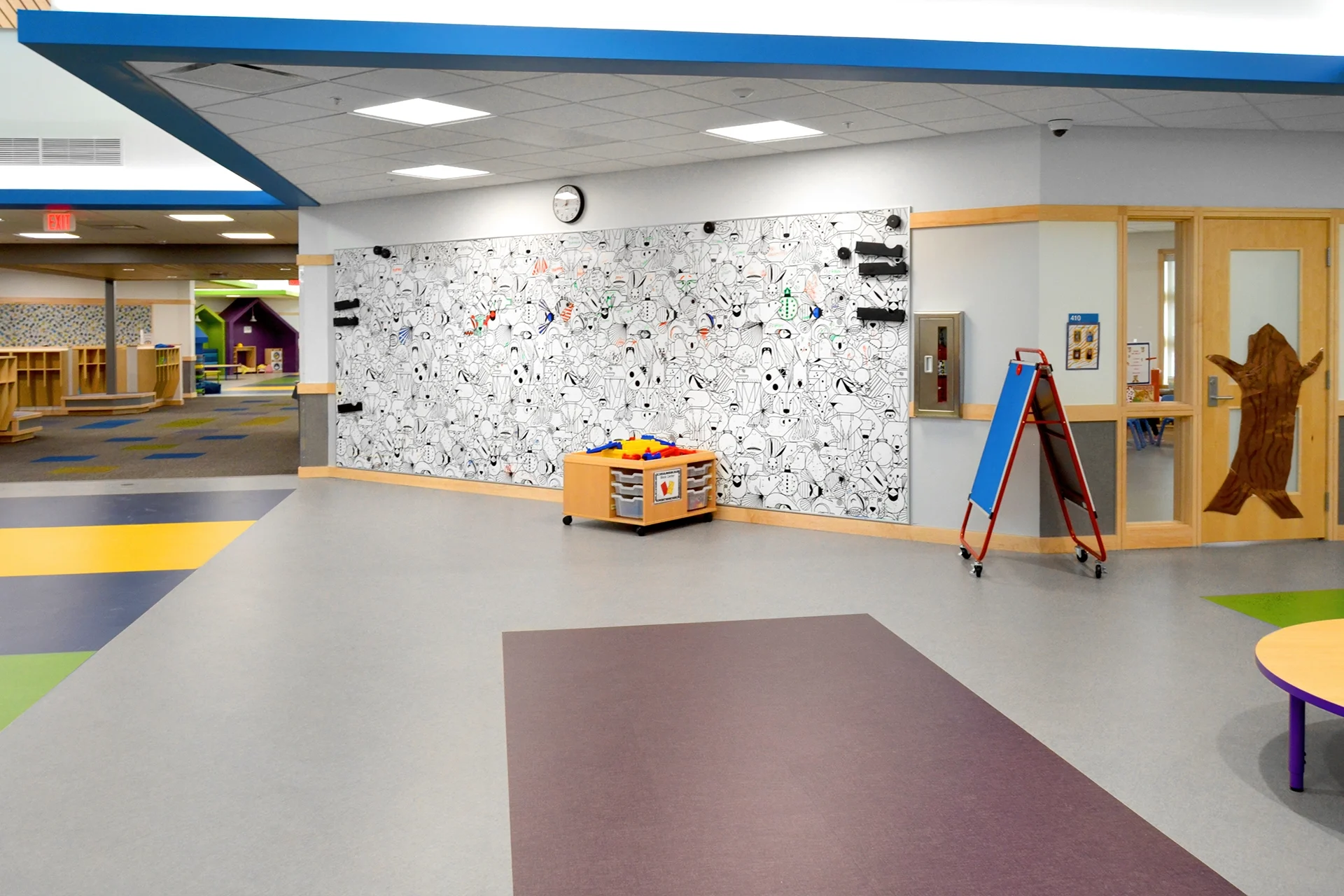
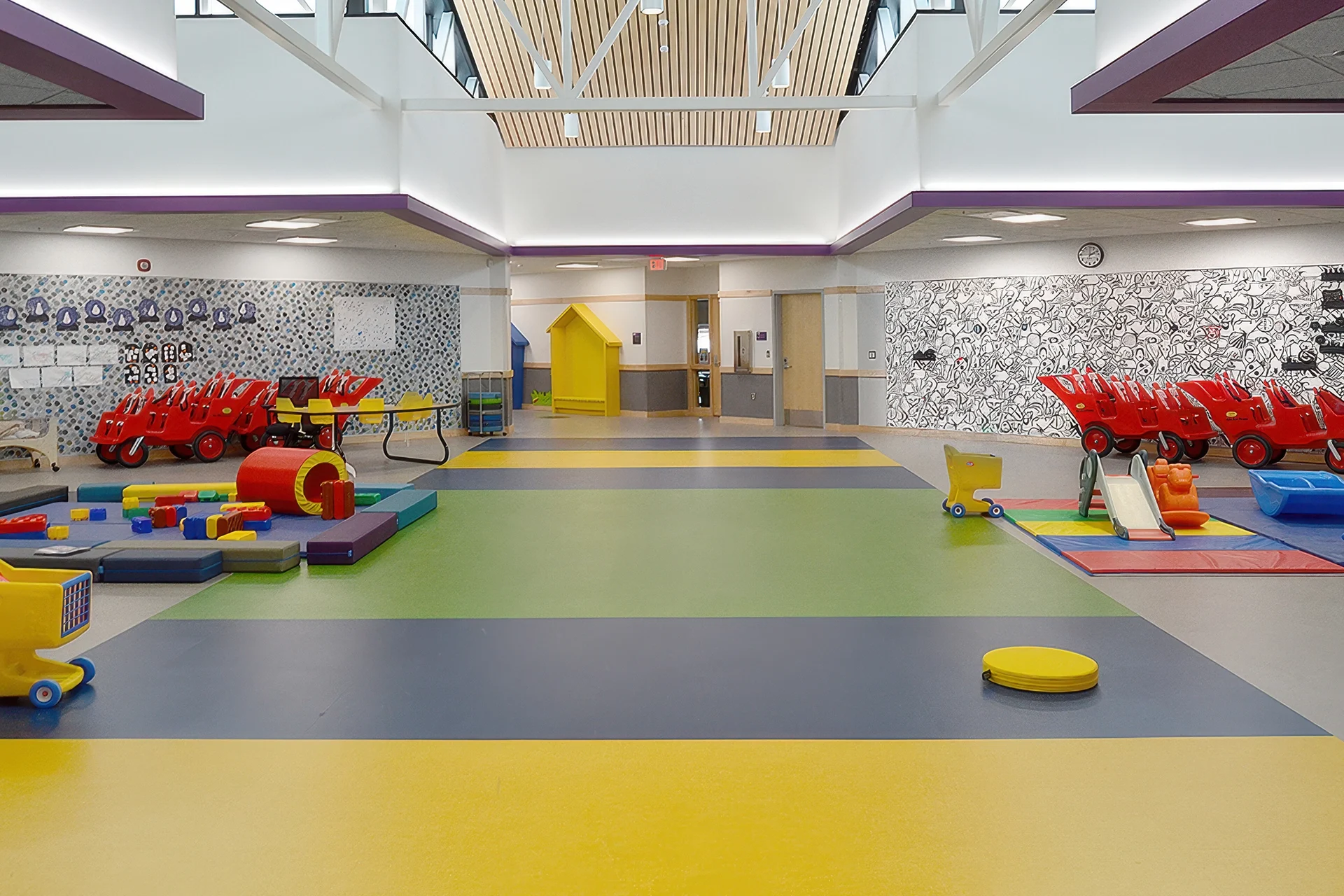
Le district scolaire public de Livonia a inauguré un nouveau centre de la petite enfance dans le cadre d'une initiative visant à moderniser ses installations éducatives. Ce centre de 72 000 pieds carrés est conçu pour favoriser le développement de plus de 700 enfants par le biais de jeux sensoriels. L'installation combine une nouvelle construction avec une section rénovée d'un ancien collège. Il comprend 29 salles de classe et plus de 60 000 mètres carrés d'espace de jeu extérieur. Le centre est conçu de manière à encourager l'exploration et l'engagement des jeunes apprenants.
Un canevas créatif pour les jeunes esprits
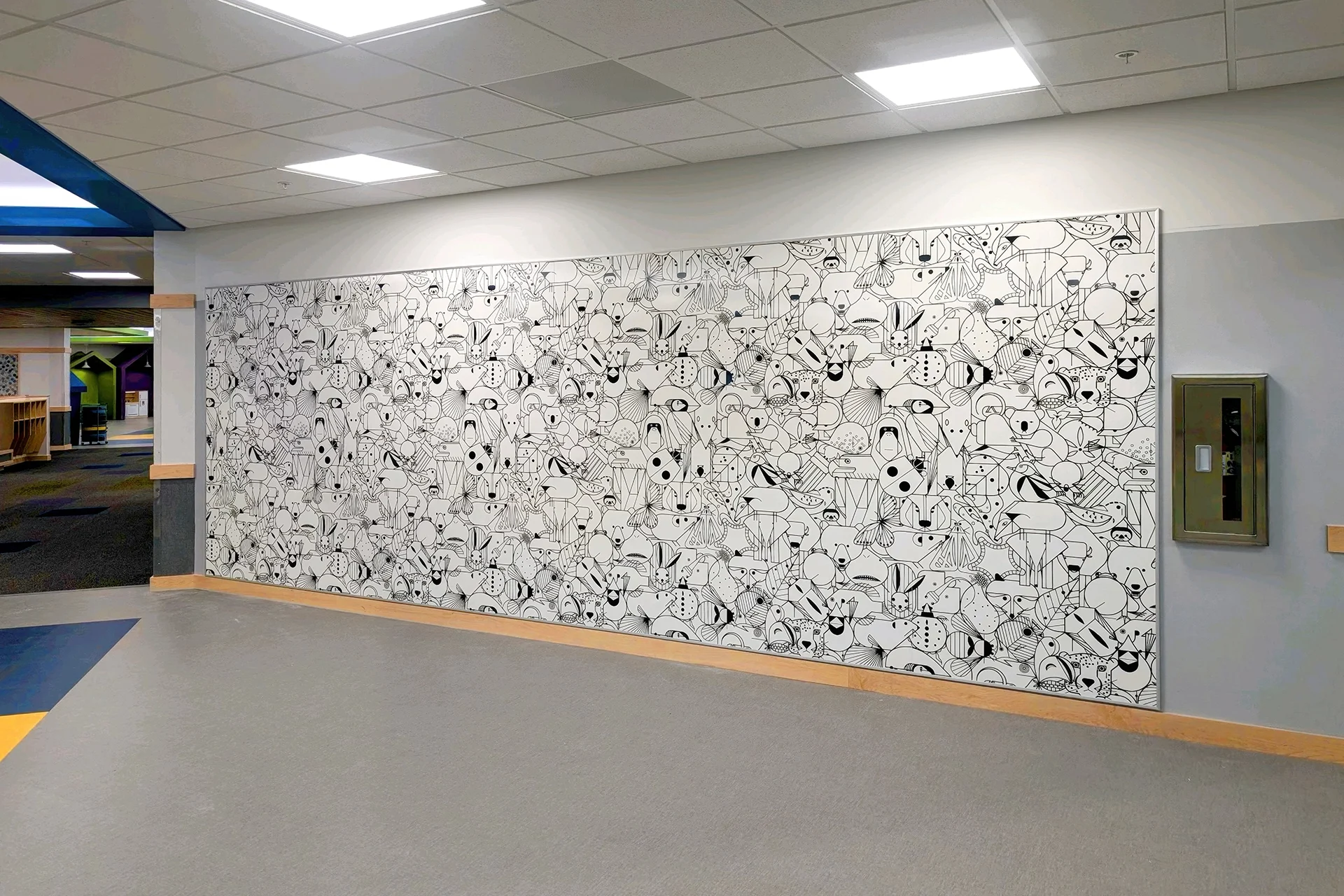
Pour soutenir la mission d'apprentissage sensoriel de l'école, TMP Architecture a spécifié les surfaces CeramicSteel imprimées numériquement de Polyvision pour les salles de classe et les espaces communs. S'appuyant sur un précédent projet réussi, l'équipe de conception a choisi ce matériau durable pour donner vie à l'expression interactive et créative en incorporant le graphique fantaisiste de Charley Harper "Beguiled by the Wild" dans une installation grand format. Conçus comme un livre de coloriage géant, les murs invitent les enfants à s'engager directement dans l'œuvre d'art, favorisant le développement de la motricité fine et de la créativité.
Au-delà du design et de la durabilité, le choix de CeramicSteel par le Centre favorise également un environnement d'apprentissage plus sain et plus durable. La surface est non poreuse, facile à désinfecter et intrinsèquement résistante aux microbes. CeramicSteel contribue au succès à long terme avec l'absence d'émissions de COV et les certifications Cradle-to-Cradle Bronze et Indoor Advantage Gold.
Meilleures pratiques pour la performance visuelle dans les salles de classe et les espaces de collaboration
Alors que les salles de classe et les lieux de travail adoptent de plus en plus les outils numériques, l'importance des surfaces de tableau blanc performantes n'a jamais été aussi grande.
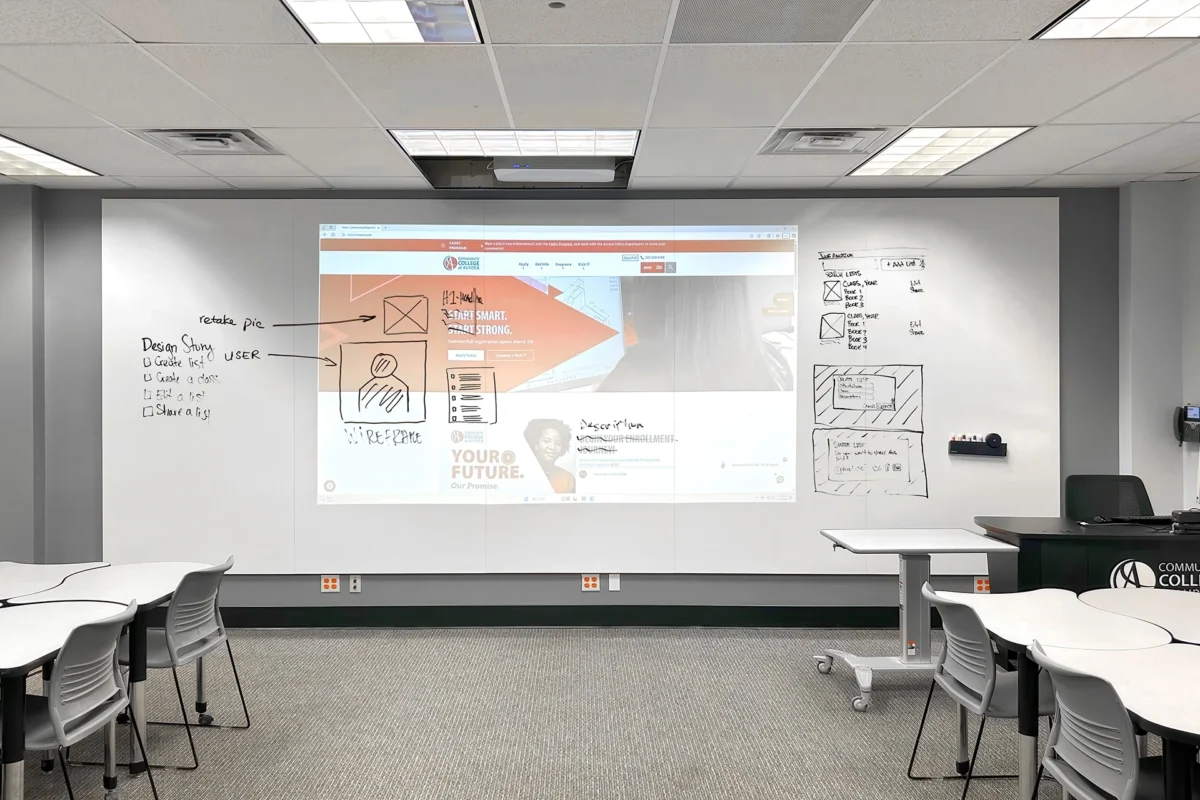
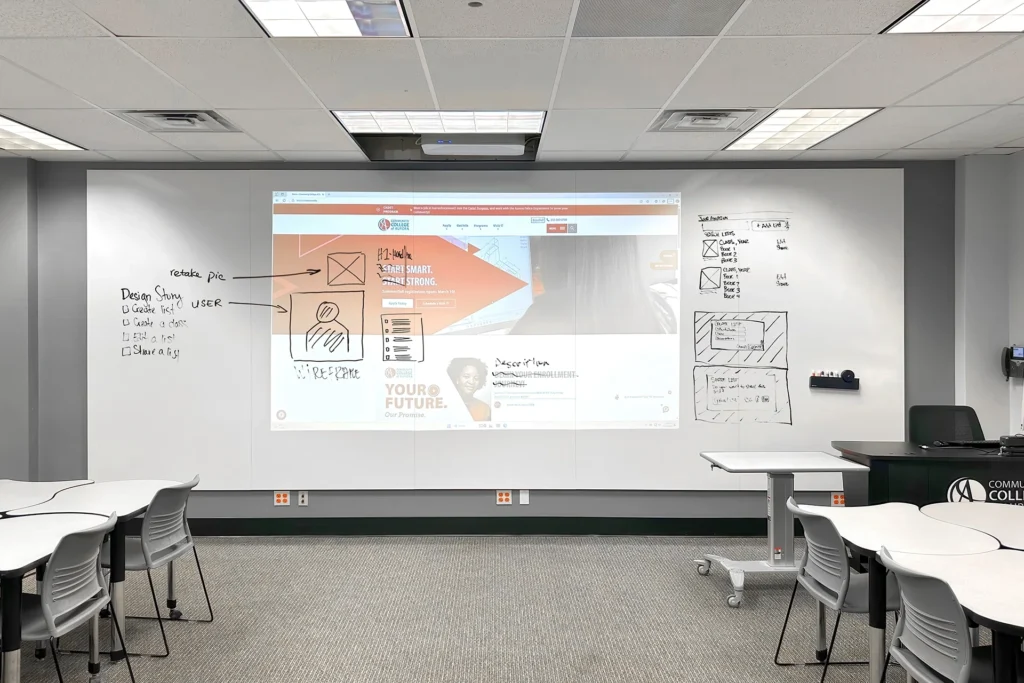
Ce document téléchargeable explique comment tirer le meilleur parti de vos tableaux blancs à projection, en mettant l'accent sur les meilleures pratiques en matière de visibilité, d'engagement et de collaboration. De l'optimisation des distances de visualisation à l'intégration transparente de médias projetés et de notes manuscrites, le guide est conçu pour aider les éducateurs et les professionnels à transformer les surfaces traditionnelles en plateformes interactives et multifonctionnelles.
Nos surfaces CeramicSteel jouent un rôle central dans cette évolution. Leur finition durable et hygiénique permet l'écriture analogique et la projection numérique, ce qui les rend idéales pour les environnements modernes d'apprentissage et de collaboration.
Qu'il s'agisse d'enseigner dans un amphithéâtre, d'animer un atelier ou de diriger une séance de brainstorming, ces bonnes pratiques vous aideront à faire en sorte que votre message soit vu, compris et mémorisé.
When we were approached to discuss the differences of whiteboards vs. chalkboards, it seemed like a dubious task. You write on one with chalk and the other with dry erase markers, right? If that was the extent of the relationship between chalkboard and whiteboard writing surfaces, this would be an incredibly short blog post. As experts in the field, let us shed some light on the subject.
Similarities between Whiteboards & Chalkboards
Whiteboards and chalkboards are both writing surfaces that share the same basic function – facilitating information-sharing
The most prominent feature of both surfaces is their simple reusability for this purpose. Both CeramicSteel whiteboards and chalkboards can be used over and over for 50 years or longer when cared for properly, and unlike other writing surfaces, CeramicSteel whiteboards and chalkboards don’t ghost or stain after use.
They can come in a variety of shapes and sizes, often custom designed to fit the modern space.
There is a basic selection of standard colors available for both chalkboard or whiteboard surfaces, and both can be produced in custom colors as well. These colors all allow for high-contrast markings, whether chalkboard or whiteboard, offering the greatest viewing quality possible.
Safe, clean and environmentally sustainable, both whiteboard and chalkboard CeramicSteel writing surfaces are Cradle-to-Cradle Bronze Certified and emit no VOCs.
In addition to responsible manufacturing, CeramicSteel whiteboard and chalkboard writing surfaces are resistant to stains, scratches, fire, bacteria and chemicals.
They’re both durable and long-lasting writing surfaces ideal for environments requiring high-performance material.
Differences between Chalkboards & Whiteboards
Whiteboards are also known as dry erase boards. This describes the act of writing with dry erase markers and easy removal of marker ink using a dry eraser or cloth.
CeramicSteel whiteboards will also tolerate permanent marker and other inks. To get rid of permanent marker, a trick is to write over the marking with a dry erase marker and erase – it’s as simple as that. Permanent marker and ink can also be easily removed using a solvent cleaner. Despite its ability to withstand a variety of writing tools, chalk is not compatible with whiteboard surfaces. The dry chalk doesn’t adhere to gloss surfaces like it does to a matte surface.
Chalkboards, on the other hand, are specifically designed for use with dry chalk sticks. Dry chalk can be easily erased from CeramicSteel chalkboards with a dry felt eraser. Chalk doesn’t stain or ghost, but it can leave behind a “chalky” appearance after heavy use between cleaning with a wet cloth.
Can You Use Dry Erase Markers On Chalkboards?
Because CeramicSteel chalkboards are smooth and nonporous, chalk pens or wet chalk can easily be used to write on the surface, too – it just requires a wet erase with soap and water. While dry erase markers, permanent markers and other inks won’t damage CeramicSteel chalkboards, they aren’t recommended; these tools don’t provide enough contrast against the chalkboard’s dark surface for clarity.
Other Uses For Chalkboards
As a dark, relatively matte surface, chalkboards absorb light. As a result of this nature, chalkboard surfaces aren’t ideal for projecting – a process wholly based on the projection of light. While it’s possible to project onto chalkboard surfaces, and it has been done, it’s not recommended when a quality image and clear communication is the bottom line.
When projecting is a priority, whiteboard surfaces or dedicated projection surfaces are the best option. The light-colored surface reflects light, creating a clean, crisp image. PolyVision CeramicSteel whiteboard surfaces have a variety of gloss levels for optimal visibility in any environment. Lower gloss levels produce less glare for more frequent users of projectors.
Finally, if attention to detail is what you’re after, chalkboards are the surface of choice. Biology professors across the globe sing the chalkboard’s praises for its forgiveness with shading, line thickness and scrawling minutia when creating intricate diagrams for their lectures. This allows for chalkboards to display more detail in their drawings, as compared to the more bold lines seen on dry erase boards or whiteboards. Whiteboard markers only offer one shade level regardless of pressure or ink layering and are typically bulky in nature, providing a less authentic writing experience for small hands learning penmanship.
Whiteboards or Chalkboards: Which Should I Choose?
When it comes down to brass tacks, CeramicSteel whiteboards and chalkboards are both premium writing surfaces with an environmentally responsible manufacturing process and safe, healthy composition for any setting. Understanding the quality helps make the selection process easier. All that’s left is to decide which surface best meets the needs of your space – will you require a projector? A whiteboard is your best option. If you’re teaching penmanship, or a cool, retro look fits your space – a chalkboard is right up your alley.
Either CeramicSteel selection can always be made with confidence, just be sure to follow the recommended cleaning and care instructions and use the recommended accessories to maximize performance.