Centro de primera infancia de Livonia: Donde el diseño brinda asistencia al aprendizaje
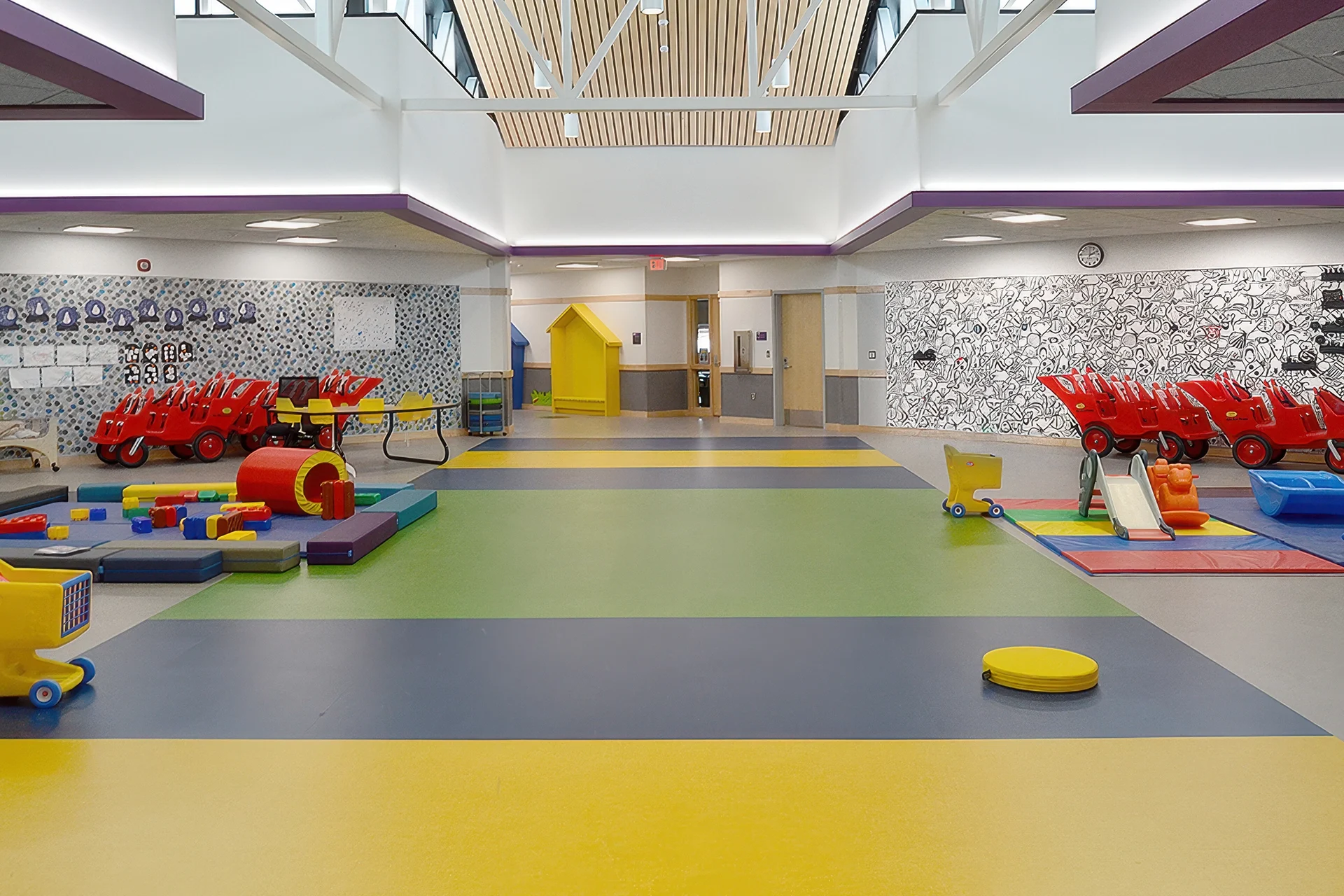
El distrito escolar público de Livonia ha puesto en marcha un nuevo Centro de Primera Infancia como parte de una iniciativa para modernizar sus instalaciones de educación. Este Centro de 72.000 pies cuadrados está diseñado para brindar asistencia al desarrollo de más de 700 niños a través del juego sensorial. Las instalaciones combinan una nueva construcción con una sección renovada de una antigua escuela secundaria. Cuenta con 29 aulas y más de 60.000 pies cuadrados de espacio de juego al aire libre. El Centro está cuidadosamente diseñado para fomentar la exploración y el compromiso de los jóvenes estudiantes.
Un lienzo creativo para mentes jóvenes
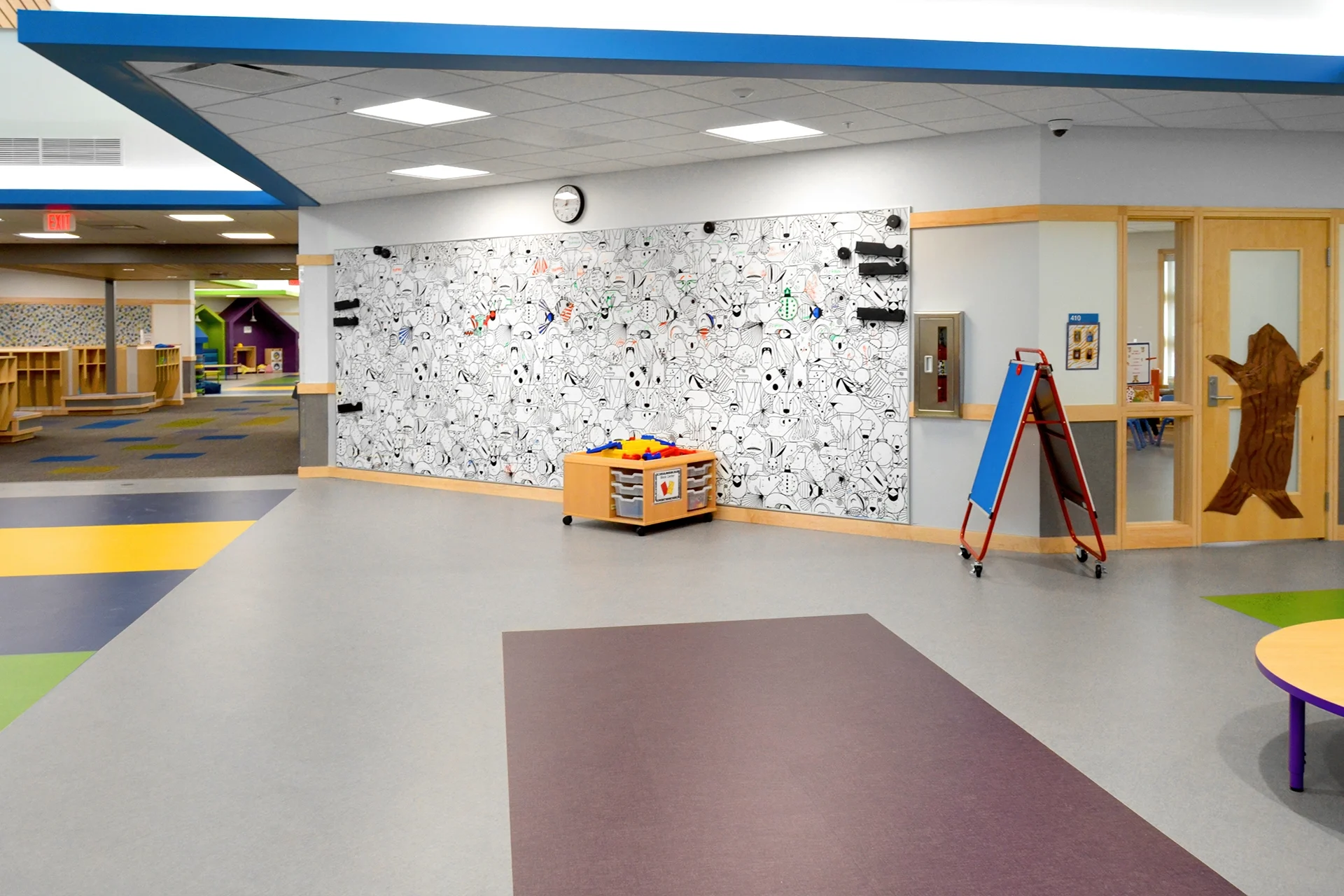
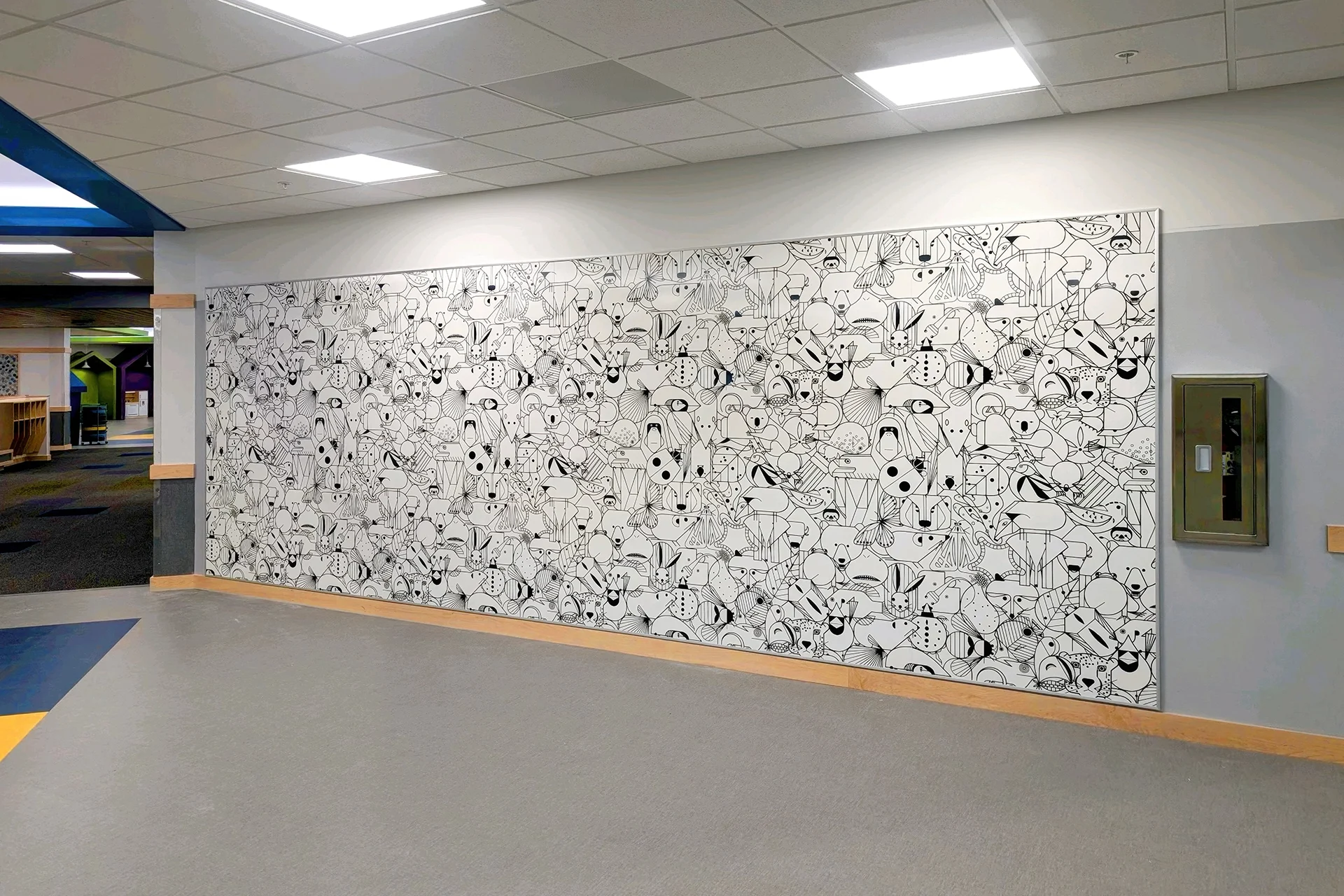
Para apoyar la misión de aprendizaje sensorial de la escuela, TMP Arquitectura especificó las Superficies CeramicSteel de Polyvision con impresión digital para las aulas y las zonas comunes. Basándose en una exitosa proyección anterior, el equipo de diseño eligió este material duradero para dar vida a la expresión interactiva y creativa incorporando el caprichoso gráfico "Beguiled by the Wild" de Charley Harper en una instalación de gran formato. Diseñadas como un libro gigante para colorear, las paredes invitan a los niños a interactuar directamente con la obra de arte, favoreciendo el desarrollo de la motricidad fina y la creatividad con la asistencia adecuada.
Más allá del diseño y la durabilidad, la elección de CeramicSteel por parte del Centro también favorece un entorno de aprendizaje más saludable y de Sostenibilidad. La superficie es no porosa, fácil de desinfectar e inherentemente resistente a los microbios. CeramicSteel contribuye al éxito a largo plazo al no emitir COV y contar con las certificaciones Cradle-to-Cradle Bronze e Indoor Advantage Gold.
Mejores prácticas para el rendimiento visual en aulas y espacios de colaboración
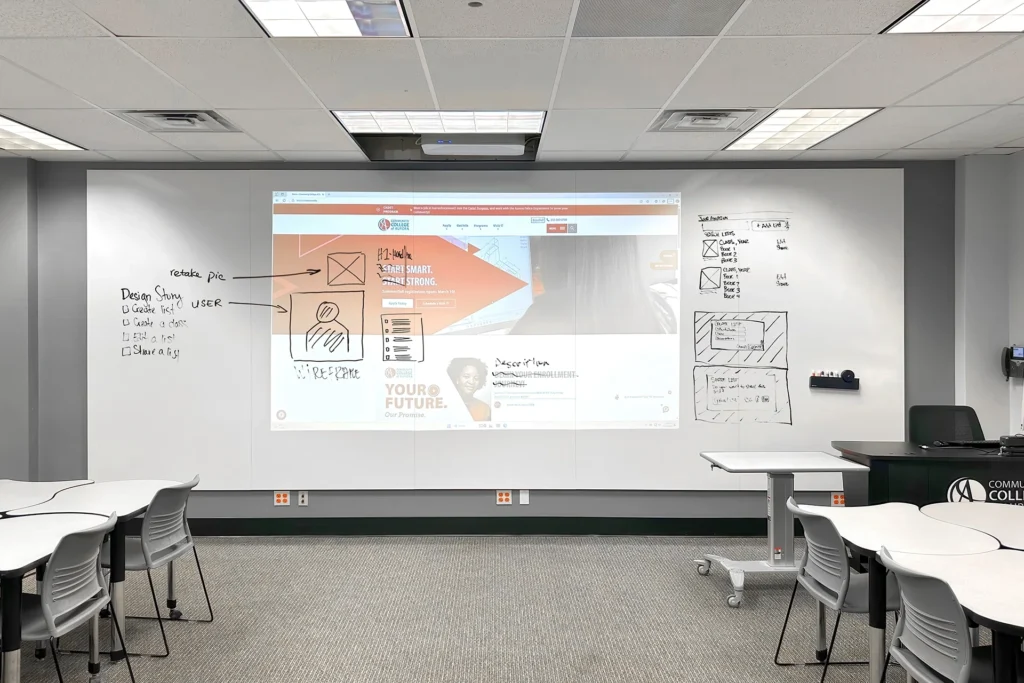
Con la creciente integración de herramientas digitales en aulas y espacios de trabajo, la importancia de superficies para pizarras blancas de alto rendimiento es más evidente que nunca.
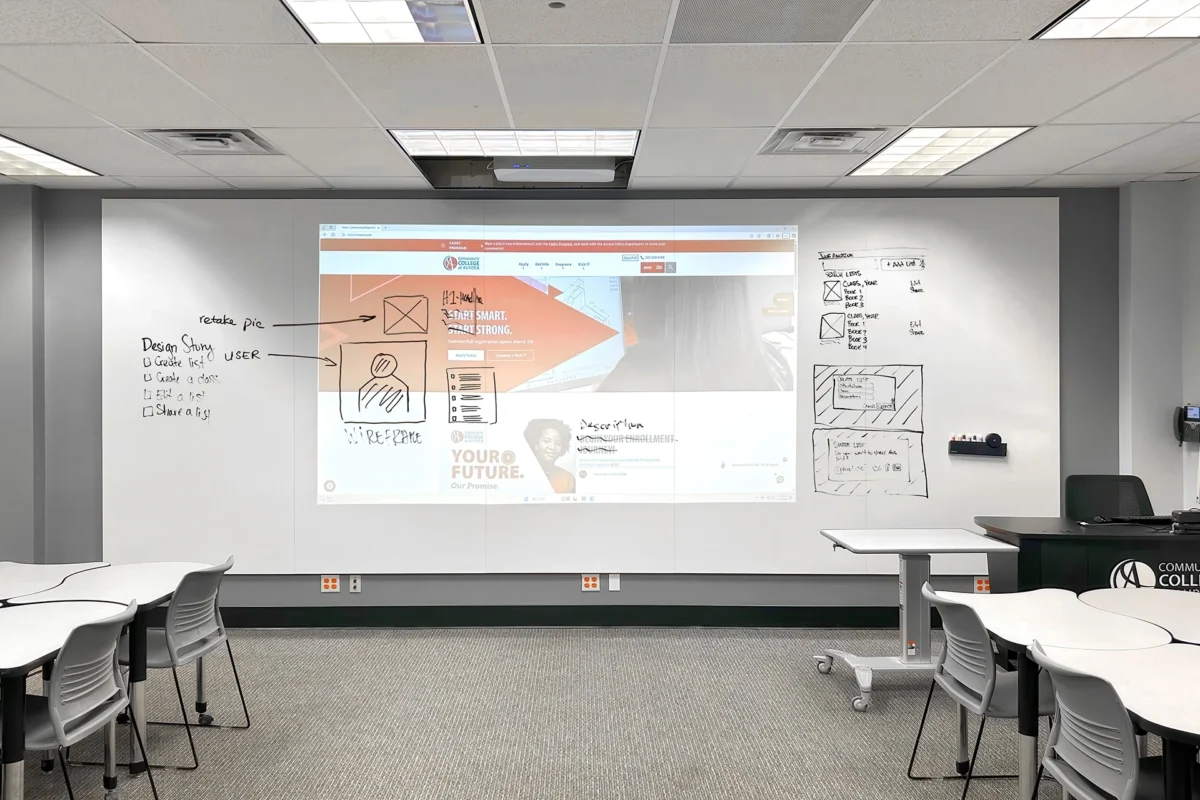
Este documento descargable describe cómo aprovechar al máximo sus pizarras habilitadas para proyección, y se centra en las mejores prácticas para la visibilidad, la participación y la colaboración. Desde optimizar las distancias de visión hasta integrar sin dificultad contenido proyectado con anotaciones a mano, la guía está pensada para ayudar a docentes y profesionales a transformar superficies tradicionales en plataformas interactivas y multifuncionales.
Nuestras superficies de CeramicSteel son protagonistas de esta revolución. Su acabado duradero e higiénico, que permite la escritura tradicional y la proyección digital, es ideal para entornos modernos de aprendizaje y colaboración.
Ya sea en una clase magistral, un taller o una sesión de lluvia de ideas, estas mejores prácticas ayudarán a que su mensaje se vea, se comprenda y se recuerde.
When we were approached to discuss the differences of whiteboards vs. chalkboards, it seemed like a dubious task. You write on one with chalk and the other with dry erase markers, right? If that was the extent of the relationship between chalkboard and whiteboard writing surfaces, this would be an incredibly short blog post. As experts in the field, let us shed some light on the subject.
Similarities between Whiteboards & Chalkboards
Whiteboards and chalkboards are both writing surfaces that share the same basic function – facilitating information-sharing
The most prominent feature of both surfaces is their simple reusability for this purpose. Both CeramicSteel whiteboards and chalkboards can be used over and over for 50 years or longer when cared for properly, and unlike other writing surfaces, CeramicSteel whiteboards and chalkboards don’t ghost or stain after use.
They can come in a variety of shapes and sizes, often custom designed to fit the modern space.
There is a basic selection of standard colors available for both chalkboard or whiteboard surfaces, and both can be produced in custom colors as well. These colors all allow for high-contrast markings, whether chalkboard or whiteboard, offering the greatest viewing quality possible.
Safe, clean and environmentally sustainable, both whiteboard and chalkboard CeramicSteel writing surfaces are Cradle-to-Cradle Bronze Certified and emit no VOCs.
In addition to responsible manufacturing, CeramicSteel whiteboard and chalkboard writing surfaces are resistant to stains, scratches, fire, bacteria and chemicals.
They’re both durable and long-lasting writing surfaces ideal for environments requiring high-performance material.
Differences between Chalkboards & Whiteboards
Whiteboards are also known as dry erase boards. This describes the act of writing with dry erase markers and easy removal of marker ink using a dry eraser or cloth.
CeramicSteel whiteboards will also tolerate permanent marker and other inks. To get rid of permanent marker, a trick is to write over the marking with a dry erase marker and erase – it’s as simple as that. Permanent marker and ink can also be easily removed using a solvent cleaner. Despite its ability to withstand a variety of writing tools, chalk is not compatible with whiteboard surfaces. The dry chalk doesn’t adhere to gloss surfaces like it does to a matte surface.
Chalkboards, on the other hand, are specifically designed for use with dry chalk sticks. Dry chalk can be easily erased from CeramicSteel chalkboards with a dry felt eraser. Chalk doesn’t stain or ghost, but it can leave behind a “chalky” appearance after heavy use between cleaning with a wet cloth.
Can You Use Dry Erase Markers On Chalkboards?
Because CeramicSteel chalkboards are smooth and nonporous, chalk pens or wet chalk can easily be used to write on the surface, too – it just requires a wet erase with soap and water. While dry erase markers, permanent markers and other inks won’t damage CeramicSteel chalkboards, they aren’t recommended; these tools don’t provide enough contrast against the chalkboard’s dark surface for clarity.
Other Uses For Chalkboards
As a dark, relatively matte surface, chalkboards absorb light. As a result of this nature, chalkboard surfaces aren’t ideal for projecting – a process wholly based on the projection of light. While it’s possible to project onto chalkboard surfaces, and it has been done, it’s not recommended when a quality image and clear communication is the bottom line.
When projecting is a priority, whiteboard surfaces or dedicated projection surfaces are the best option. The light-colored surface reflects light, creating a clean, crisp image. PolyVision CeramicSteel whiteboard surfaces have a variety of gloss levels for optimal visibility in any environment. Lower gloss levels produce less glare for more frequent users of projectors.
Finally, if attention to detail is what you’re after, chalkboards are the surface of choice. Biology professors across the globe sing the chalkboard’s praises for its forgiveness with shading, line thickness and scrawling minutia when creating intricate diagrams for their lectures. This allows for chalkboards to display more detail in their drawings, as compared to the more bold lines seen on dry erase boards or whiteboards. Whiteboard markers only offer one shade level regardless of pressure or ink layering and are typically bulky in nature, providing a less authentic writing experience for small hands learning penmanship.
Whiteboards or Chalkboards: Which Should I Choose?
When it comes down to brass tacks, CeramicSteel whiteboards and chalkboards are both premium writing surfaces with an environmentally responsible manufacturing process and safe, healthy composition for any setting. Understanding the quality helps make the selection process easier. All that’s left is to decide which surface best meets the needs of your space – will you require a projector? A whiteboard is your best option. If you’re teaching penmanship, or a cool, retro look fits your space – a chalkboard is right up your alley.
Either CeramicSteel selection can always be made with confidence, just be sure to follow the recommended cleaning and care instructions and use the recommended accessories to maximize performance.