Throughout history, art has been a powerful vehicle for expressing human beliefs, values, and aspirations.
From religion and ritual to history, symbolism, fashion, communication, and design, artists communicate ideas through form, composition, color, and line. The ways these elements come together are limitless, driven by imagination, skill, and dedication. Rather than imitation, artists pursue innovation, using their work to establish a distinctive voice. The evolution of art across cultures, movements, and eras reflects the enduring breadth and impact of human creativity.
One of the most influential expressions of this creativity is public art created for shared spaces and experienced as part of everyday life. Visible in all conditions, public art reflects both artistic vision and the values of the communities and organizations that commission it. A historic example can be found in the glass mosaics of Ravenna, Italy, where the ceilings of the Basilica of Sant ’Apollinare use richly colored glass to convey Biblical narratives. Designed as visual teaching tools for largely illiterate audiences, these mosaics combined beauty with purpose, serving as bold public statements in their time.
In the modern era, public art continues to shape cultural dialogue. Andy Warhol, one of the 20th century’s most influential artists, drew on his background in advertising to create bold, high-contrast imagery that became synonymous with Pop Art and mass culture. His mural Thirteen Most Wanted Men, commissioned for the 1964 New York World’s Fair and censored before opening, illustrates the lasting ability of public art to challenge conventions and influence public perception.
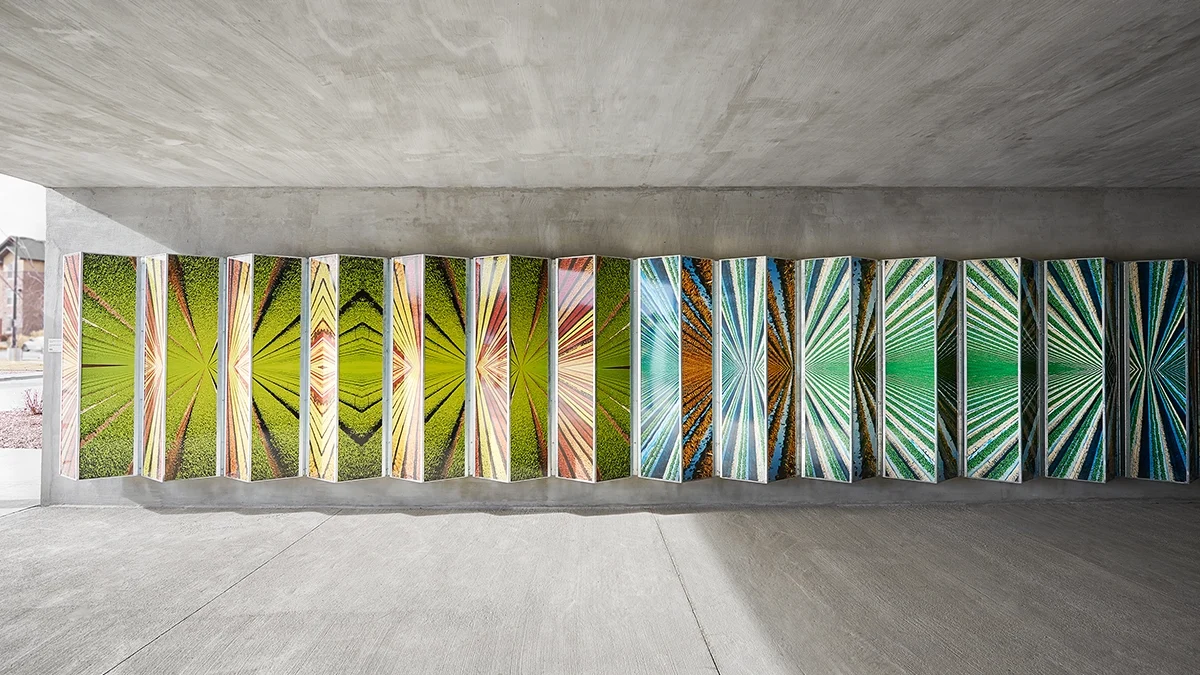
As a materials manufacturer, Polyvision plays an active role in public art by collaborating closely with artists, designers, and commissioning partners to transform creative vision into durable, large-scale surface design. Through projects such as the Joining Hands installation in Tulsa, Oklahoma, and the lenticular-style pieces at the Tampa Riverwalk and the Arvada Ridge Train Station in Colorado, Polyvision surfaces translate visual narratives into architectural elements that enliven transit hubs and civic spaces.
These custom panels and surfaces extend the artist’s intent beyond traditional media, allowing color, pattern, and imagery to interact seamlessly with the built environment. By combining technical expertise with creative interpretation, Polyvision helps ensure that public art is visually impactful, long-lasting, and meaningfully integrated into the daily experience of the communities it serves.
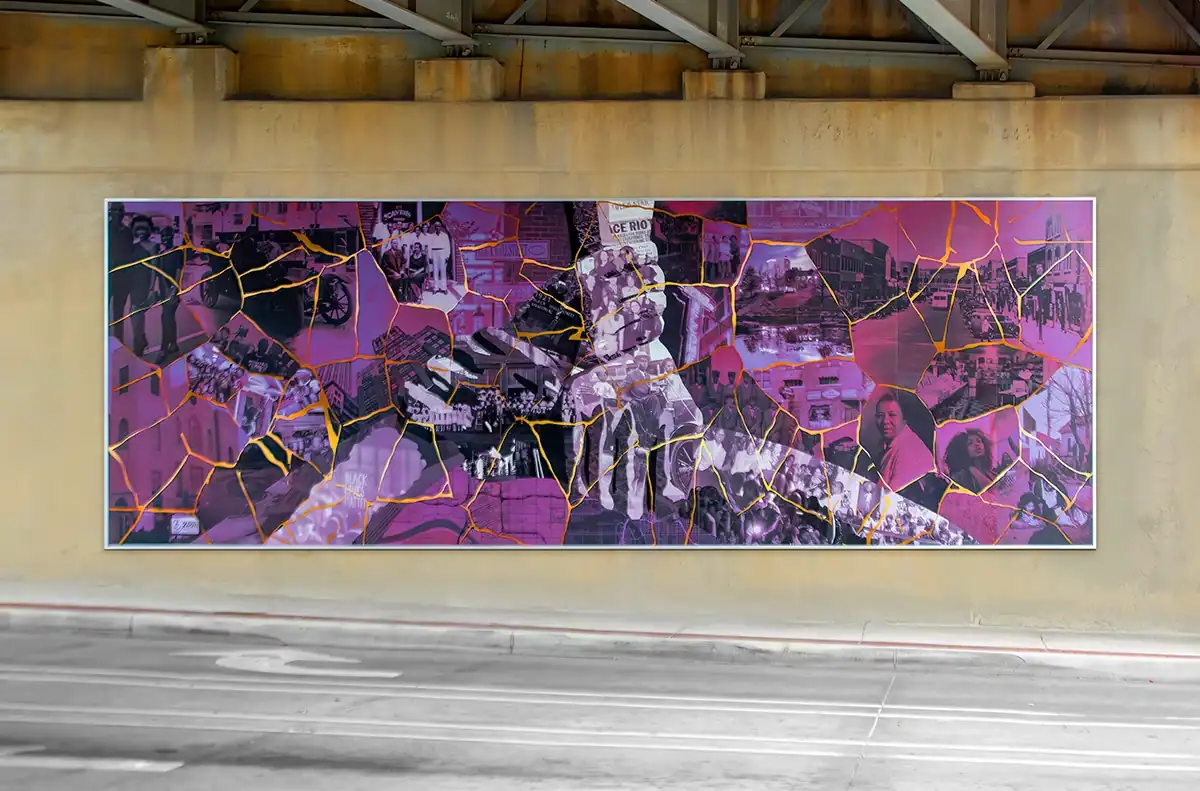
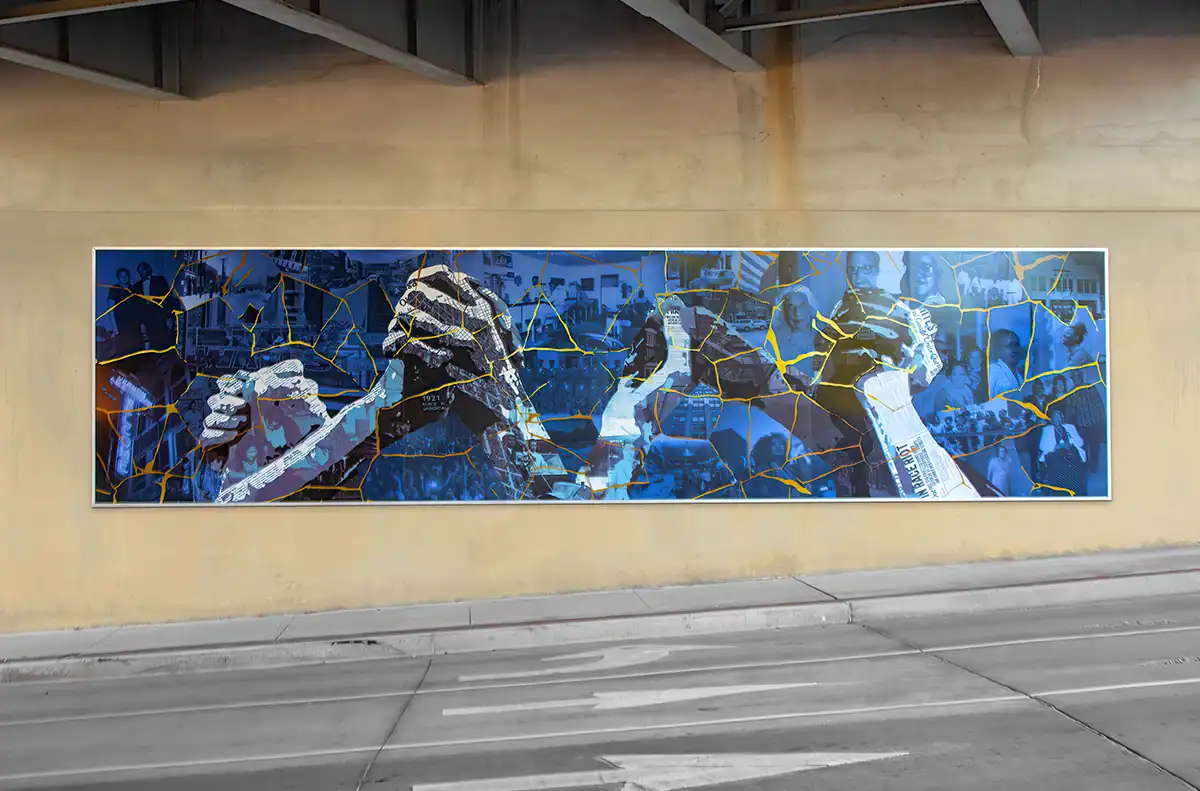
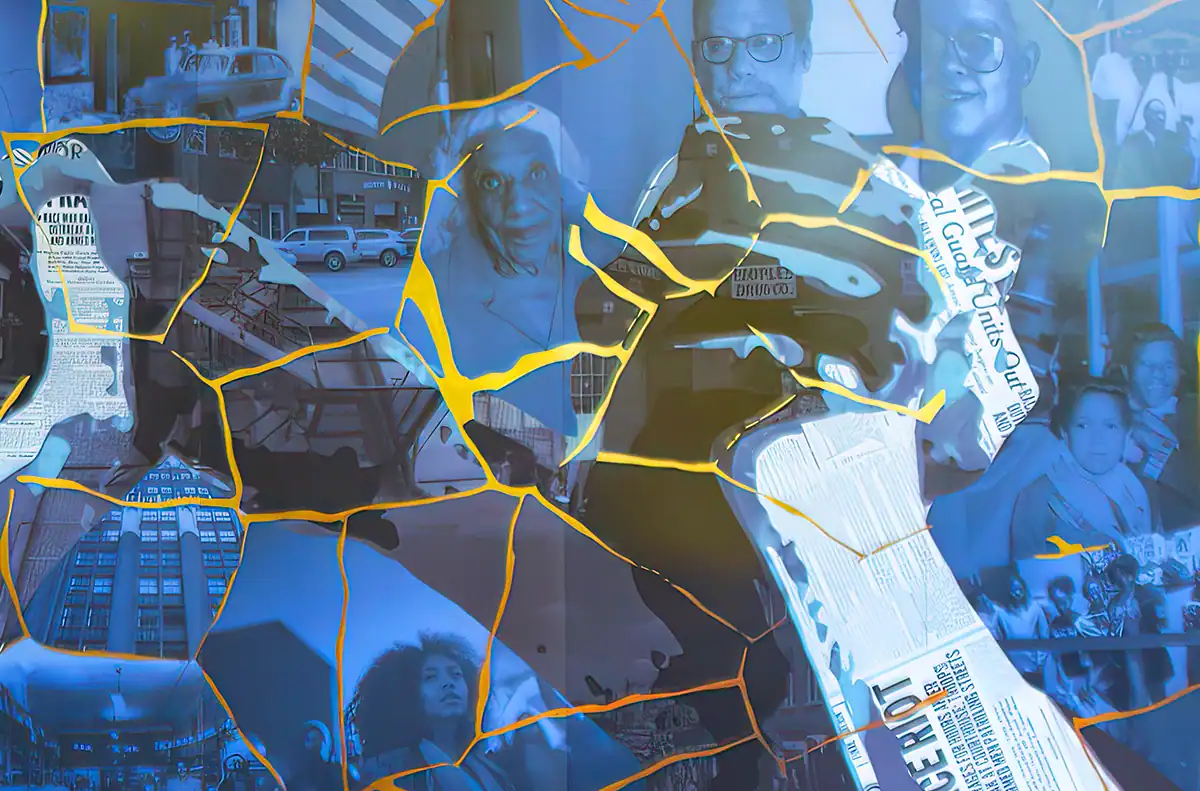
Through a multi-faceted partnership between Polyvision, RE:site Studios, the Oklahoma Arts Council, local cultural history organizations and photographers, and the Oklahoma Department of Transportation, four vibrant murals sprang to life on the walls of the Detroit Avenue underpass in Tulsa, Oklahoma.
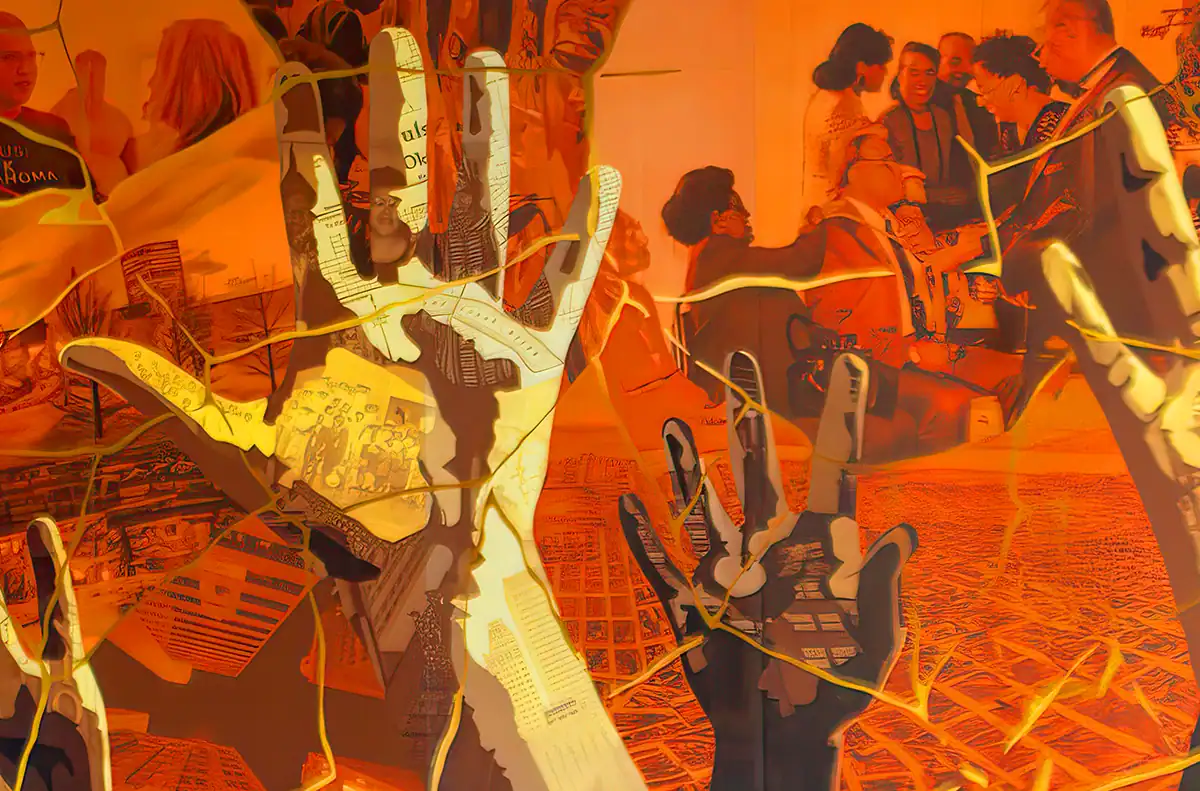
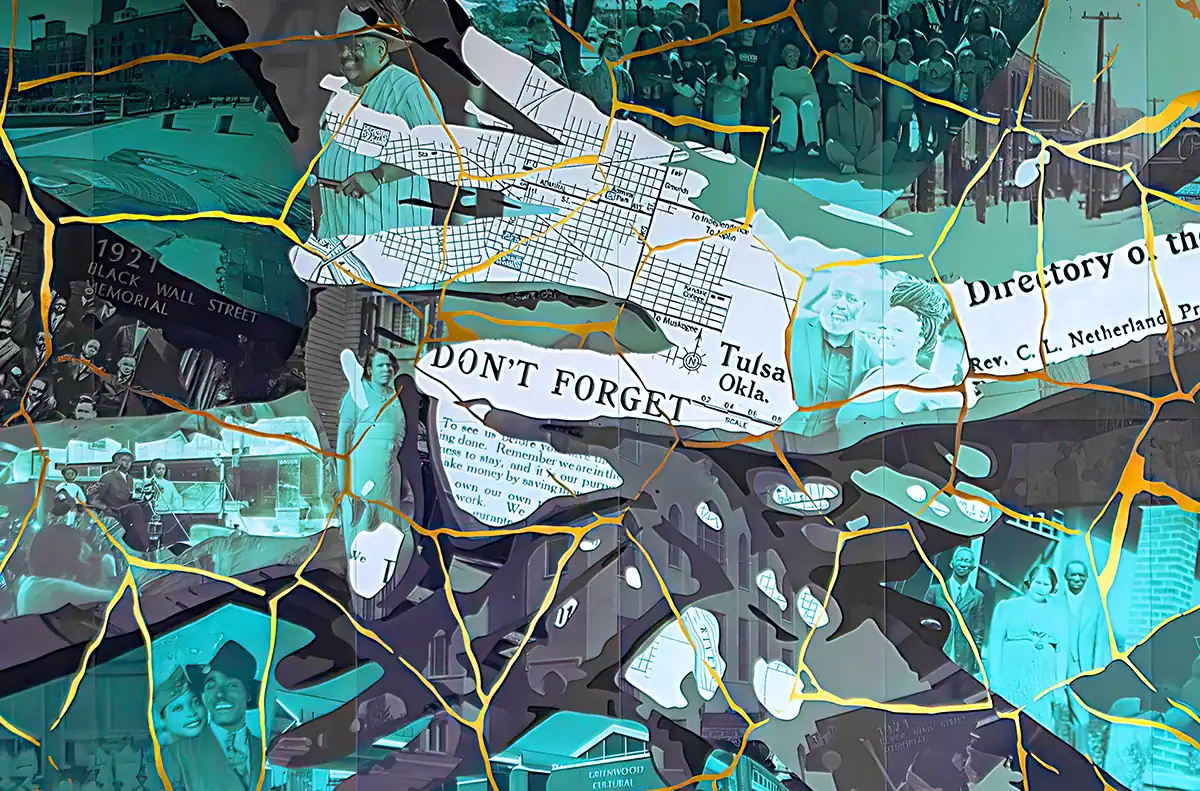
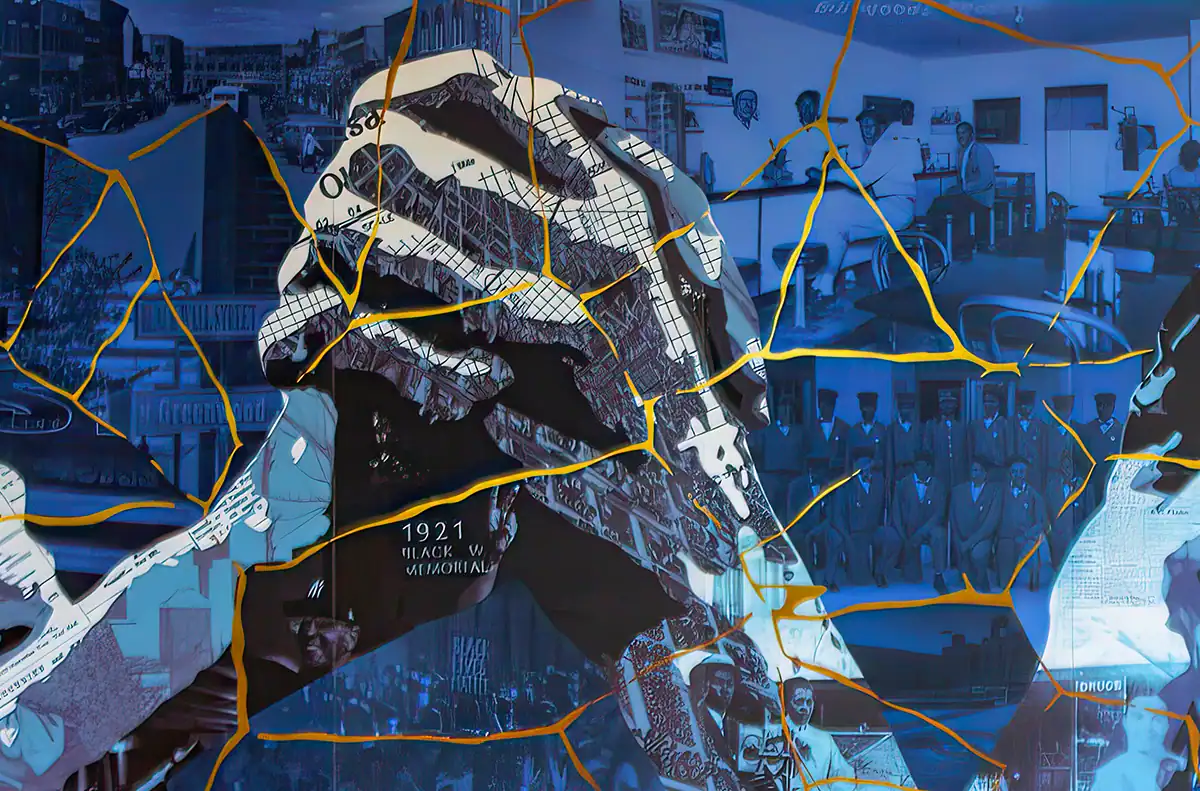
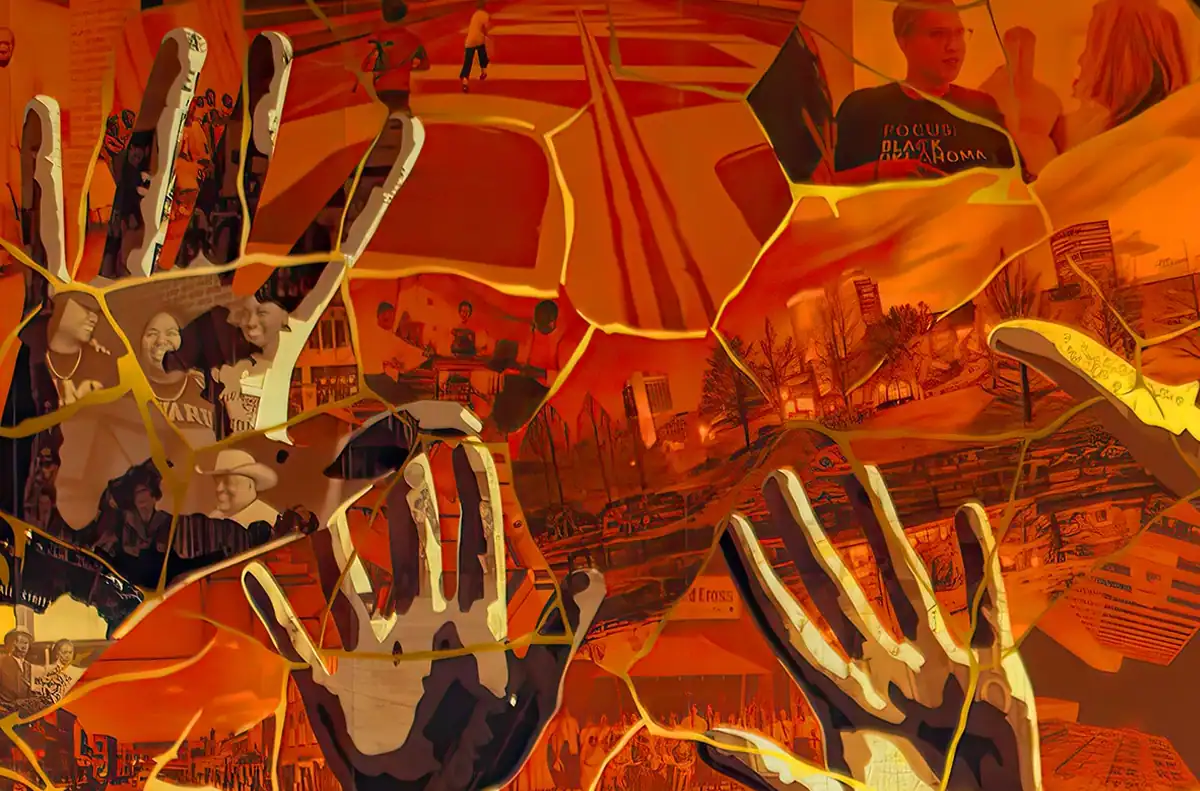
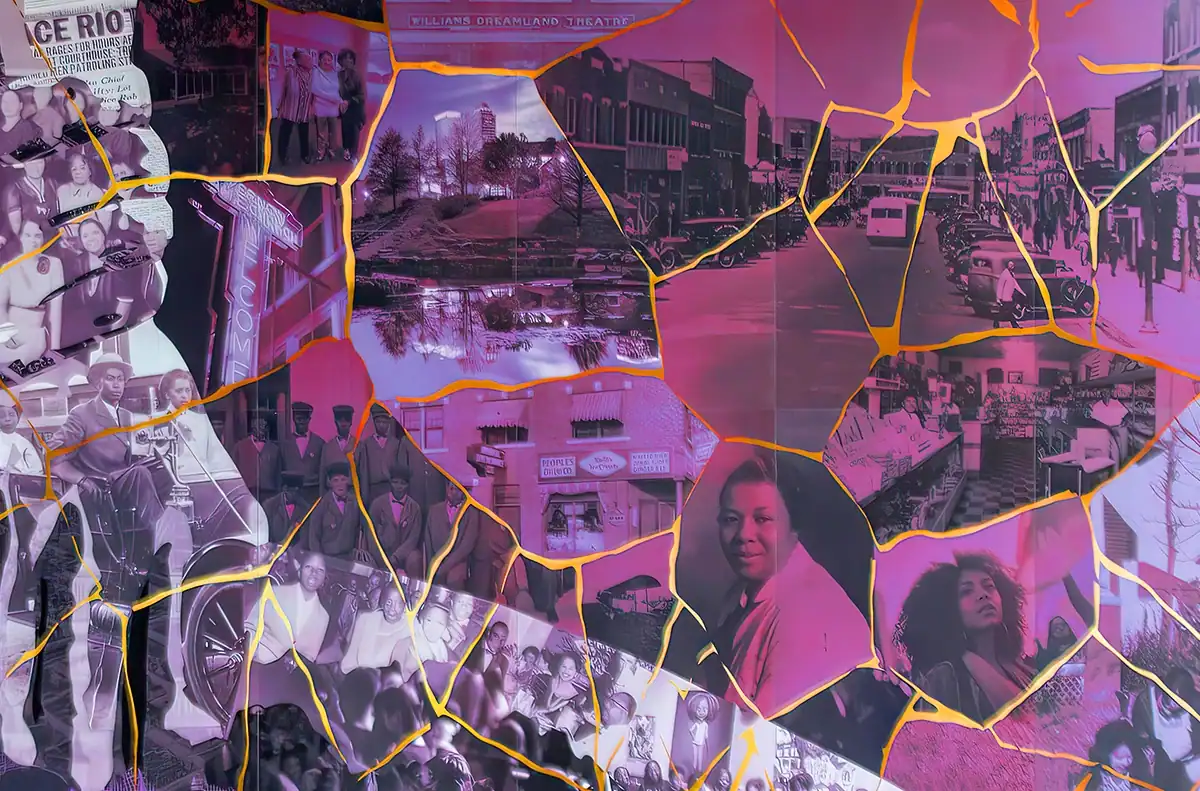
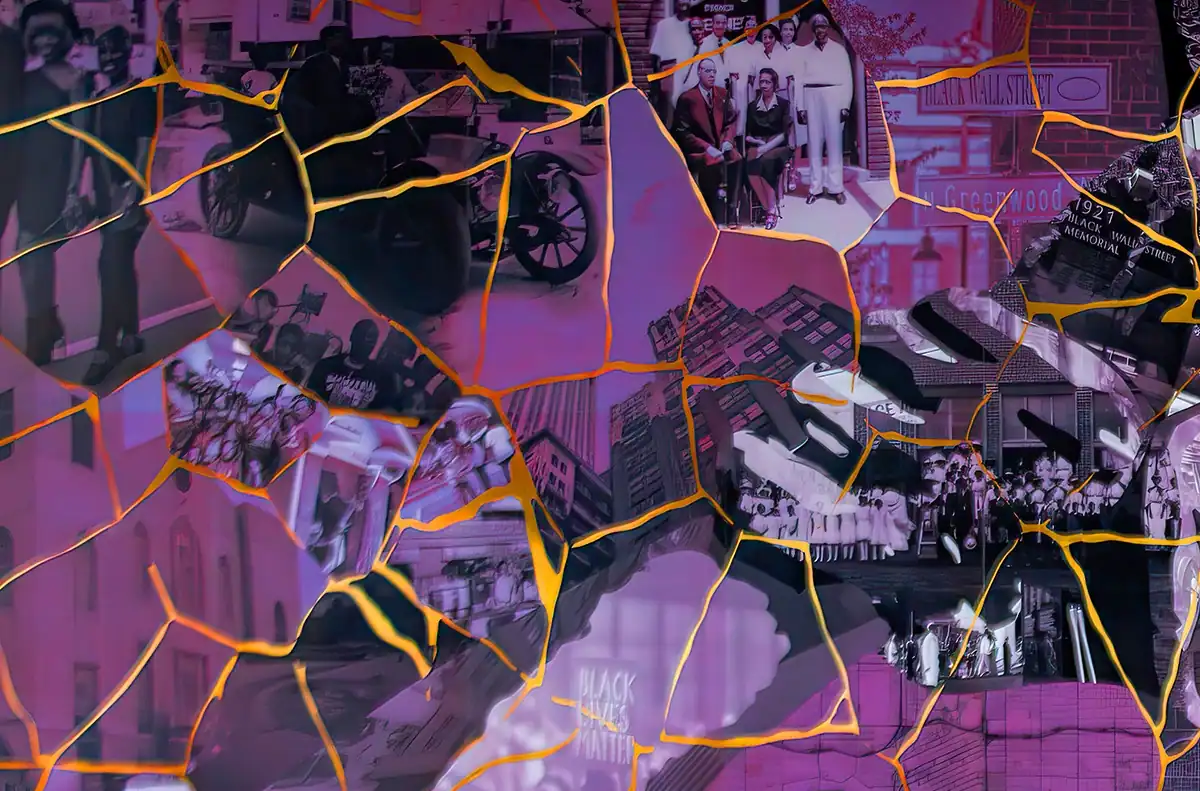
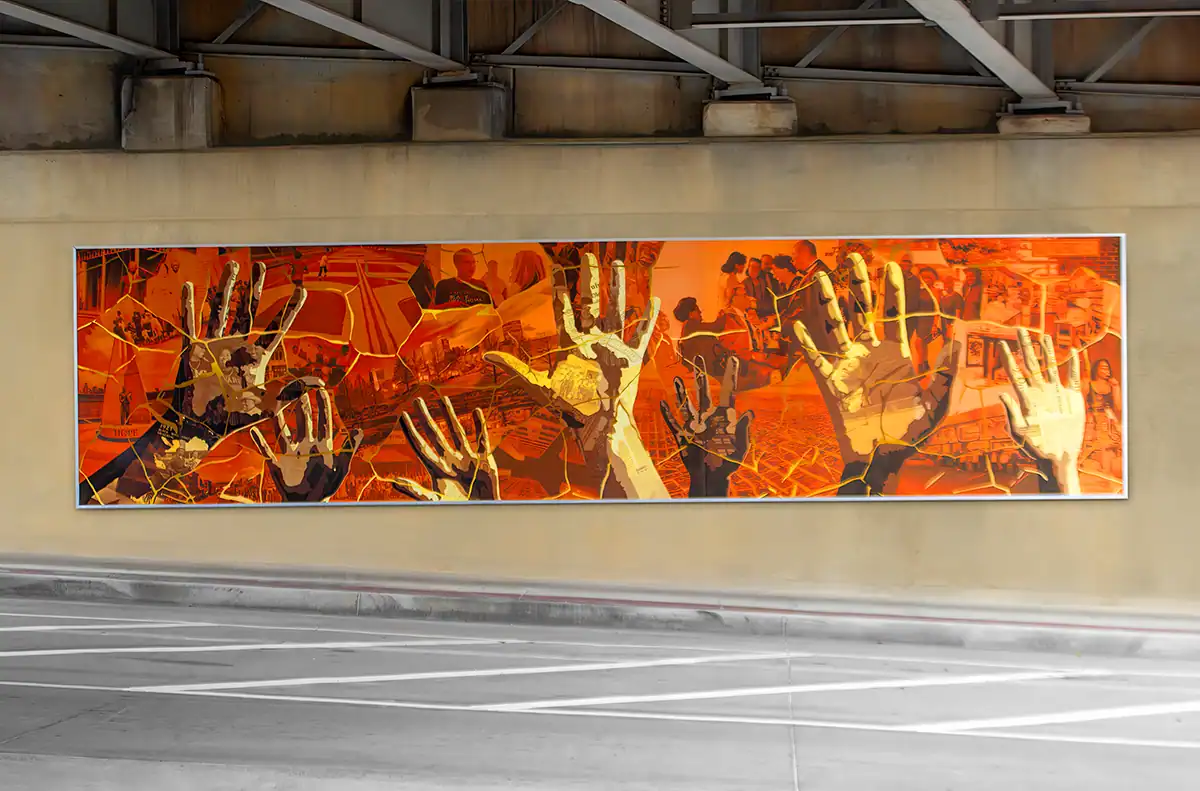
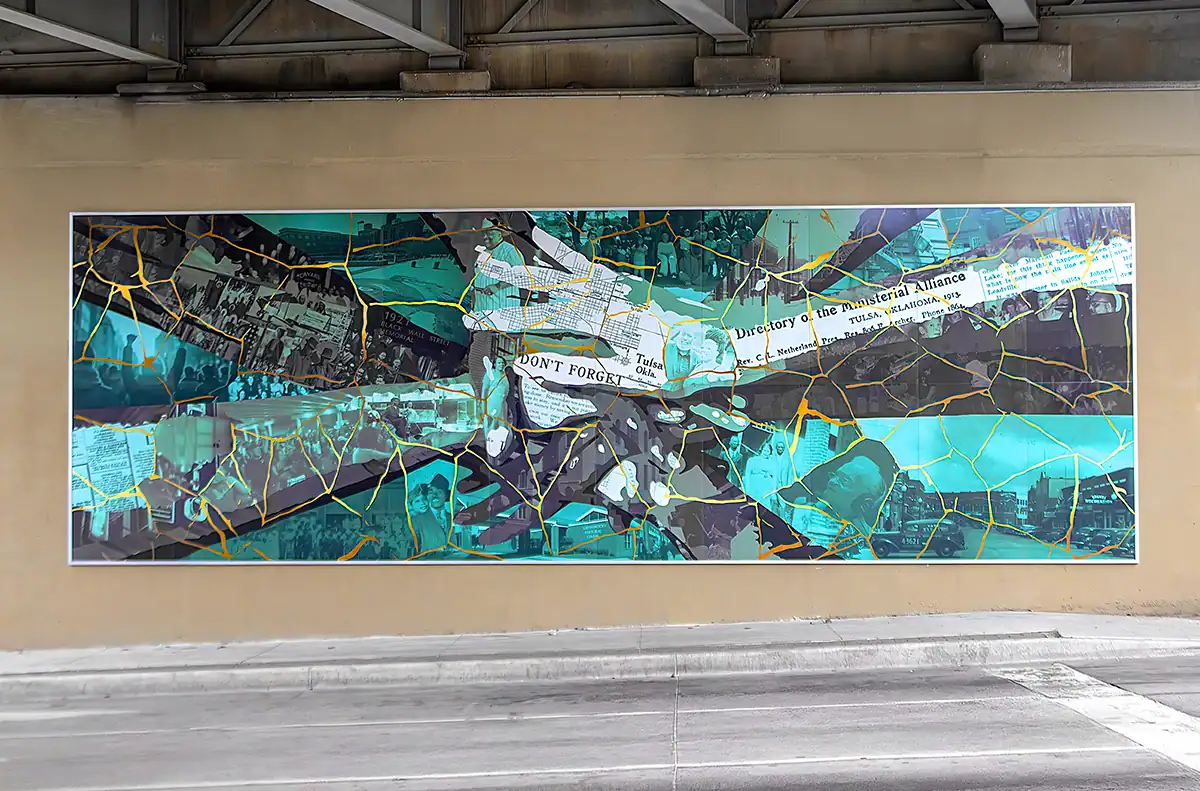
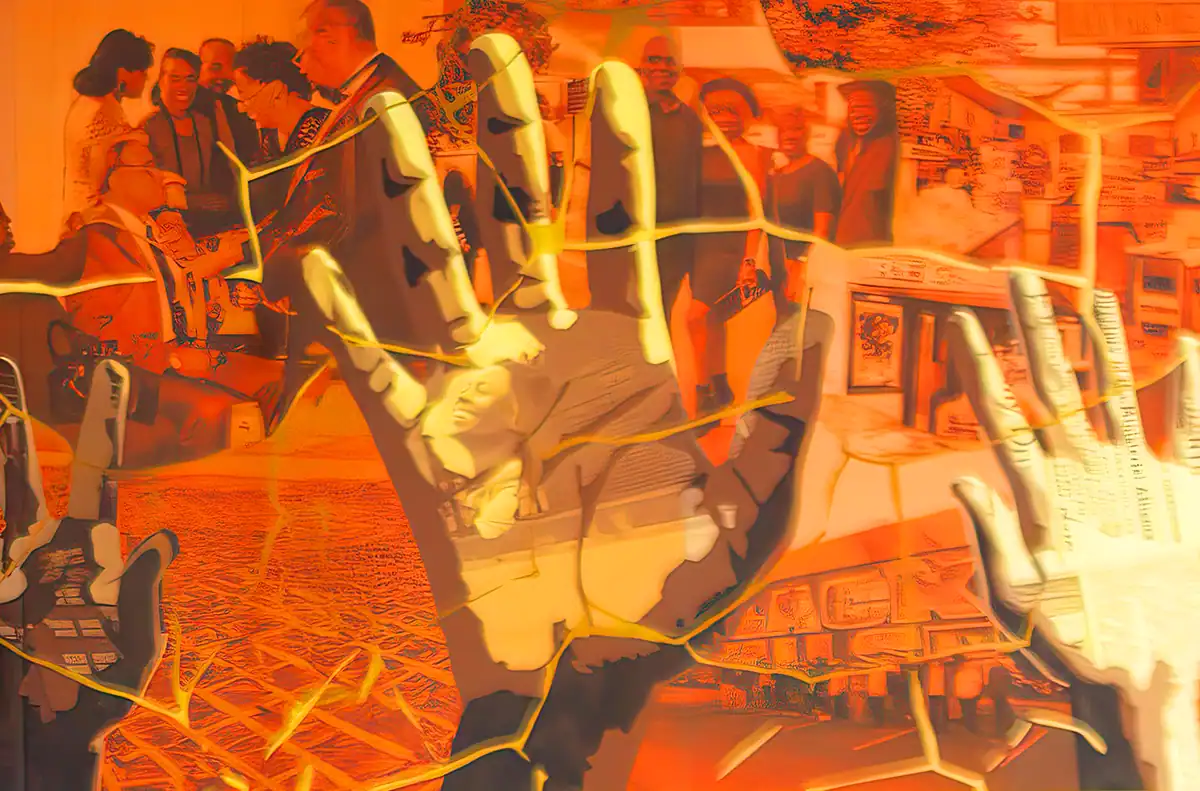
The 30-foot-wide murals honor the historic Greenwood neighborhood’s resilience following the 1921 Tulsa Race Massacre, celebrate its vibrant history, and inspire progress toward a united, equitable community. Historical photographs that celebrate life in the Greenwood community are collaged across 60 digitally printed CeramicSteel panels and toned with pleasing colors: fresh greens, rich purples and violets, calming blue shades and vivid orange hues.
Partner RE:site Studios
Completion Date 2024
Area 1512 ft2
Client Oklahoma Arts Council
The collages are tied together with gold veins, reflective of the ancient Japanese kintsugi technique where broken pottery is joined back together and highlighted with gold pigment, symbolizing beauty in what was once broken and the resilience of becoming whole again.
The colorful artwork illuminates otherwise generic, gray concrete transportation corridor, transforming it into a dazzling atmosphere that can be viewed by foot or car, each mode offering a different experience of color. When viewed at a distance, the joined hands that inspired the title stand out become visually prominent, solidifying the artwork’s intent. The murals serve as a beacon of pride, healing, and hope for Tulsa, engaging the community in reflection and conversation about its past and future
Polyvision’s CeramicSteel panels were chosen for their durability, resistance to weather, and colorfast printing technology, ensuring the murals will inspire current and future generations. The panels were designed to be lightweight yet sturdy for easy installation on uneven surfaces, framed in custom stainless steel. The additional qualities of graffiti- and bacteria-resistance are helpful in maintaining the surface in a busy transportation corridor.
As a result of collaboration, innovative materials, and thoughtful design, the project honors history while projecting a vision of unity and progress. The project highlights the power of public art to educate, inspire, and create a sense of belonging, so important in our modern world.
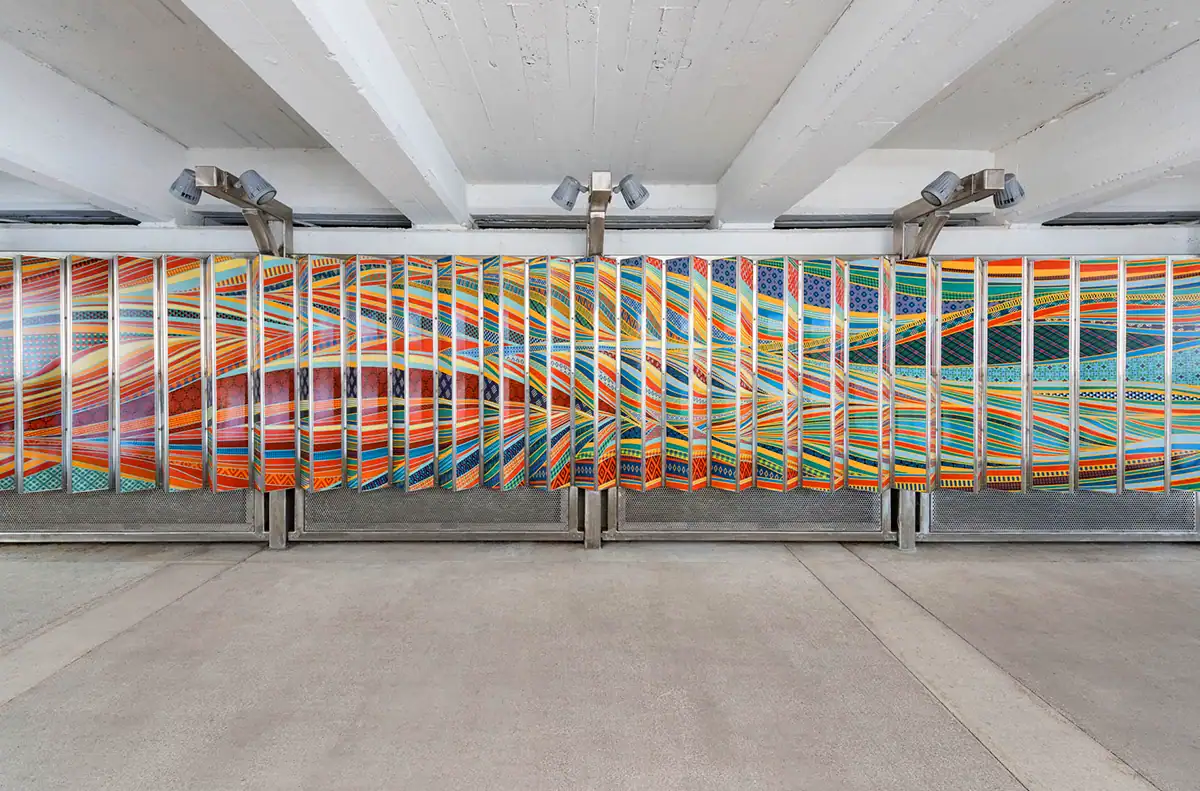
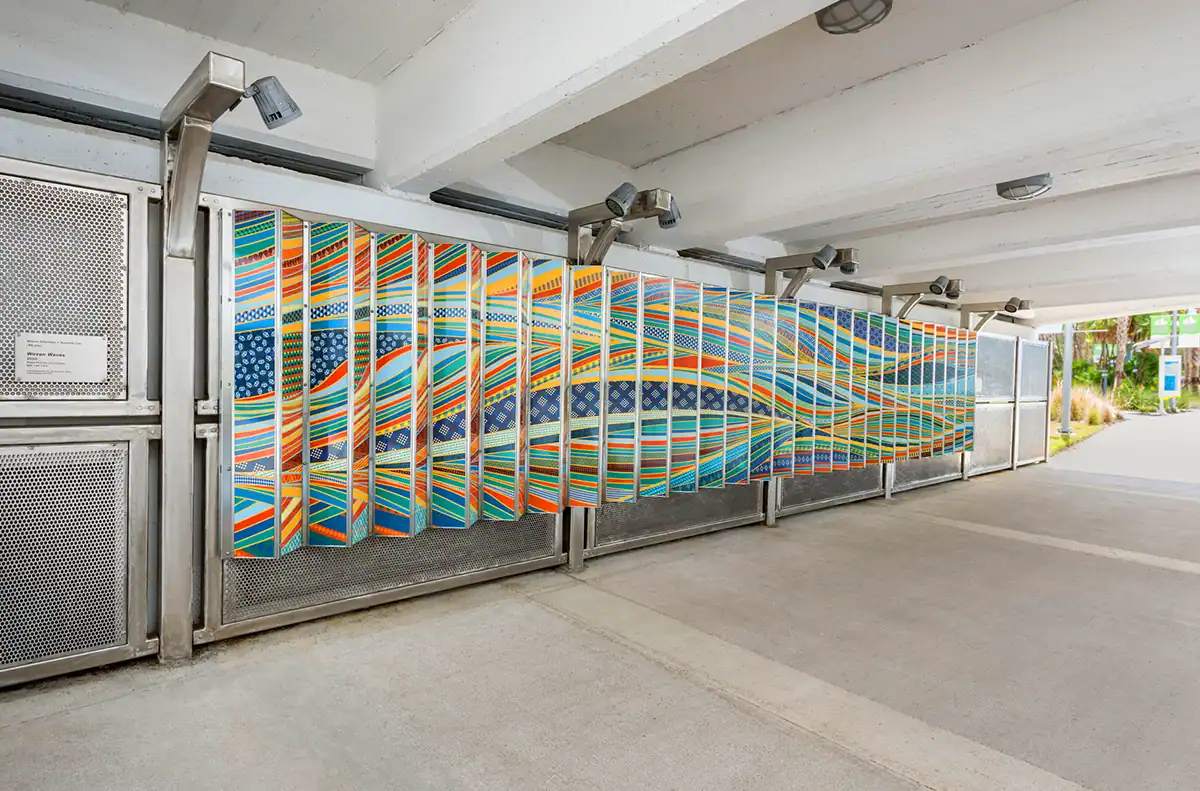
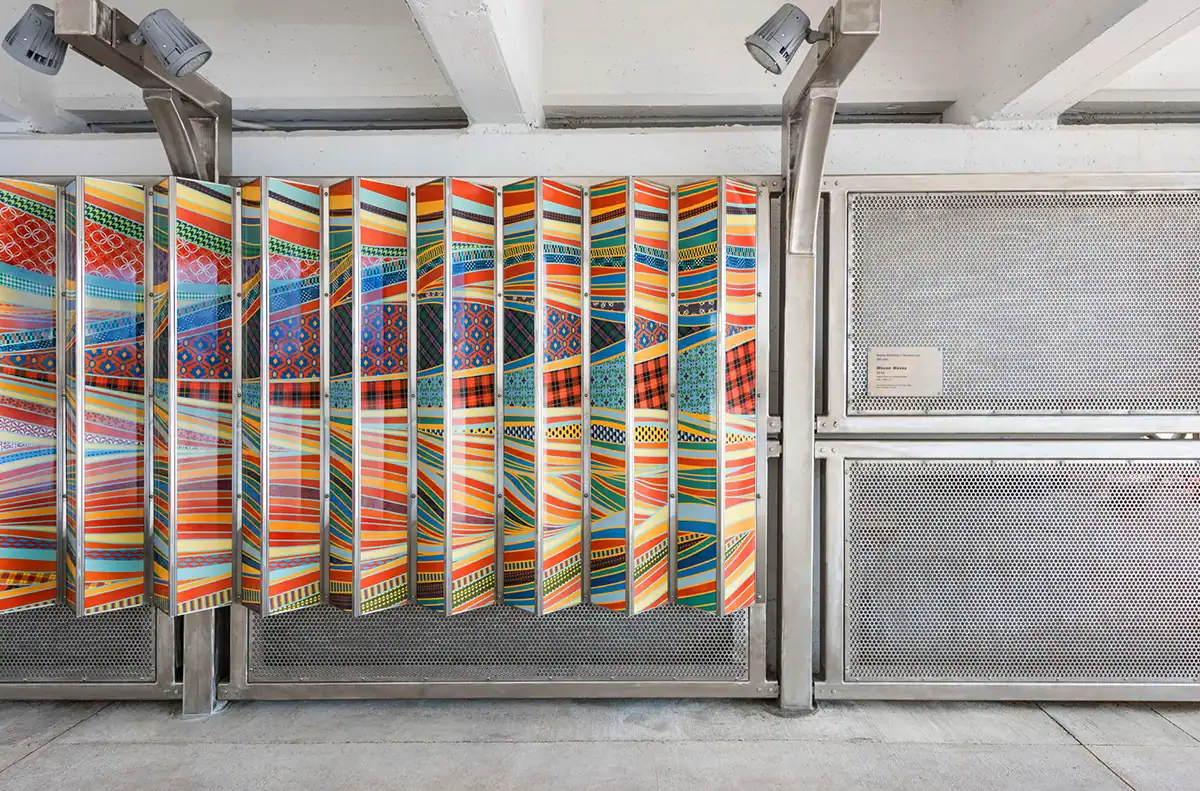
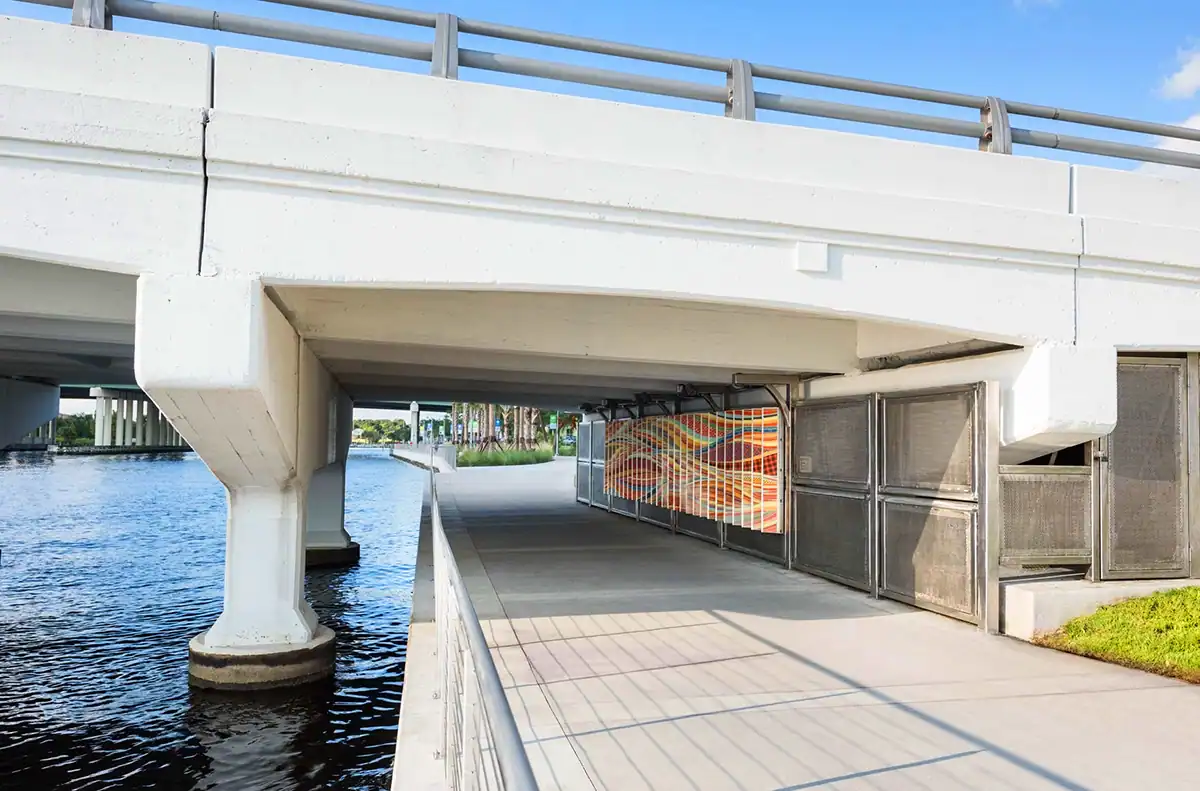
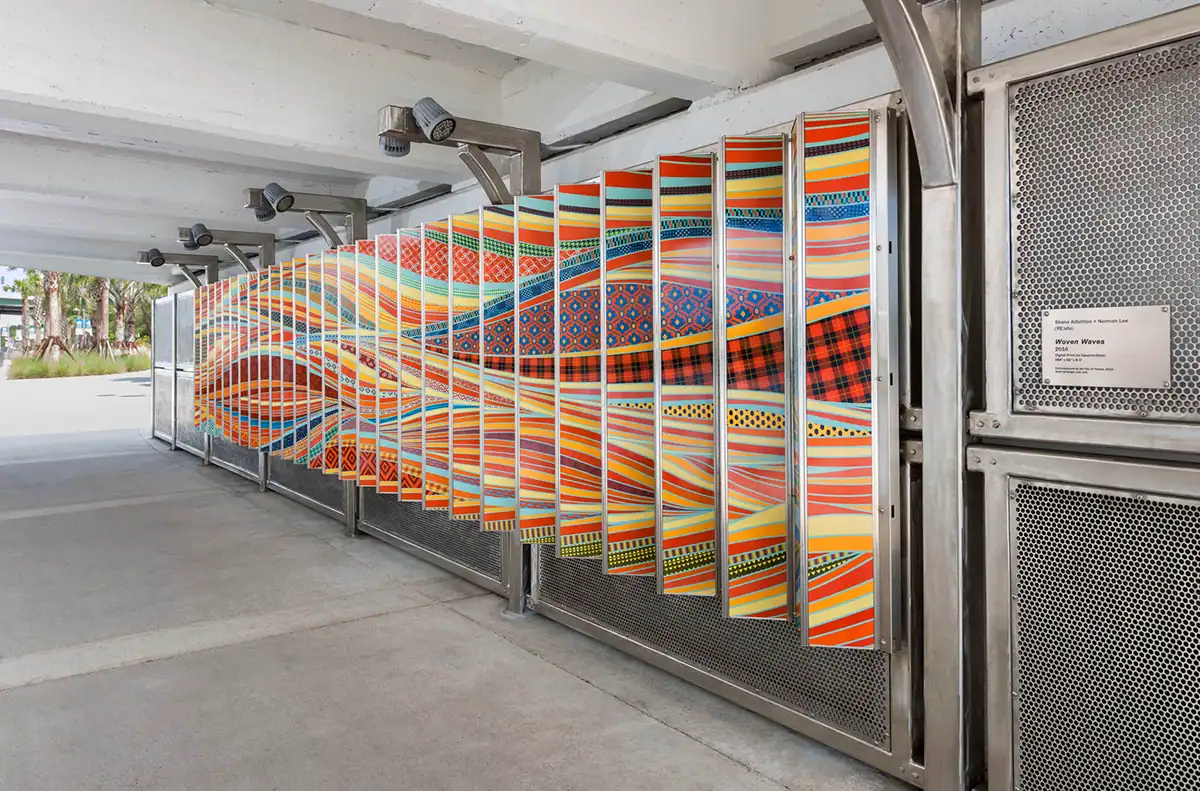
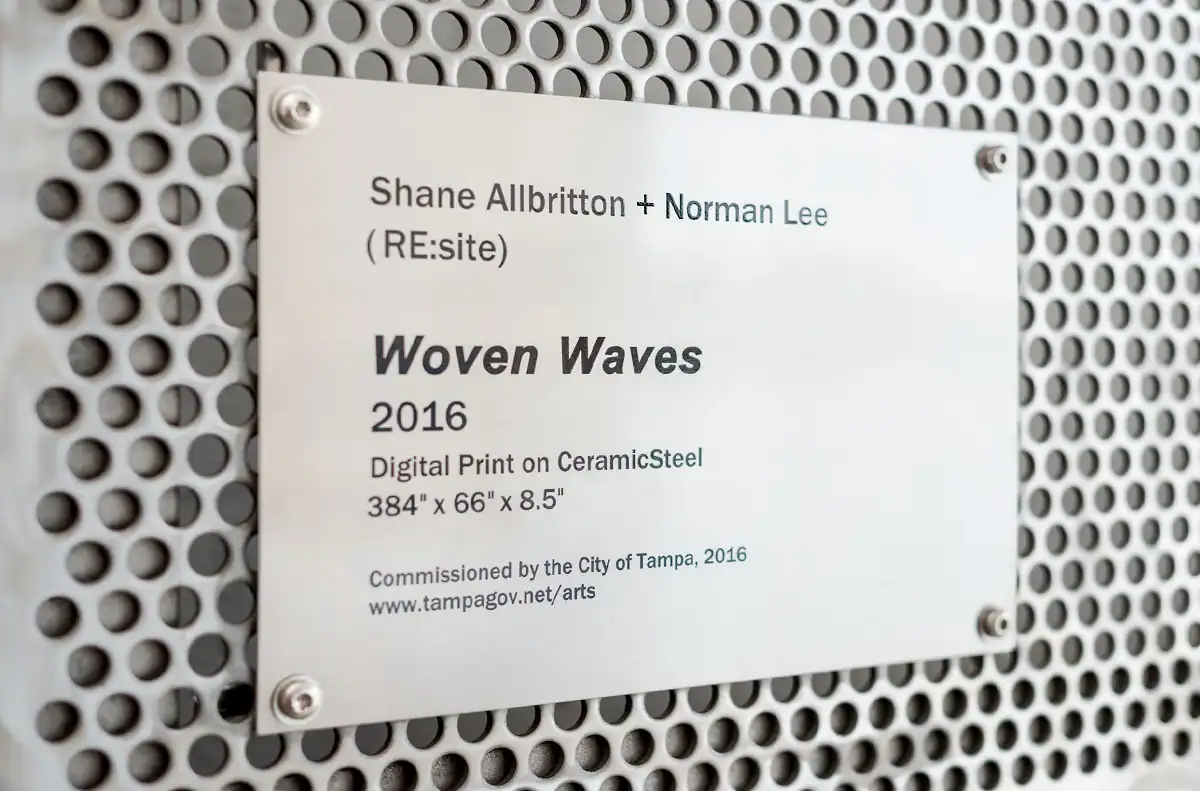
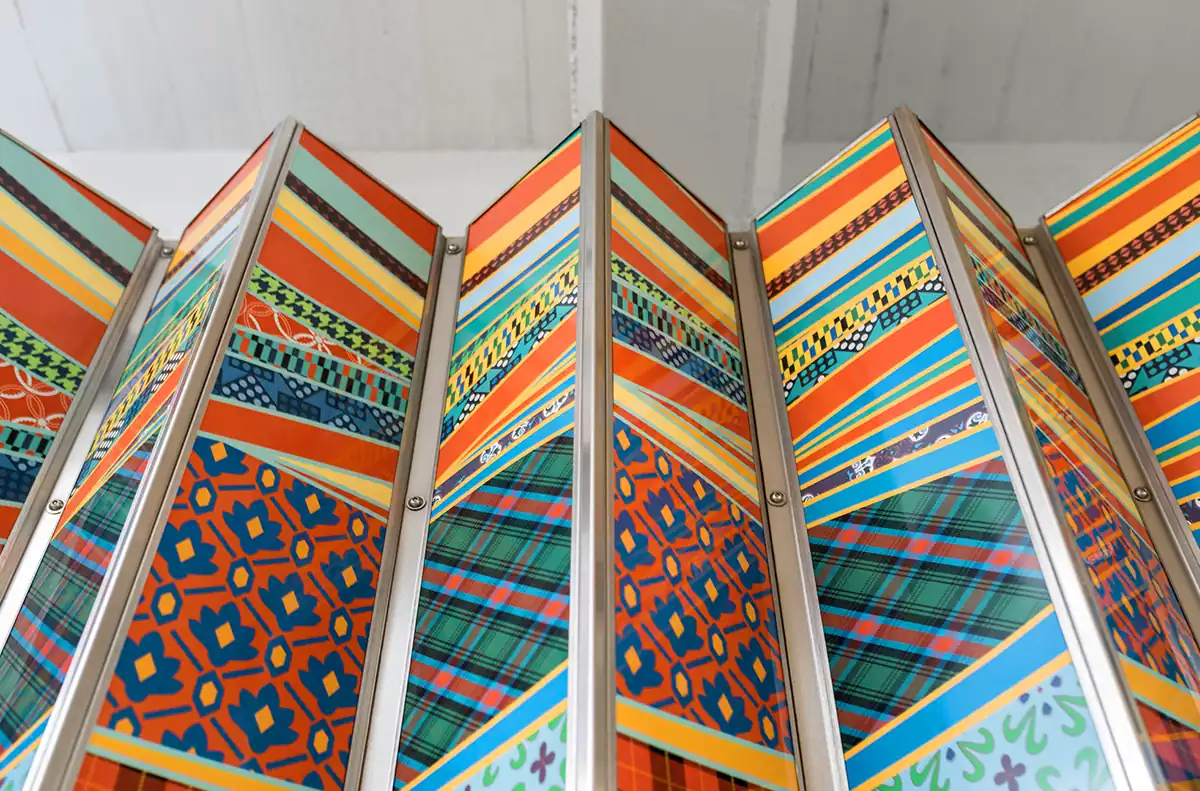
The City of Tampa developed a 2.6-mile waterfront walkway along the Hillsborough River and Tampa Bay to create a vibrant, pedestrian-friendly destination connecting parks, museums, and cultural sites. As part of this initiative, artists Shane Allbritton and Norman Lee designed Woven Waves, a public art installation beneath the Laurel Street Bridge.
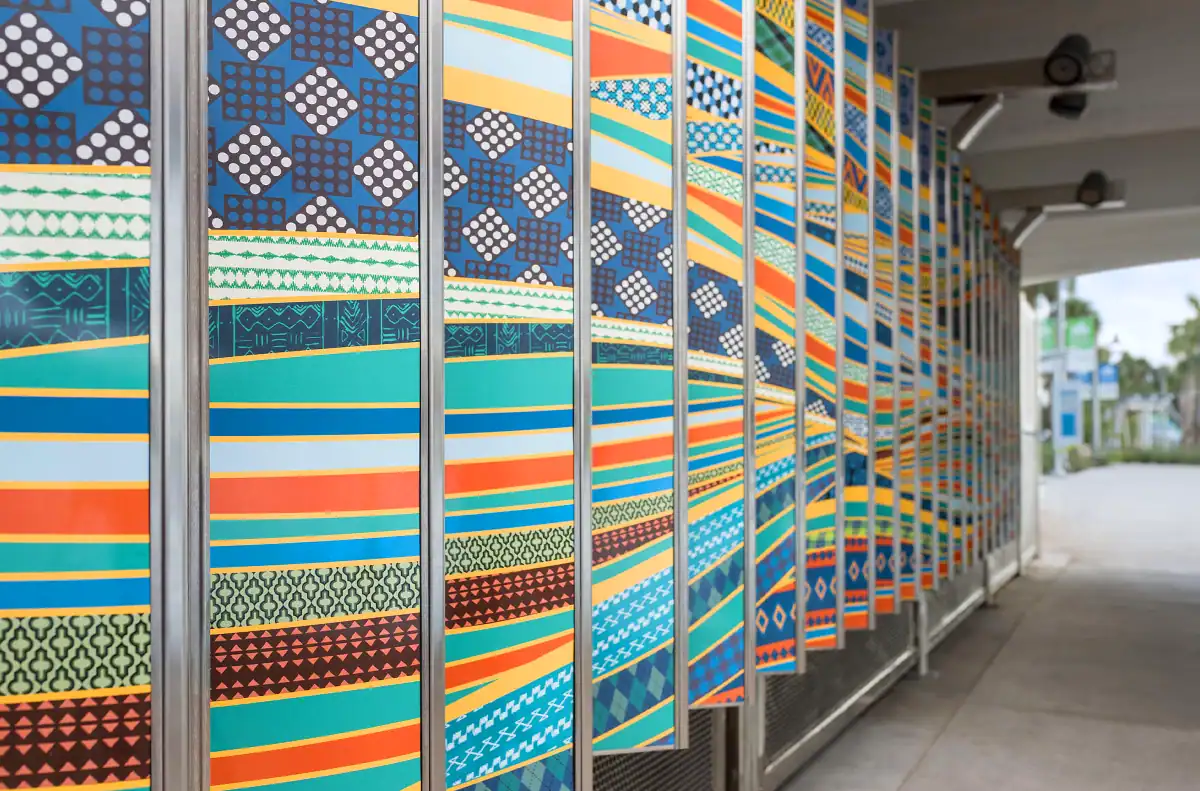
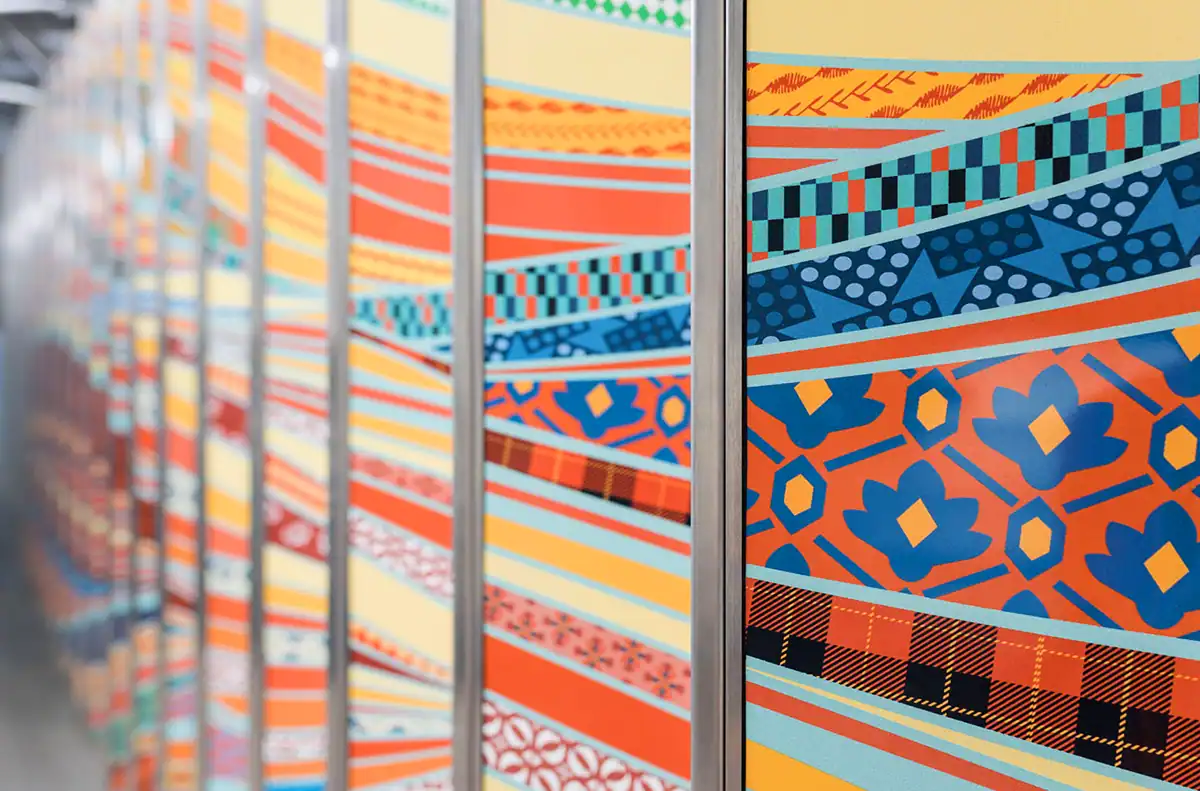
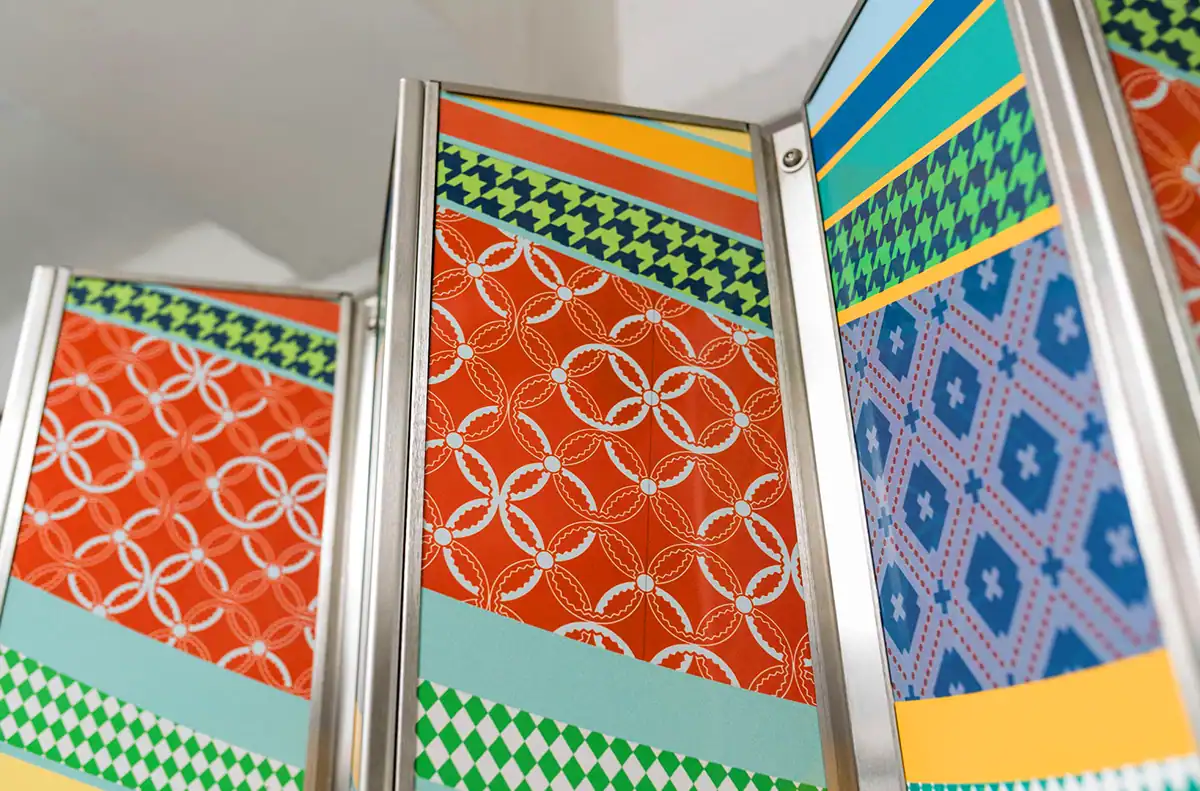
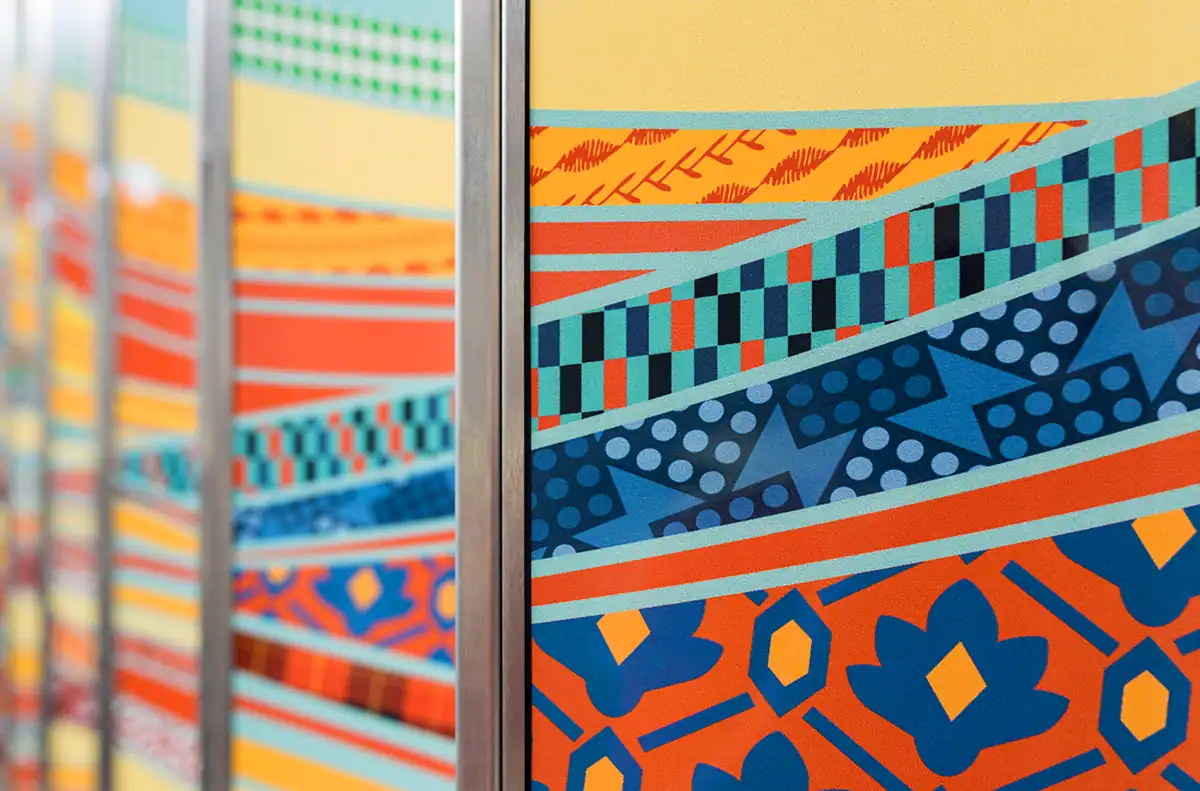
The installation consists of 54 folded CeramicSteel panels organized in a lenticular stainless-steel framework, creating a dynamic, shifting visual effect as viewers move past on foot, bike, or water. The artwork draws on the site’s multicultural history, referencing the former Fortune Street Bridge and its namesake, local historical figure Fortune Taylor, and incorporates patterns inspired by West African, Cuban, and Scottish traditions to symbolize Tampa’s diverse communities.
Partner Designtex
Completion Date 2016
Area 201 ft2
Client City of Tampa, FL
Designer RE:site Studios
Artist RE:site
Fabricated by Polyvision and supported by Metalab Studio and Designtex, the panels use durable, UV-resistant CeramicSteel with digitally printed imagery fused into the surface that will remain colorfast indefinitely. Other benefits of porcelain enameled steel include a non-porous surface which makes the material impervious to water, dirt, bacteria and even vandalism, ensuring longevity, easy, minimal maintenance, and resilience in a harsh waterfront environment.
A colorful and energetic addition to the riverfront, the project successfully integrates art, history, and infrastructure, enhancing the Tampa Riverwalk experience while fostering cultural connection and community engagement.
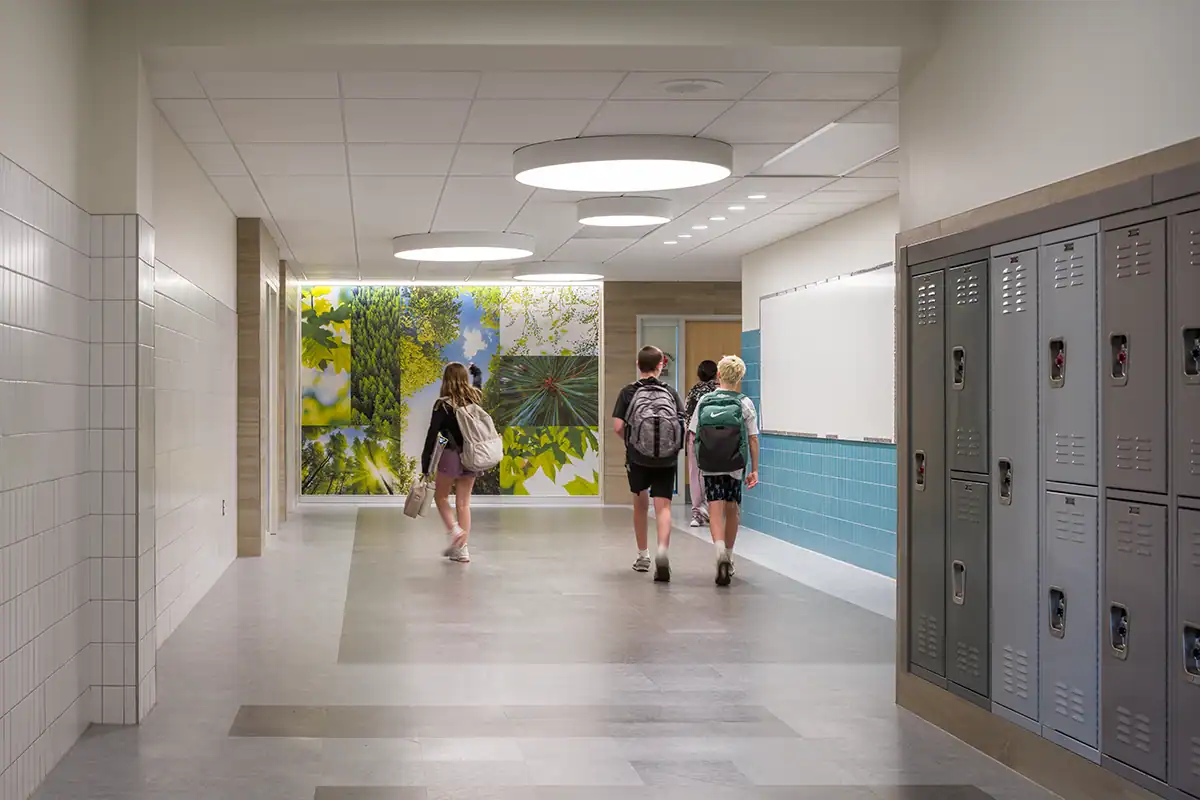
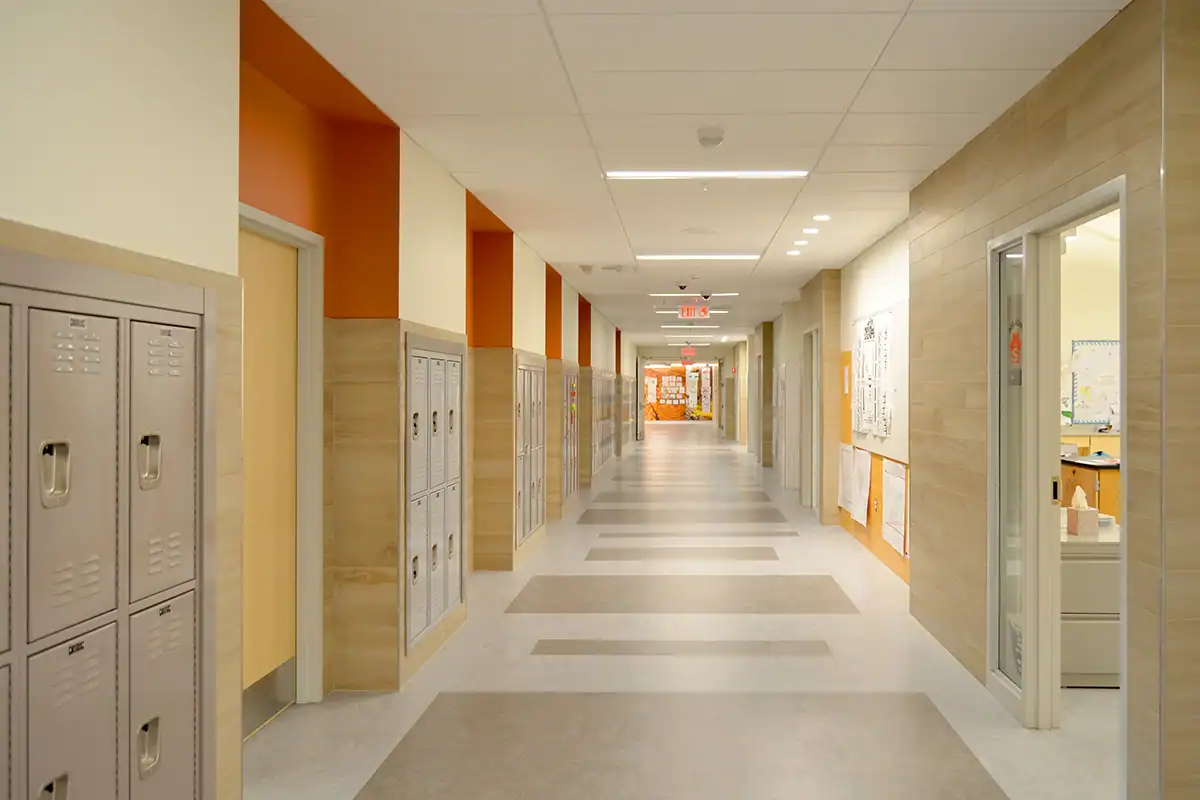
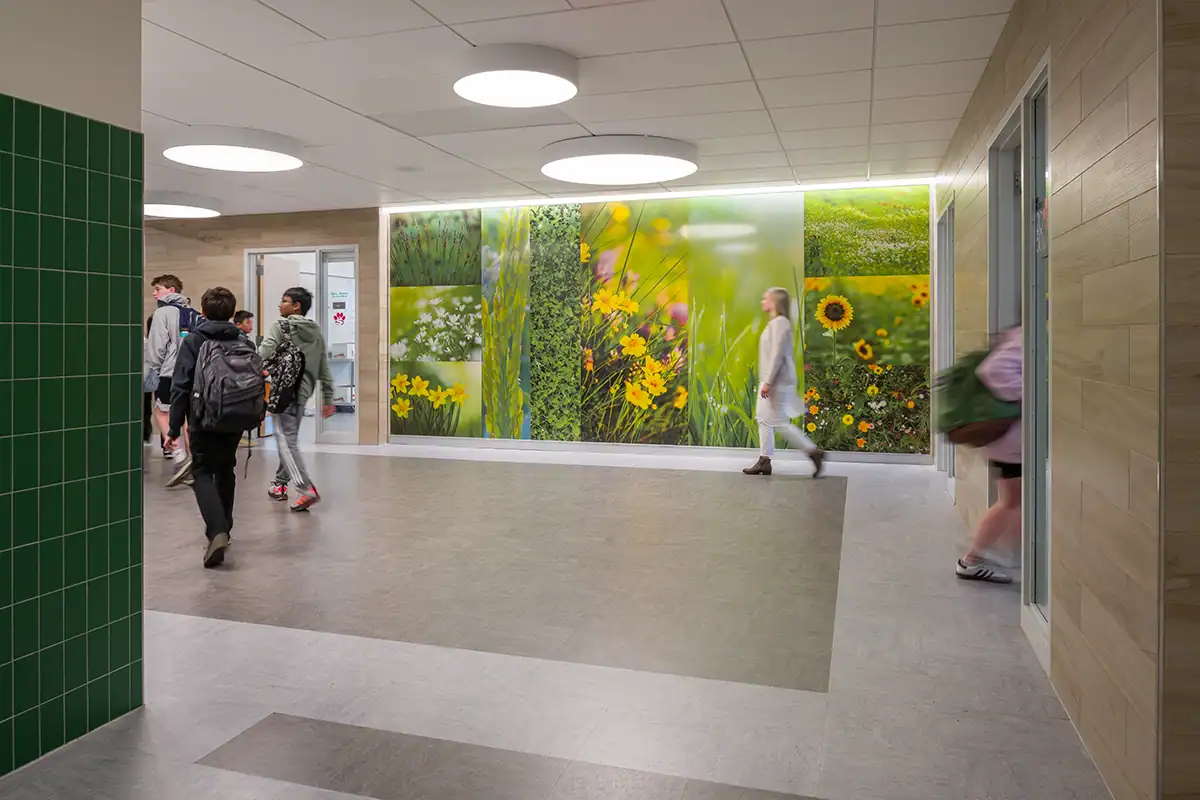
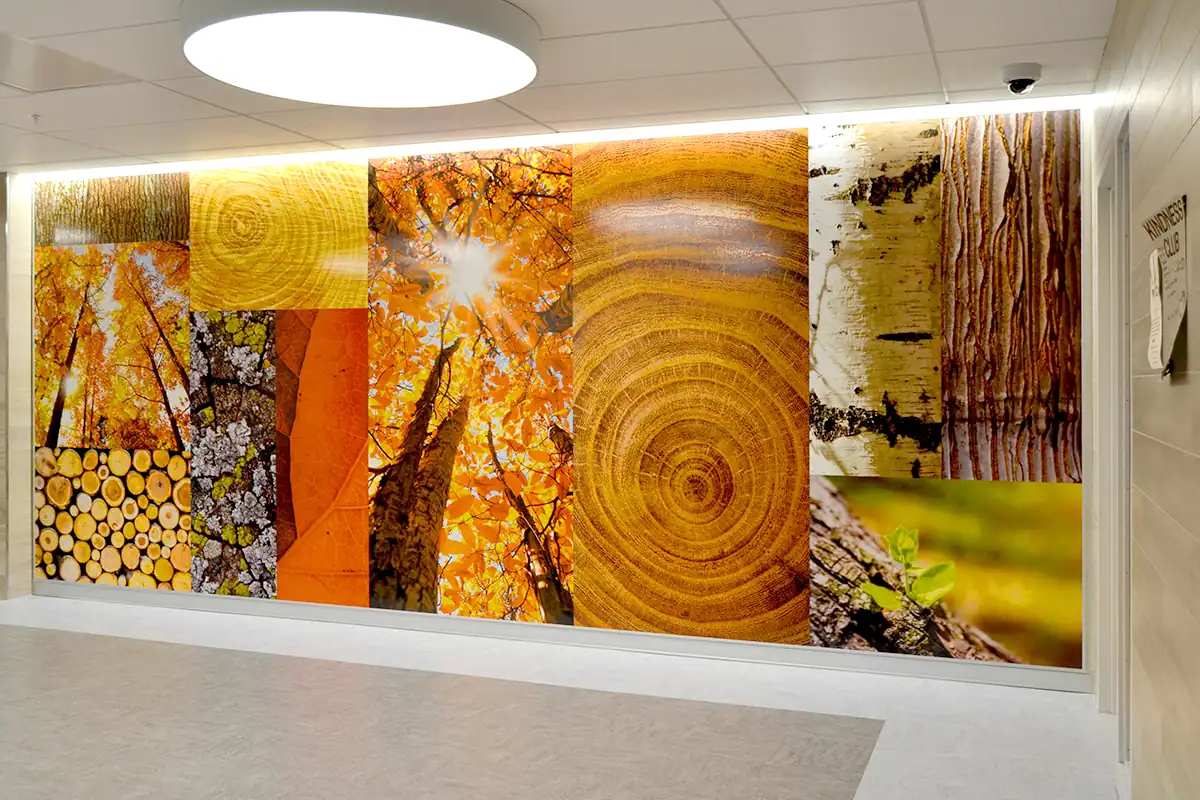
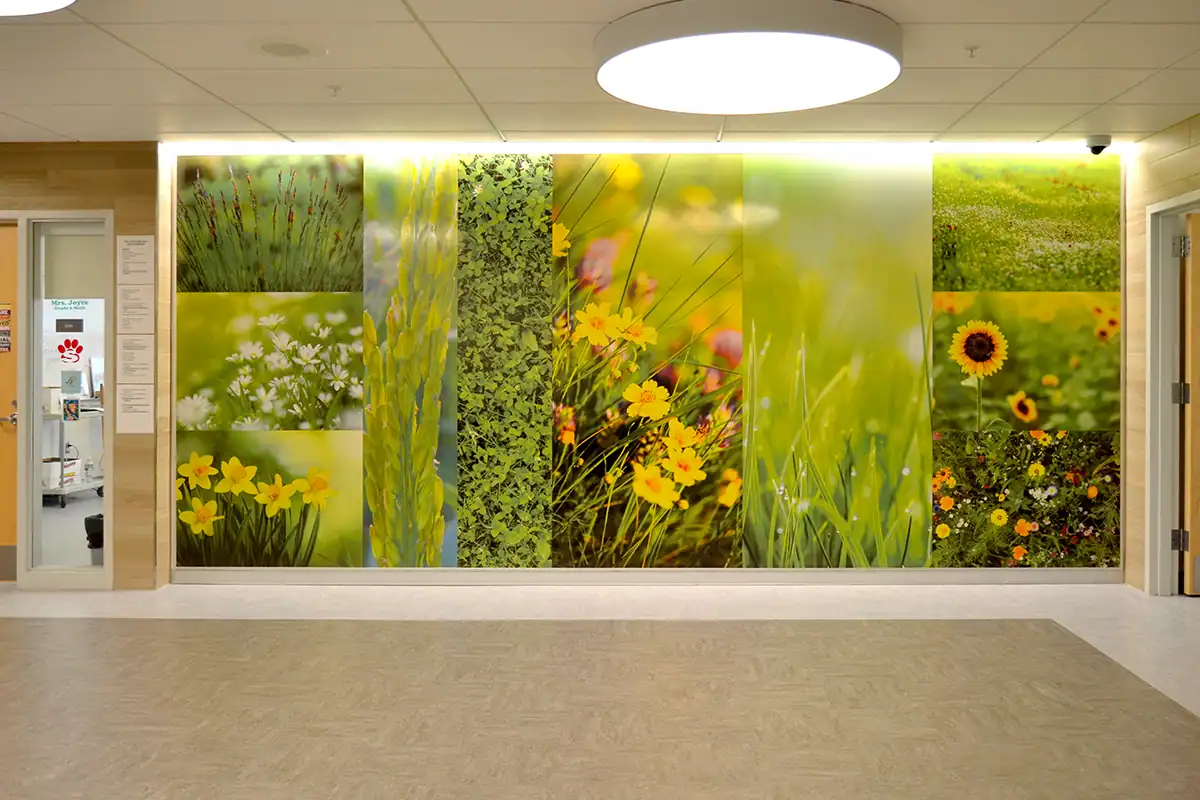
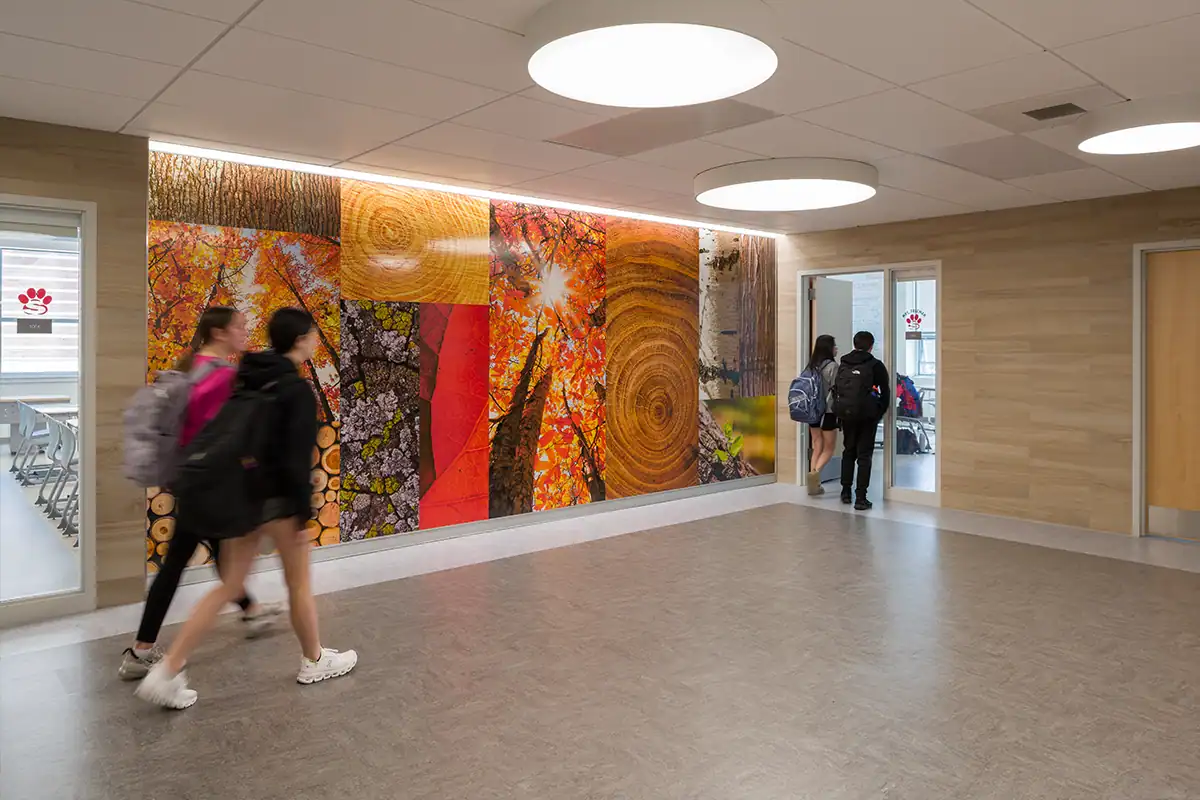
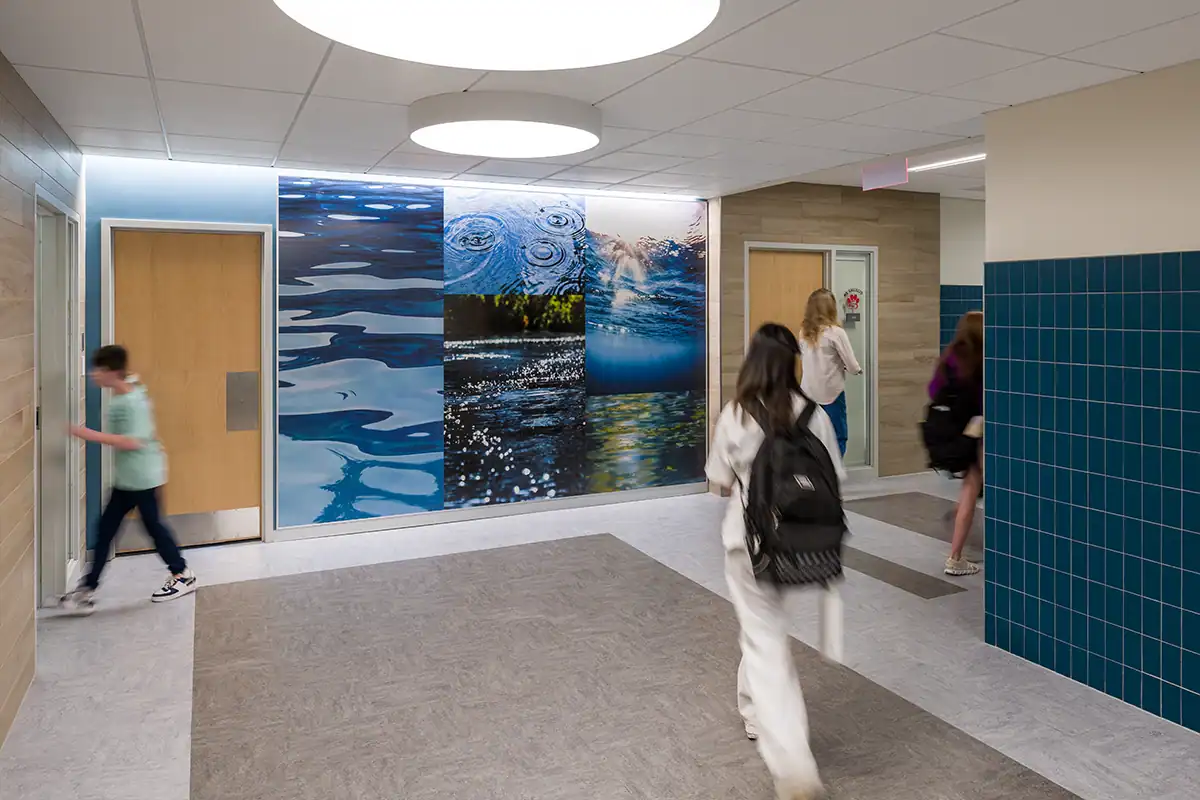
Bright, collaged images of nature from floor to ceiling grace the hallways at South Middle School.
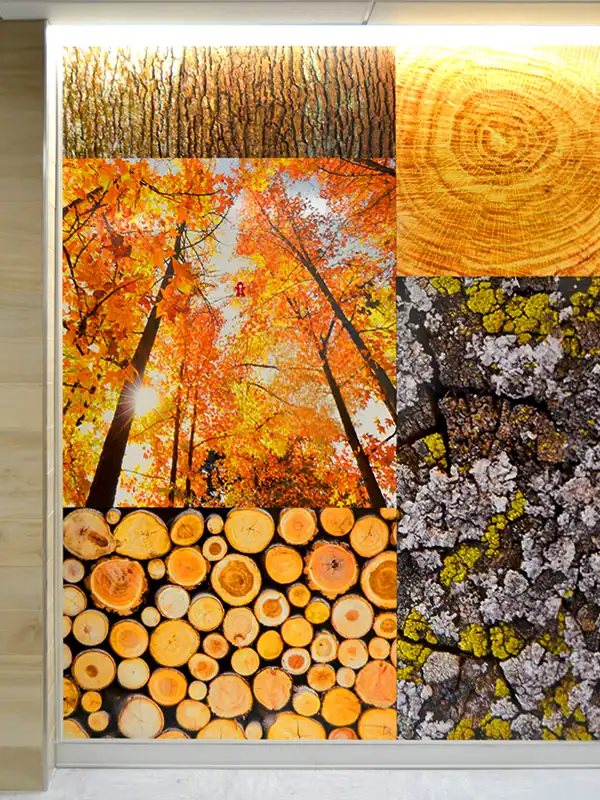
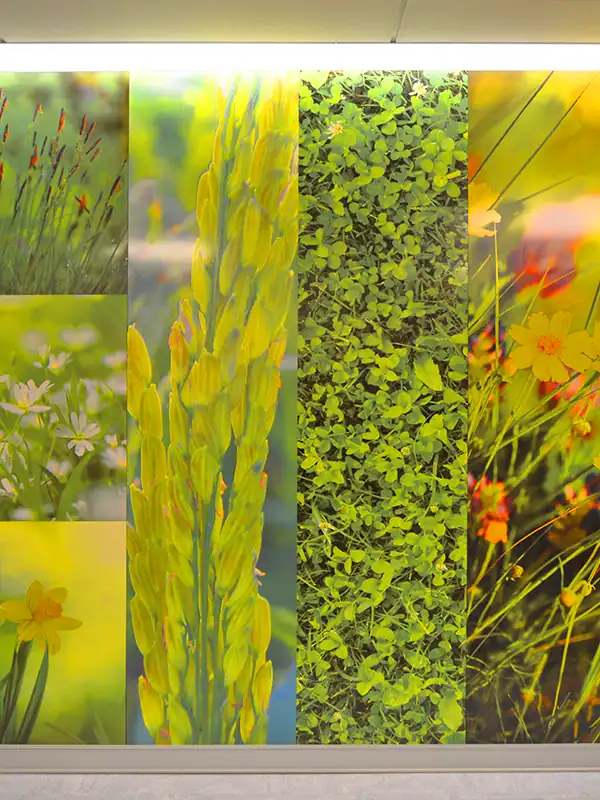
MDS Architects designed each of the four murals highlighting a prominent feature in the natural world: Water, Woods, Trees and Grass. Polyvision Surface Imaged CeramicSteel fits in perfectly with the environmental theme: certified Air Advantage Gold and Cradle-to-Cradle Bronze, healthy indoor air is maintained with zero VOC emissions and ecologically sustainable with a product lifecycle that exceeds most other interior decorative and functional wall cladding materials, keeping material out of landfills.
Along with Polyvision’s “Lifetime Warranty” that guarantees the surface gloss level and fadeproof color for the life of the building or as long as the product is in use, these features are ideal for schools, where conservative budgets appreciate quality and performance.
Photography by Gordon Grisinger
Another key feature of CeramicSteel is its durable surface, which is impact- and graffiti-resistant, important in schools where class changes can be hectic and sports equipment or other objects may accidentally contact corridor walls. Sanitation, as critical as ever to maintain, is easy with Polyvision’s non-porous surface, which is inherently resistant to bacteria growth. School staff can use the most potent cleaning agents repeatedly knowing that the surface was built to withstand chemicals and resist staining.
The collaged images are striking, with various hues of red, orange, green, brown, blue and even a few pink flowers creating a colorful reminder of the abundance of nature, a sense of wellbeing for students, faculty and staff as they move through their day at the school.
Partner Designtex
Completion Date 2023
ClientBraintree Public Schools, South Middle School
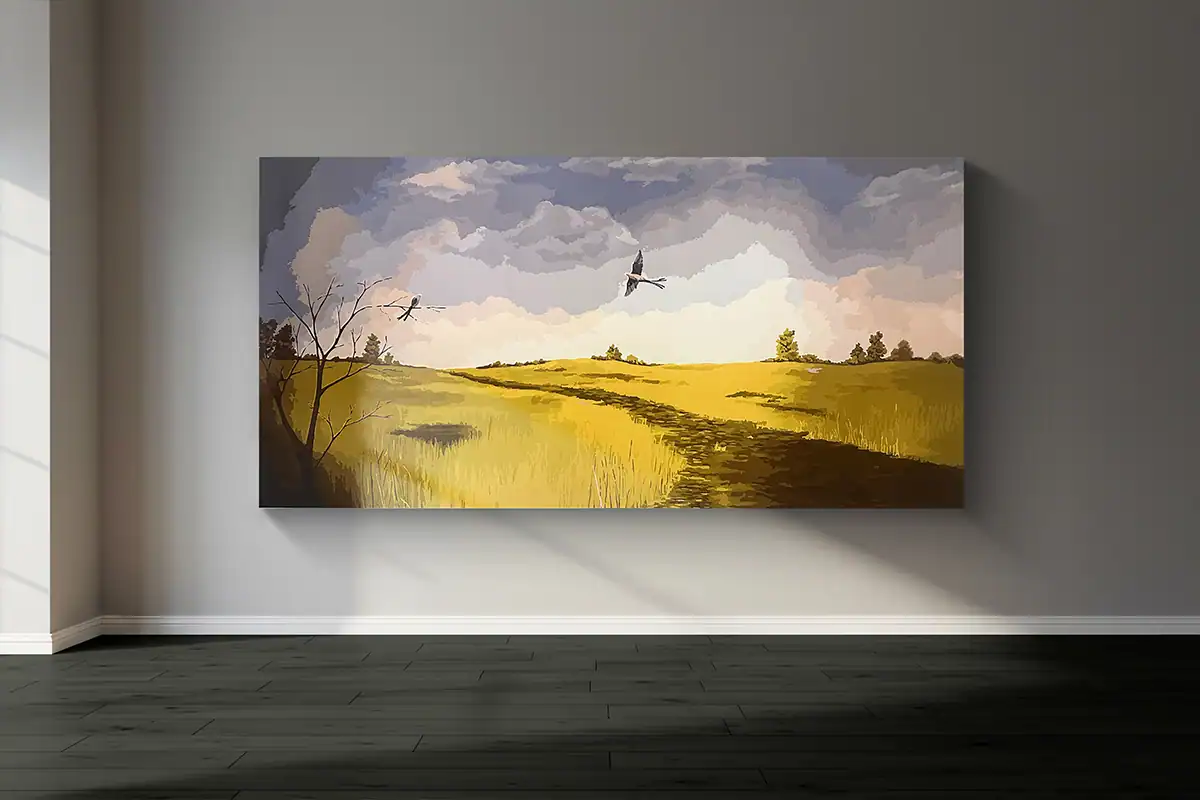
A local cultural center in Oklahoma reached out to Steelcase to replicate a painted wall mural that is a focal point in their facility.
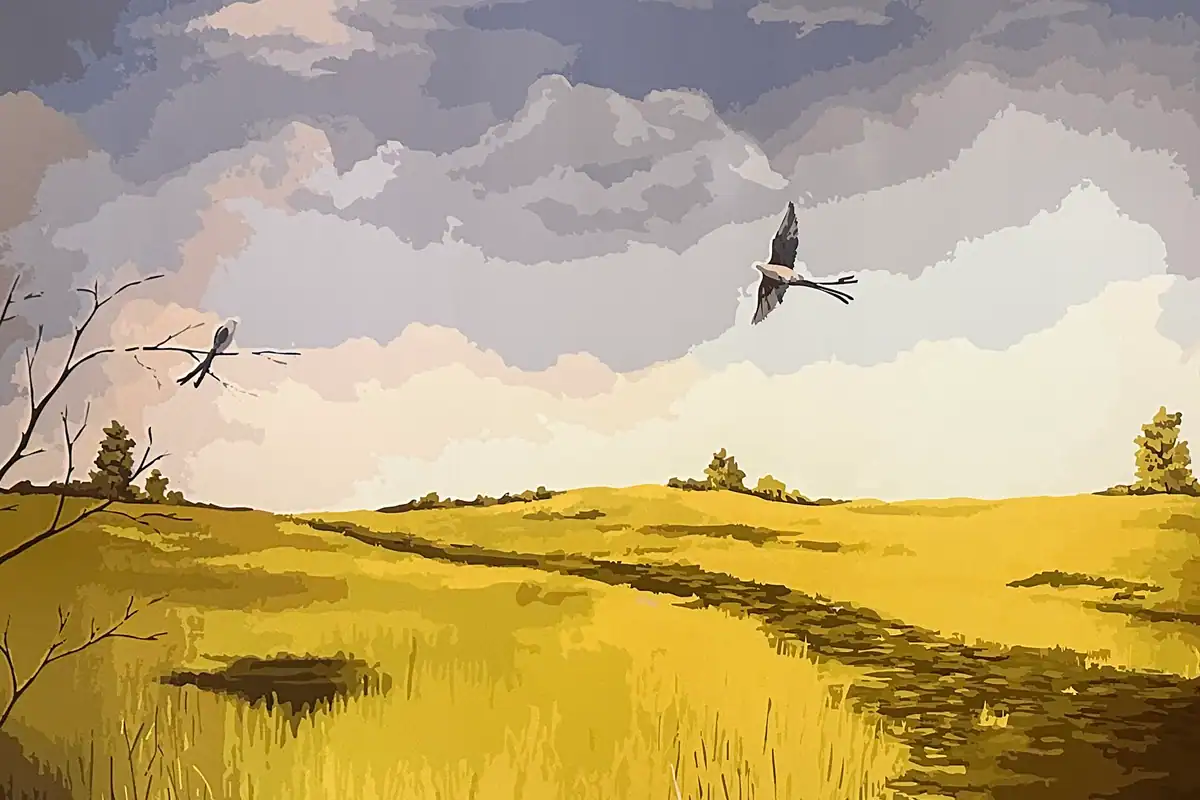
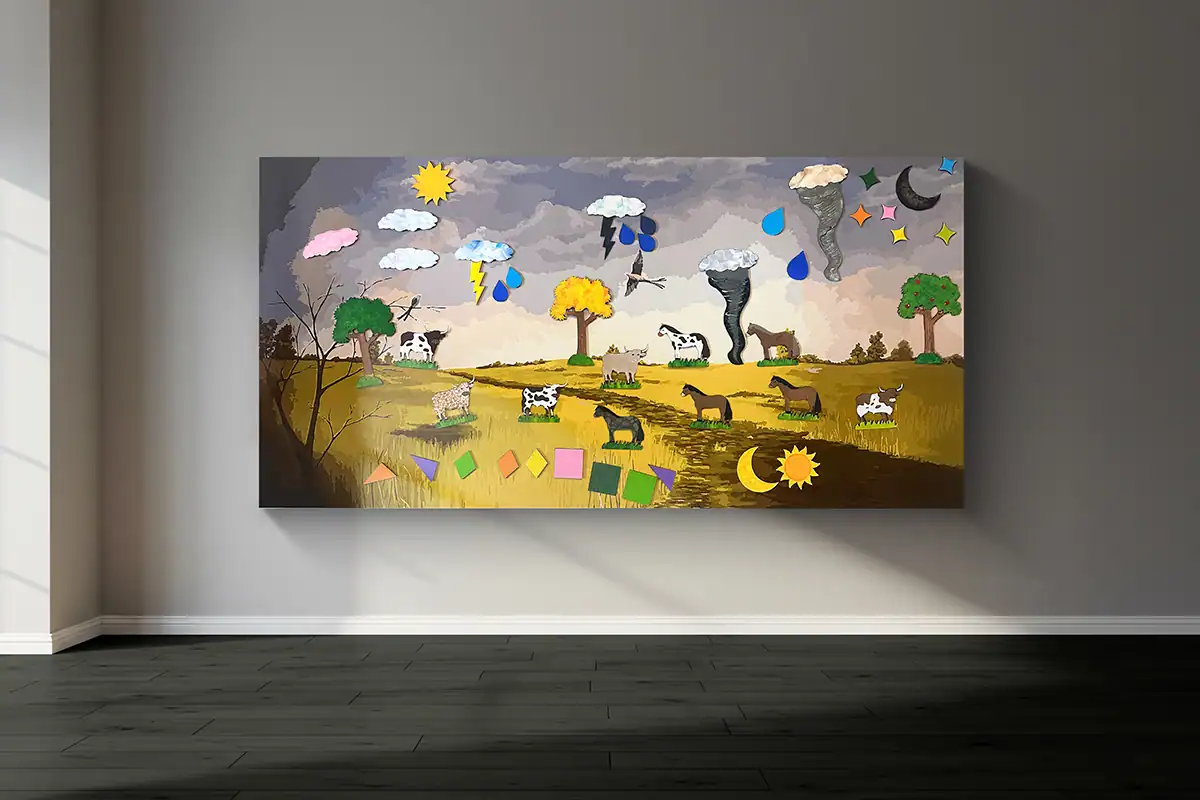
Their goal was to make a version of the mural accessible and with interactive features for the Center’s younger crowd, and Polyvision Surface Imaging on CeramicSteel was the perfect solution. The original artwork is a dramatic view of a grassy field and sky with a bird in flight in soothing earth-tone colors.
The smooth surface is inherently magnetic, so children can play directly with the colorful surface, adding shape magnets and moving them around infinitely without any risk of surface damage. The 8-foot-wide panel is large enough for several children to play at the same time, and witnessing their enjoyment makes the mural artwork even more special for the Center’s staff. In addition to beautifully rendered color, CeramicSteel is ideal for settings that cater to children as the product is Indoor Advantage Gold certified, emitting no harmful VOCs into the air.
with magnets
without magnets
↔
The durable, non-porous surface is also a big plus in public spaces that see high visitor traffic. CeramicSteel surfaces can be cleaned with simple water or medical-grade disinfectants as often as desired. This quality makes CeramicSteel a sustainable and eco-conscious choice. The porcelain enamel surface is fadeproof and outlasts all other typical interior decorative materials, accompanied by Polyvision’s “Forever Warranty”. Little visitors will delight in this beloved artwork for decades to come, joyfully playing and letting their imaginations run free.
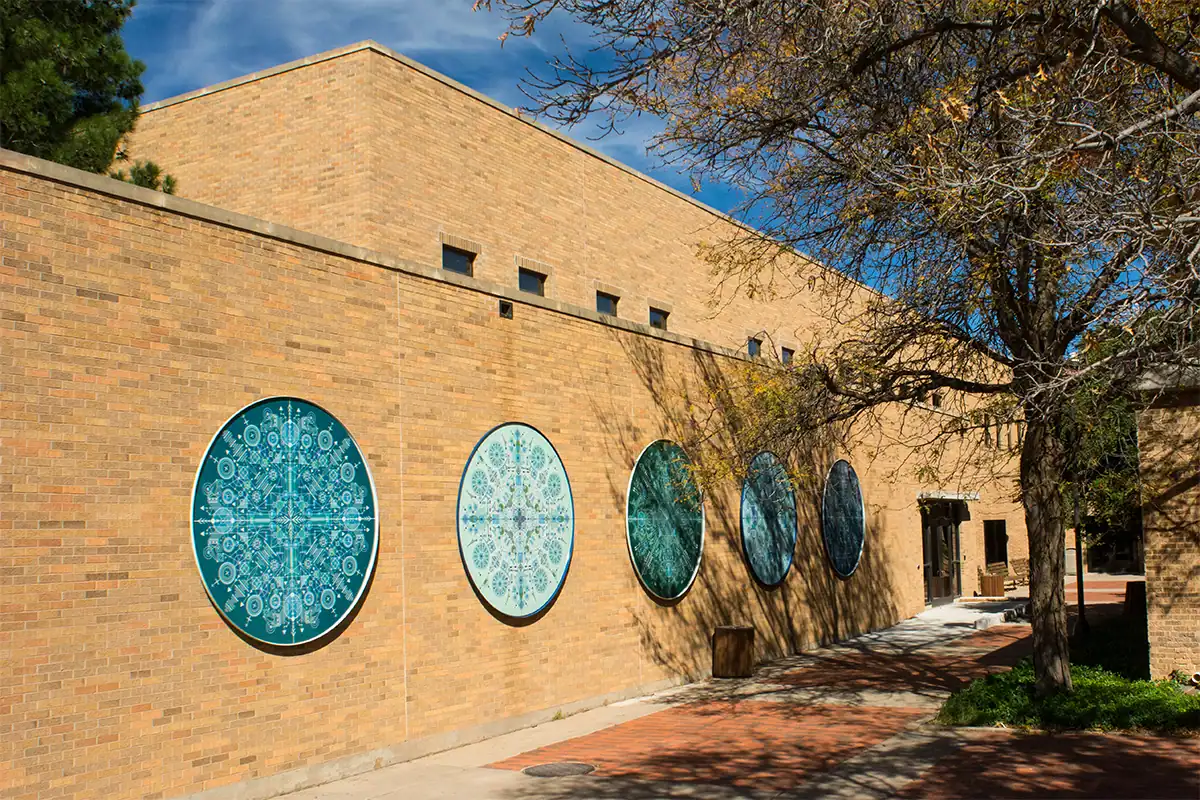
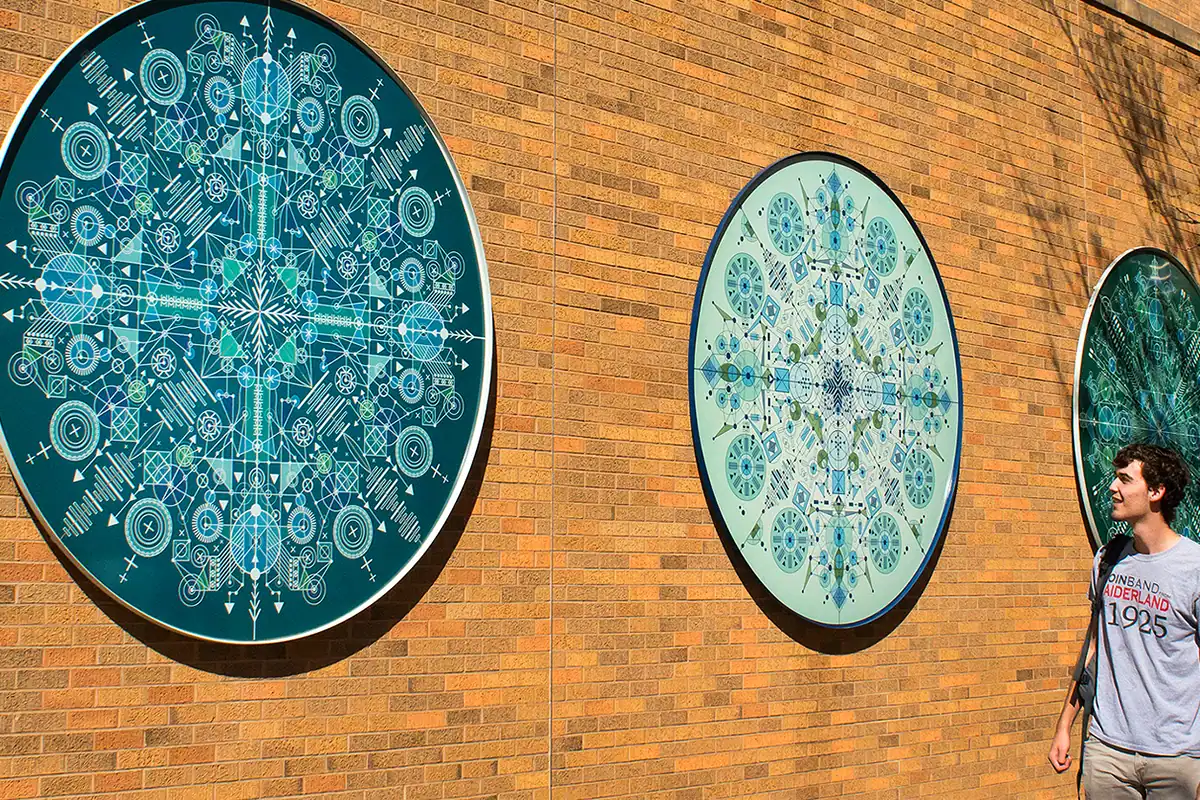
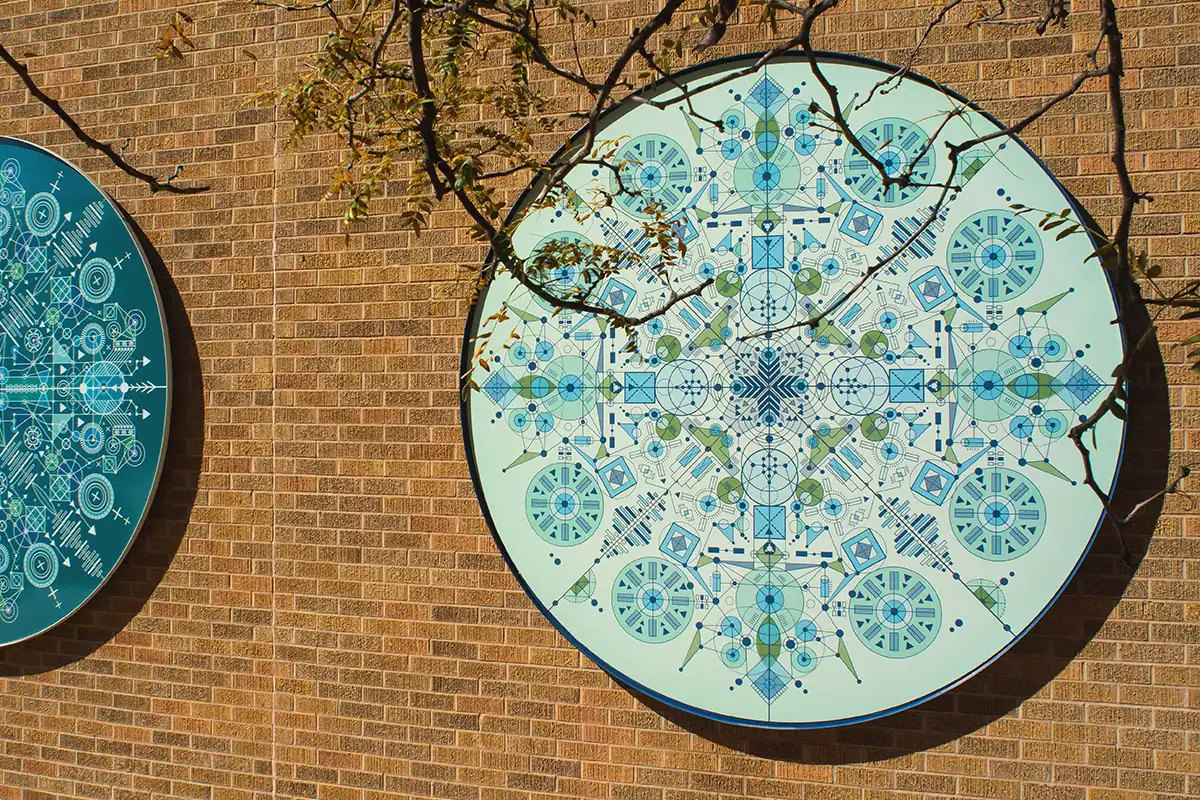
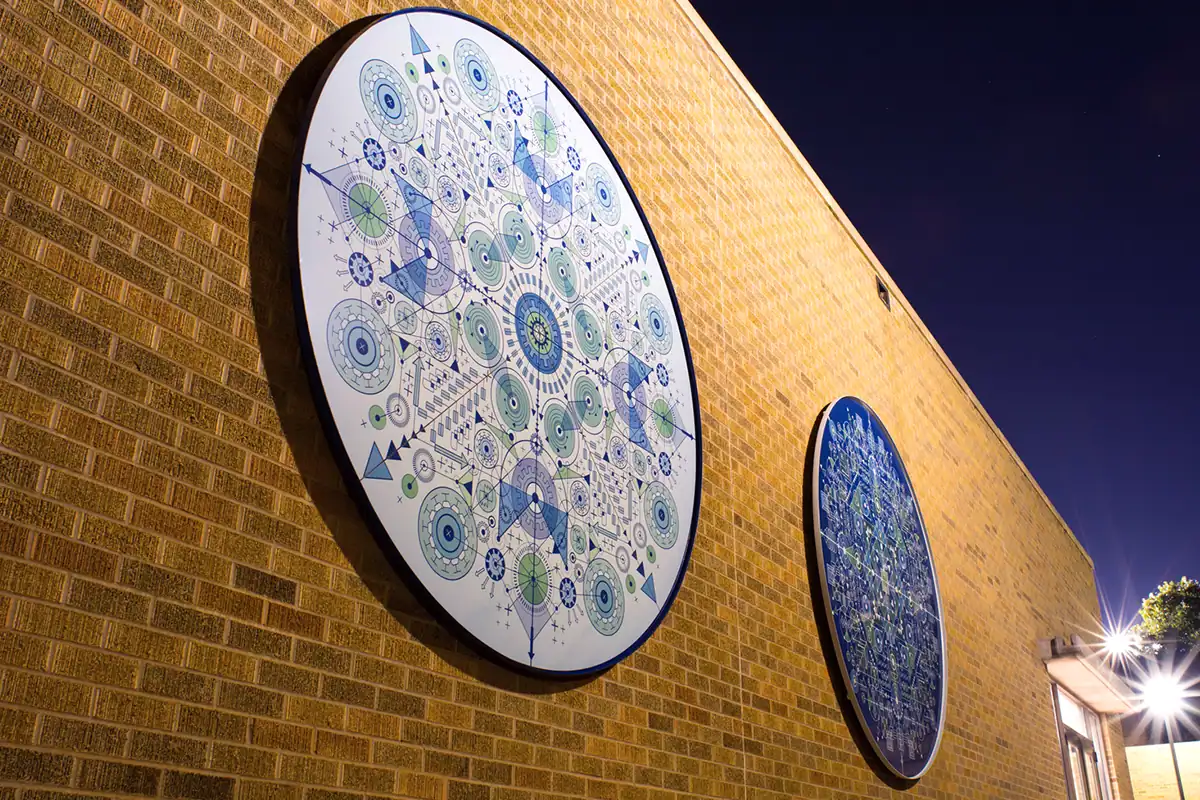
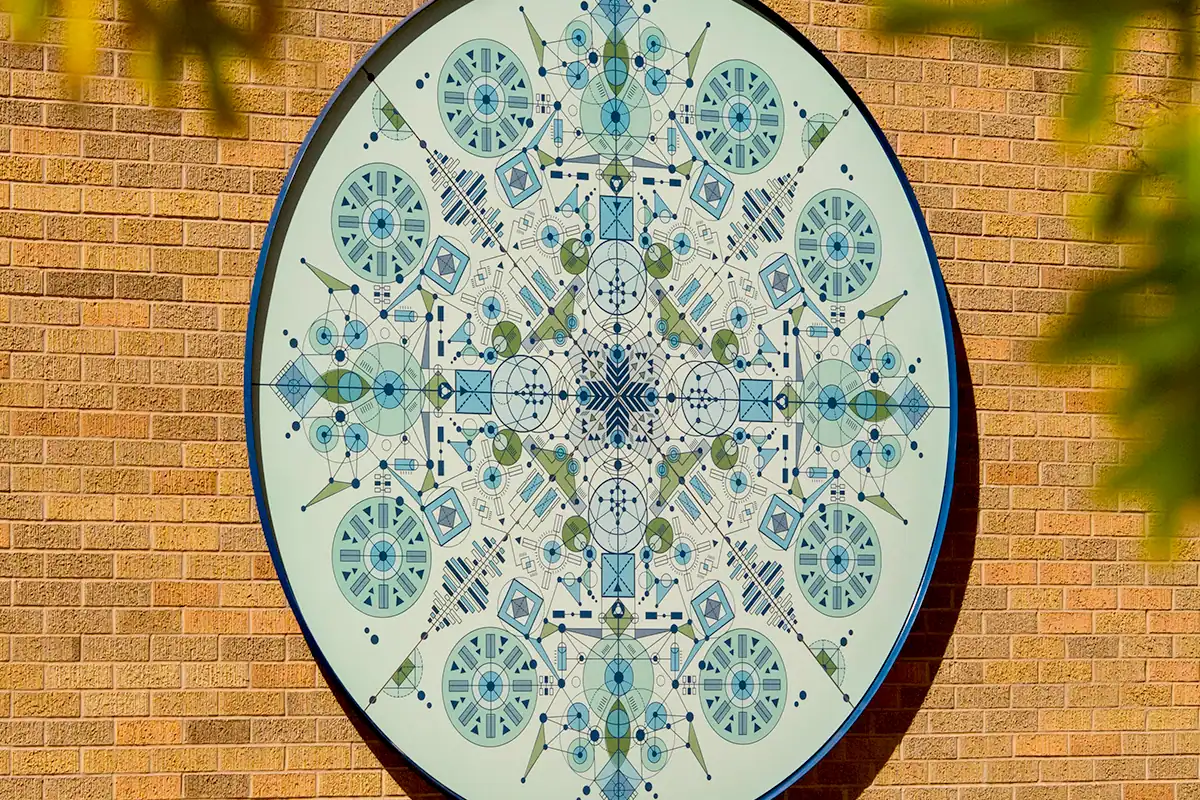
A series of five mandala-inspired panels in eye-catching blue and green hues grace an exterior wall of the Industrial Engineering building at Texas Tech University.
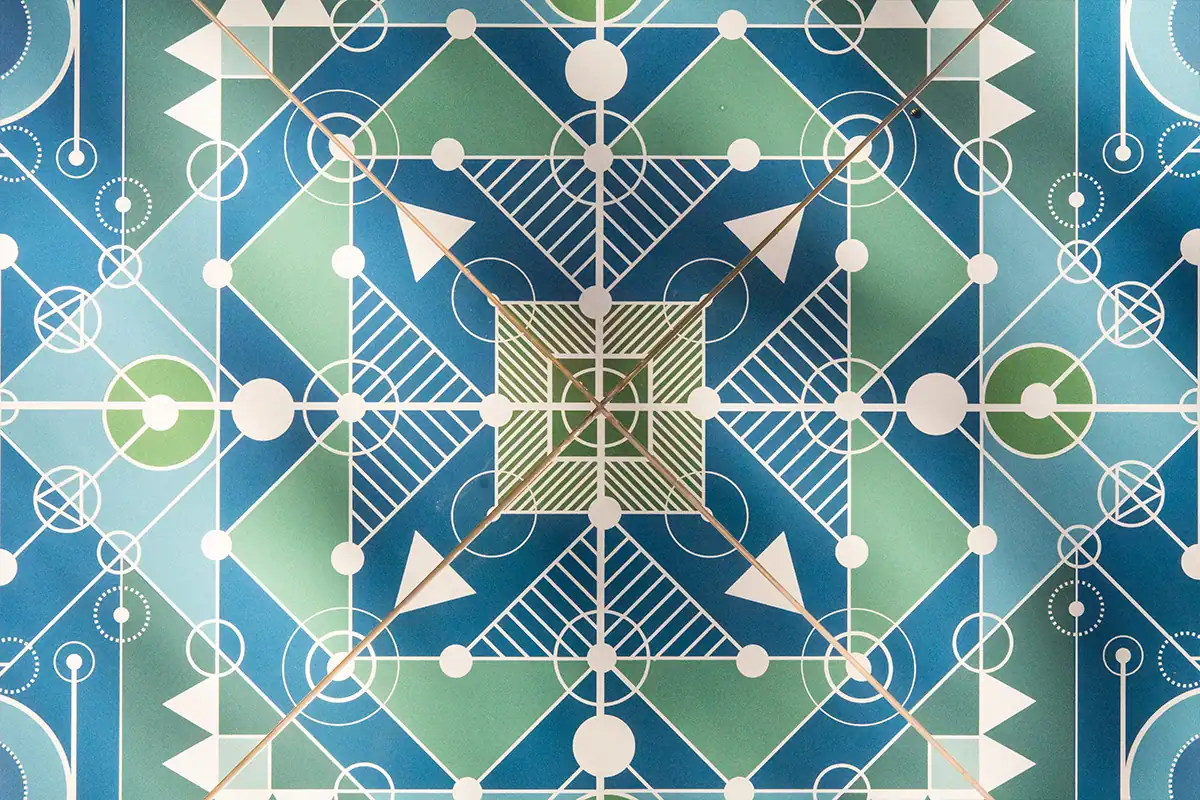
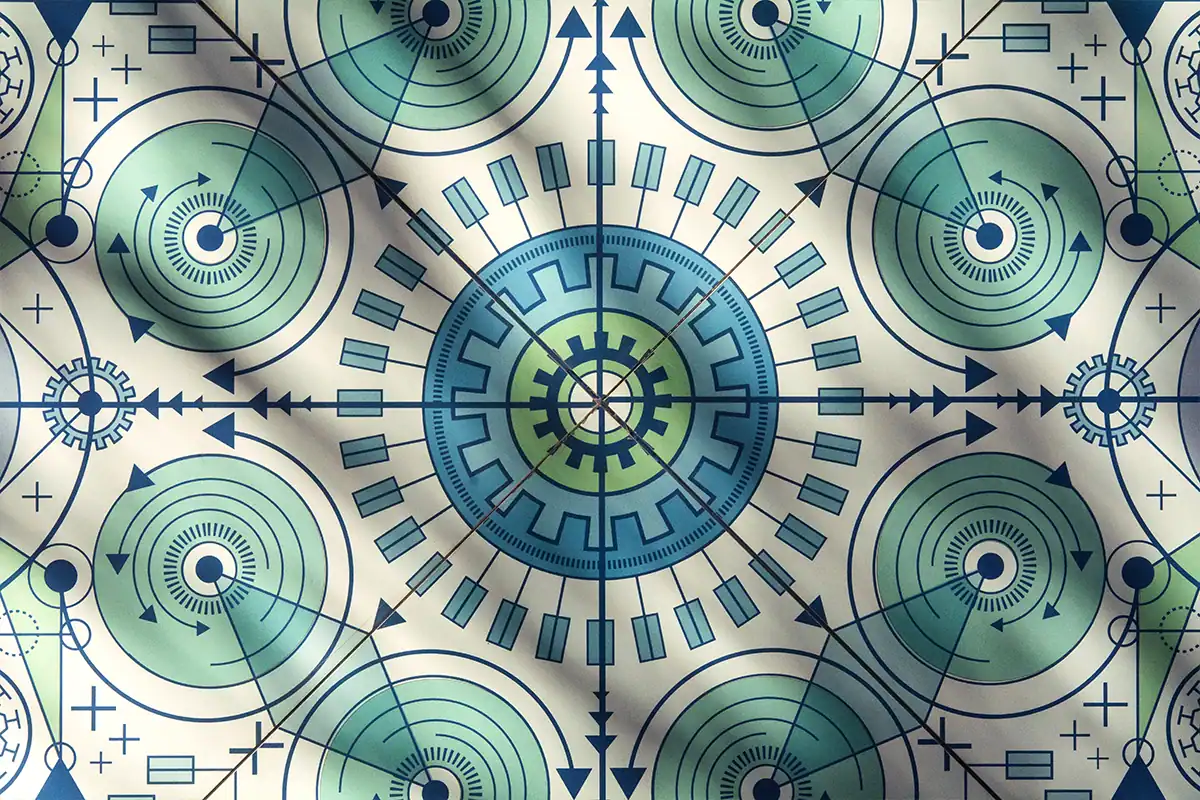
Paying homage to the building’s purpose, various symbols and elements found in formulas, diagrams, calculations, blueprints, and the science of physics, are combined in unique ways to create interesting and complex graphic patterns that invite contemplation.
Polyvision’s digitally printed CeramicSteel was an ideal product for the artist to effectively convey the design intent and provide superior performance over the long term. The specialized technology delivers fadeproof, rich color and visual texture on a durable, weather resistant surface, ensuring years of enjoyment by the university community. Having used printed CeramicSteel on other public art projects, RE:site artist-founder Shane Allbritton “loved the results in terms of color, clarity, and especially durability” and it was these qualities that helped her win the project.
One of the most appealing advantages of printed CeramicSteel is its sustainable and eco-conscious profile. The durable porcelain enamel surface far outlasts many other typical decorative exterior materials and is designed to retain its gloss level and color consistency for decades without fading, cracking or flaking. The long product lifecycle means a relatively low cost of ownership – an important consideration for educational facilities.
At over 7 feet in diameter, the panels are awe-inspiring and a beautifully striking tribute to the close relationship between art and science.
Working visit by Education Minister
Zuhal Demir to Polyvision
A vision for the future of the classroom
Education Minister Zuhal Demir’s visit to Polyvision’s production site began with a warm, informal welcome. While the conversation touched on the international successes of Belgian companies and the influence of Bart De Wever on the political landscape, it quickly connected to the central theme of the day: the quality of our education.
At a time when performance is under pressure, and AI is reshaping the world, the minister was clear about her mission: order must be restored by returning to the essentials, knowledge and discipline.
That idea of discipline immediately came to life through a comparison with the education system in Hong Kong. Silvie Vermoote, Director of Sales EMEA/APAC, described how focus and structure are the norm there, an approach that closely resembles how education in Belgium used to function. The minister acknowledged its potential and shared that a proposal is on the table to once again anchor these values in our schools.
During the presentation and the factory tour that followed, it became clear how Polyvision and Vanerum respond to this vision. We showed that a modern classroom does not have to be a digital copy of the outside world. The minister strongly agreed with the statement that students should not stare at a screen for 8 hours a day.
Under her motto, “those who write, endure,” she argued for a return to the board. She expressed concern about the decline in children’s motor skills as fewer and fewer learn to write properly, and emphasized that, especially in primary education, an iPad must not become a necessity.
The tour gave the minister an in-depth look at the craftsmanship behind the enameled surfaces. From the mill room and the coils to the heat of the furnaces and the final inspection, the technical precision and the durability guarantee of the surface made a strong impression. This led to an engaging dialogue about competition from other products and the significant export value of our solutions, which reach metro stations and classrooms from Brussels to Singapore. The minister showed particular interest in the products’ sustainability, noting that many of these boards remain in excellent condition in classrooms after more than 50 years.
The design of school buildings was also discussed. The minister shared her observation that the trend of large, open learning spaces is fading. Studies are clear: such spaces create too much noise and too little focus. She is therefore working toward a return to more traditional, well-structured classrooms. Vanerum demonstrated how their sliding systems and acoustic solutions create the calm environment necessary for meaningful interaction between teacher and student.
The visit concluded with a broader reflection on the younger generation. The minister drew parallels with Sweden’s mobile phone ban and Australia’s strict approach to harmful copycat behavior on social media. Her view is that we must offer young people structure again and protect them from social barriers and a decline in motor skills.
For Minister Demir, the visit to Polyvision reinforced a clear conviction: that high-quality education begins with a well-designed physical learning environment. In a world increasingly dominated by screens and distraction, the board remains what it has always been, a central point of calm, focus, and human connection.
It is here, in the structured classroom, that knowledge is transferred, discipline is learned, and the foundation for the future is laid. And it is companies like Polyvision and Vanerum that continue to make that possible through craftsmanship that lasts for generations.
When people think back to their school days, they often picture one thing first: the board. Chalkboard, whiteboard, sliding board. It was the place where the teacher began and ended, where difficult topics unfolded step by step, and where mistakes could be erased and tried again.
Today, classrooms are more modern than ever. There are laptops, tablets, digital platforms, and online exercises. But one thing is striking: in almost every classroom, the board remains the anchor point. What matters ends up there. Not on a separate screen, not behind a login, but visible to everyone.
Everywhere, the board plays the same central role: it is the classroom’s visual memory.
Key terms are written there.
Step-by-step plans are drawn there.
Ideas come together there in a diagram or mind map.
The lesson summary stays there a little longer, so it can sink in.
The board makes learning collective. In a classroom where some students are strong with digital tools and others have less access or experience, the board creates equality. Everyone looks at the same thing; everyone can follow, ask questions, and add to it. No password, no account, no device, just a marker and a surface that invites writing.
The boards Polyvision develops are rooted in that reality. Our CeramicSteel surfaces combine the power of classic writing with today’s flexibility:
They can be used as a writing surface with a marker or chalkstick.
They are magnetic, so teachers can easily work with cards, pictures, or planning tables.
They are suitable as projection surfaces, so the board also works with digital learning tools.
The technology around the board may change, but the essence remains: it is the place where thinking becomes visible.
When writing on the board, a teacher thinks out loud. Students see not only the end result, but also the process: erasing, rephrasing, and simplifying. That transparency is hard to capture on individual screens, but it happens naturally when everyone looks at the same board.
In 2024, Polyvision collaborated with RE:site, an art studio known for commemorative public art, to create a powerful mural series in Tulsa. These murals, installed on the Detroit Avenue underpass, pay tribute to the resilient Greenwood community, forever impacted by the Tulsa Race Massacre of 1921.
The murals, titled Joining Hands, were designed to promote healing, unity, and racial equity. They feature vibrant images that symbolize the restorative justice journey of this historic Black neighborhood.
The Project
Joining Hands comprises four large-scale murals, each 30 feet wide, printed on Polyvision’s durable CeramicSteel. This medium, known for its resilience and long-lasting durability, was ideal for this outdoor project, ensuring the artwork would withstand the test of time and the elements.
Photo credit: Jerrico Winkleman/Polyvision
Historical and Contemporary Imagery
The murals combine past and present moments from the Greenwood District, sourced from local archives and photographers.
Kintsugi Technique
Inspired by the Japanese art of restoring broken pottery with gold, the murals feature hands joined together, symbolizing unity, resilience, and the healing of a fractured community.
Community Impact
The project is part of Tulsa’s larger public art initiative and serves as a reminder of the Greenwood neighborhood’s thriving past and hopeful future.