Vuelta al cole - Transformar los entornos de aprendizaje desde la guardería hasta la universidad
A medida que agosto se adentra en septiembre, comienza a crecer la emoción de un nuevo curso escolar. Es la estación de las nuevas noticias para los alumnos: nuevos cuadernos, nuevas aulas y un sinfín de posibilidades. For educators, it is time to strategize to create the most engaging and effective educación environments.
At Polyvision, we are by your side, devising ways to make those educación spaces not only functional but truly inspiring, from the vibrant kindergarten classrooms to the bustling university lecture halls.
Un nuevo comienzo
El comienzo de un nuevo curso escolar encierra una magia única. Tanto si se trata del primer día de guardería de un niño como de un estudiante universitario que se prepara para su último semestre, el comienzo de unas nuevas noticias académicas rebosa entusiasmo y potencial.
No olvidemos que un entorno de aprendizaje adecuado puede marcar la diferencia a la hora de configurar la experiencia de un estudiante.
Todo es cuestión de descubrimiento
Para los estudiantes más jóvenes, las aulas son como puertas a nuevos mundos, donde se despierta la curiosidad y se construyen las habilidades fundamentales. En esta etapa, todo es una gran aventura.
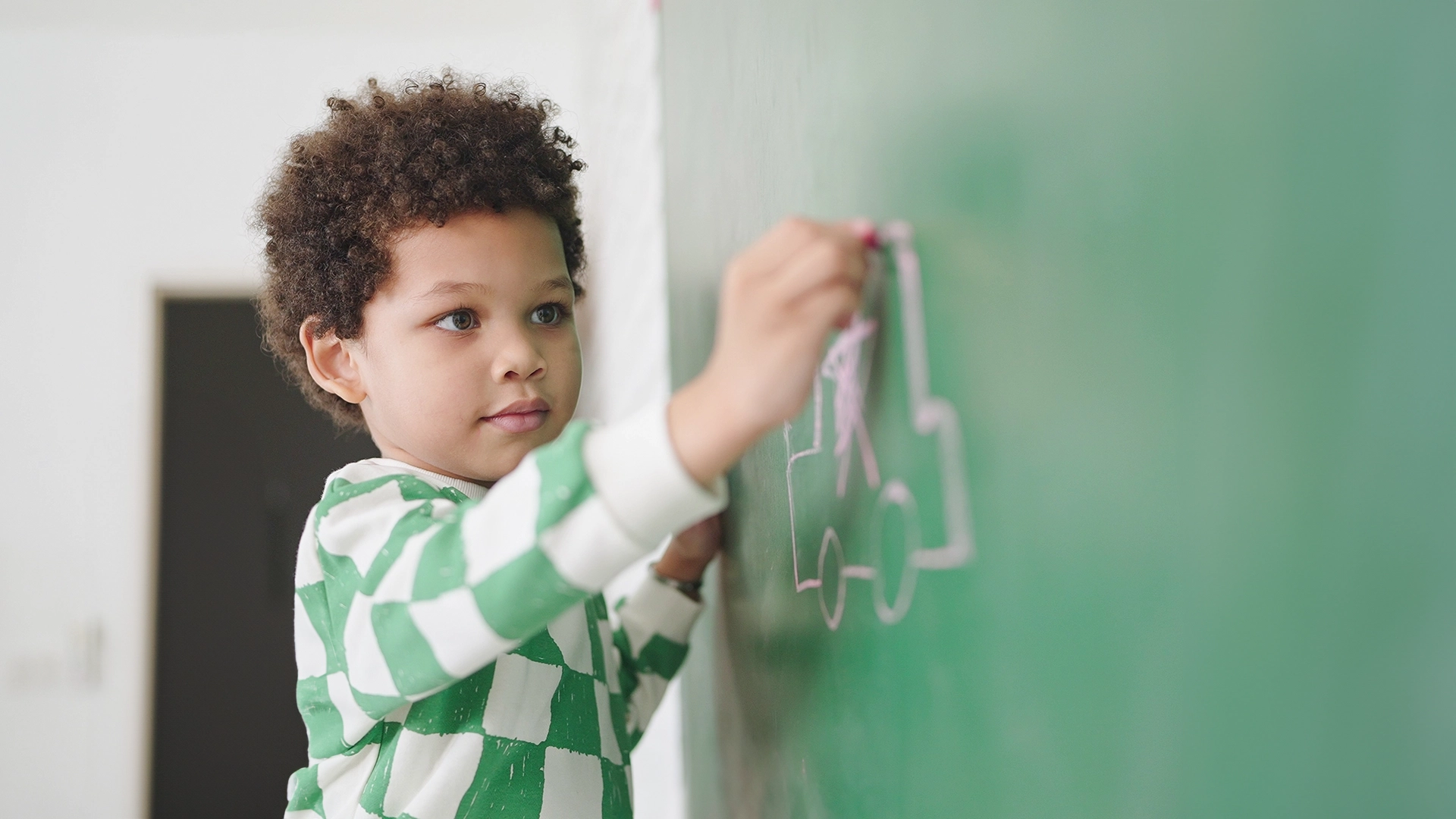
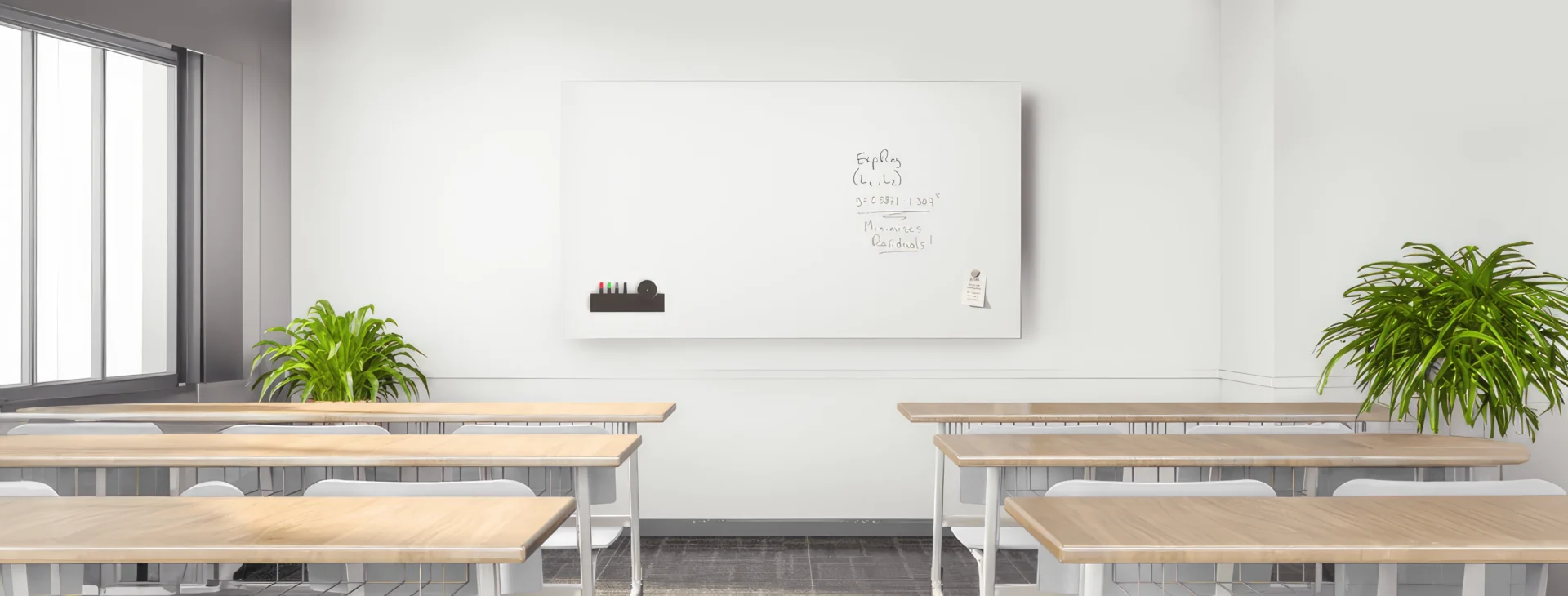
Las aulas deben ser adaptables, atractivas y estar preparadas para la exploración. Las superficies en las que se puede escribir y las herramientas interactivas pueden convertir una simple pared en un lienzo para la creatividad, donde las mentes jóvenes pueden practicar sus letras, esbozar sus sueños o trazar su próxima gran idea.
Construir y ampliar conocimientos
A medida que los alumnos crecen, también lo hacen sus entornos de aprendizaje. En las escuelas primarias y secundarias, las aulas se convierten en el epicentro del aprendizaje estructurado. La misión aquí es aprovechar la curiosidad de la primera infancia y profundizar en las materias que se imparten.
Las Superficies de escritura duraderas y fáciles de mantener brindan Asistencia a estas actividades, proporcionando un espacio en el que los alumnos pueden visualizar conceptos, resolver problemas y colaborar con sus compañeros. Estas herramientas ayudan a hacer tangibles las ideas abstractas, permitiendo a los alumnos unir los puntos (literal y figuradamente).
Prepararse para
el futuro
Cuando los estudiantes entran en el colegio o la universidad, el entorno de aprendizaje vuelve a evolucionar. El énfasis se desplaza ahora hacia el pensamiento crítico, la colaboración y la aplicación práctica.
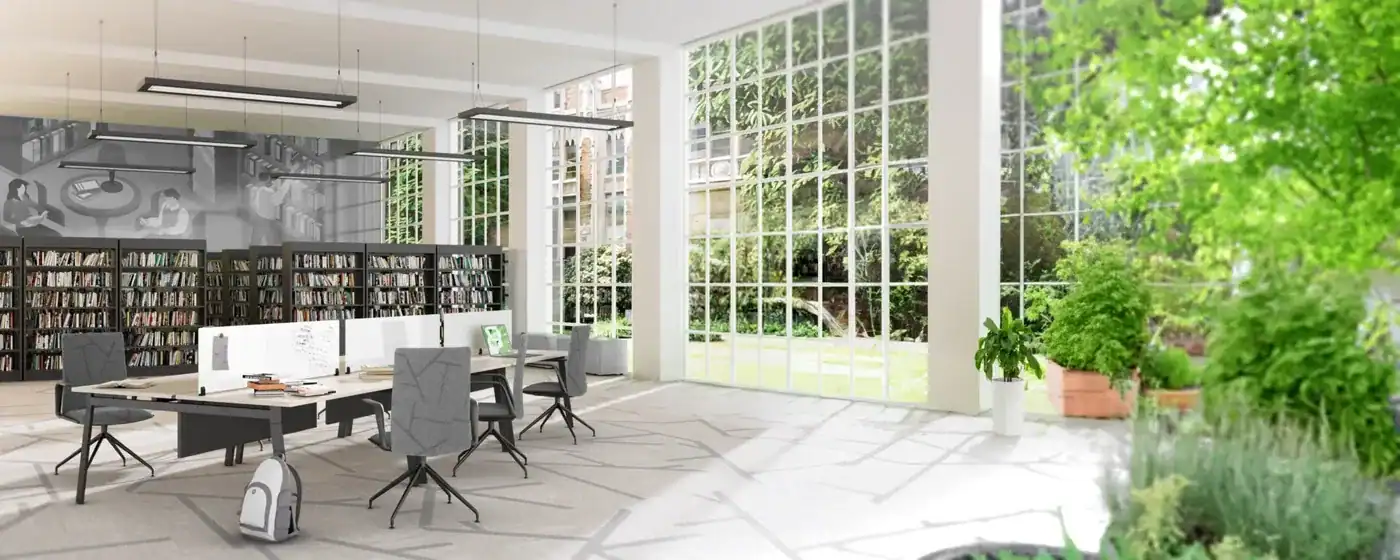
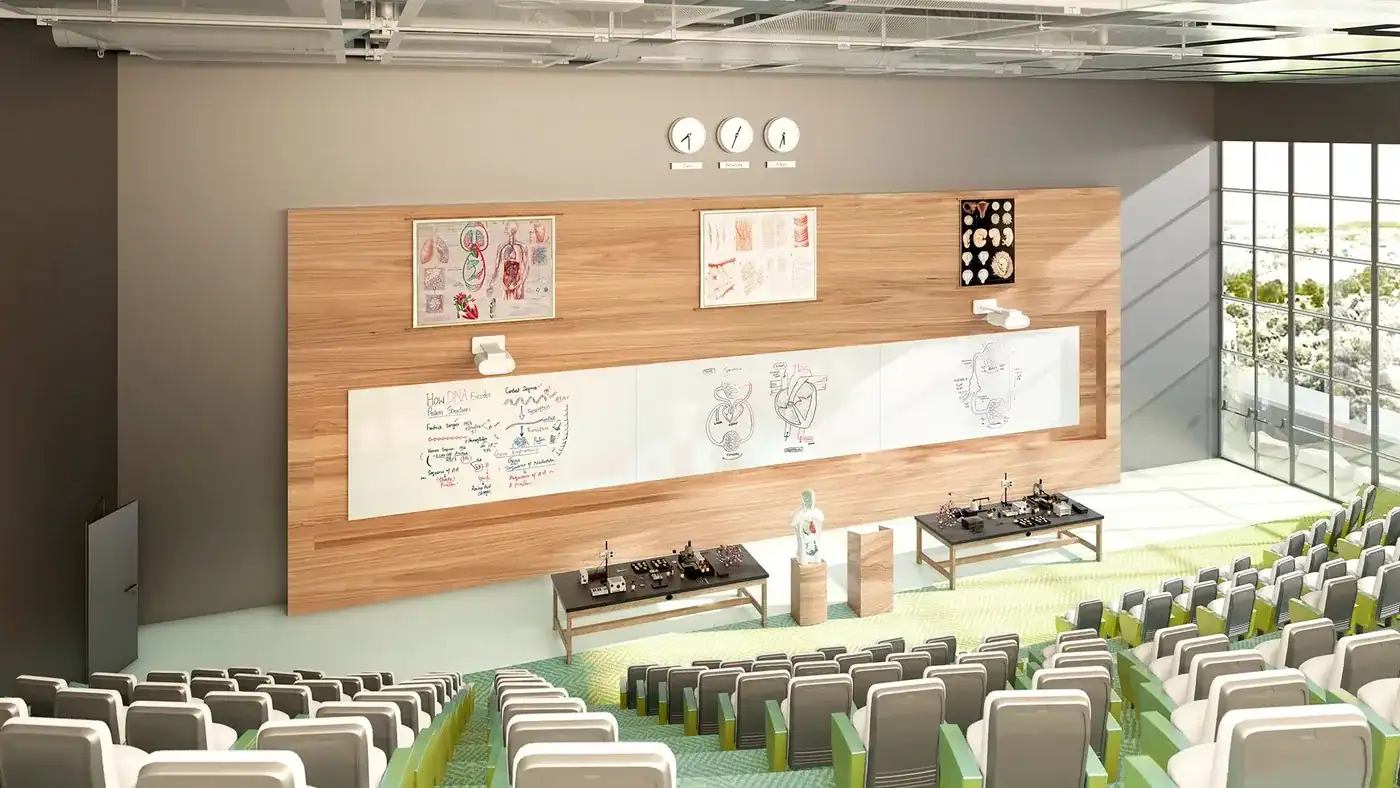
Las aulas, los laboratorios y las zonas de estudio deben despertar la interacción y la creatividad. Las superficies avanzadas y versátiles permiten enfoques didácticos dinámicos y animan a los estudiantes a profundizar realmente en la materia. Tanto si trabajan en un proyecto de grupo como si analizan datos complejos, en estos entornos se trata de tender puentes entre el aprendizaje y la práctica.
Con la vista puesta en el año escolar que se avecina
A medida que la temporada de vuelta al cole se pone en marcha, tanto si está preparando un aula de preescolar como montando un aula universitaria, estamos aquí para ayudarle a crear espacios que no sólo enseñen, sino que también inspiren.
Por un año lleno de descubrimientos, crecimiento y éxito.
Throughout history, art has been a powerful vehicle for expressing human beliefs, values, and aspirations.
From religion and ritual to history, symbolism, fashion, communication, and design, artists communicate ideas through form, composition, color, and line. The ways these elements come together are limitless, driven by imagination, skill, and dedication. Rather than imitation, artists pursue innovation, using their work to establish a distinctive voice. The evolution of art across cultures, movements, and eras reflects the enduring breadth and impact of human creativity.
One of the most influential expressions of this creativity is public art created for shared spaces and experienced as part of everyday life. Visible in all conditions, public art reflects both artistic vision and the values of the communities and organizations that commission it. A historic example can be found in the glass mosaics of Ravenna, Italy, where the ceilings of the Basilica of Sant ’Apollinare use richly colored glass to convey Biblical narratives. Designed as visual teaching tools for largely illiterate audiences, these mosaics combined beauty with purpose, serving as bold public statements in their time.
In the modern era, public art continues to shape cultural dialogue. Andy Warhol, one of the 20th century’s most influential artists, drew on his background in advertising to create bold, high-contrast imagery that became synonymous with Pop Art and mass culture. His mural Thirteen Most Wanted Men, commissioned for the 1964 New York World’s Fair and censored before opening, illustrates the lasting ability of public art to challenge conventions and influence public perception.
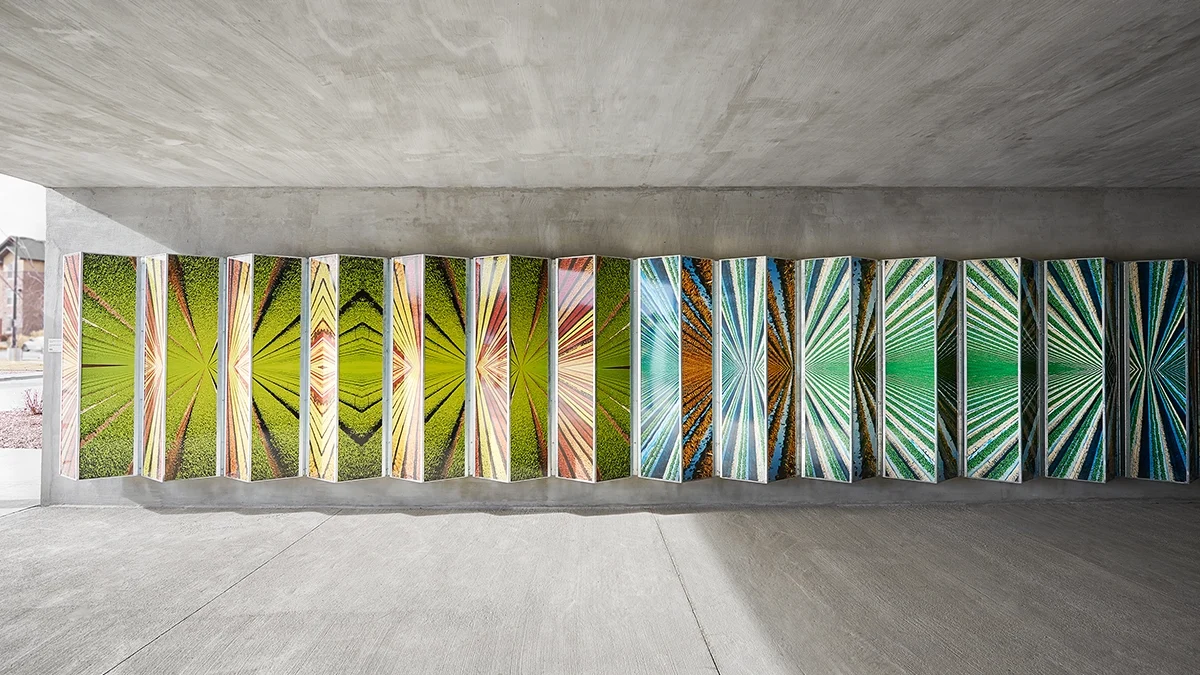
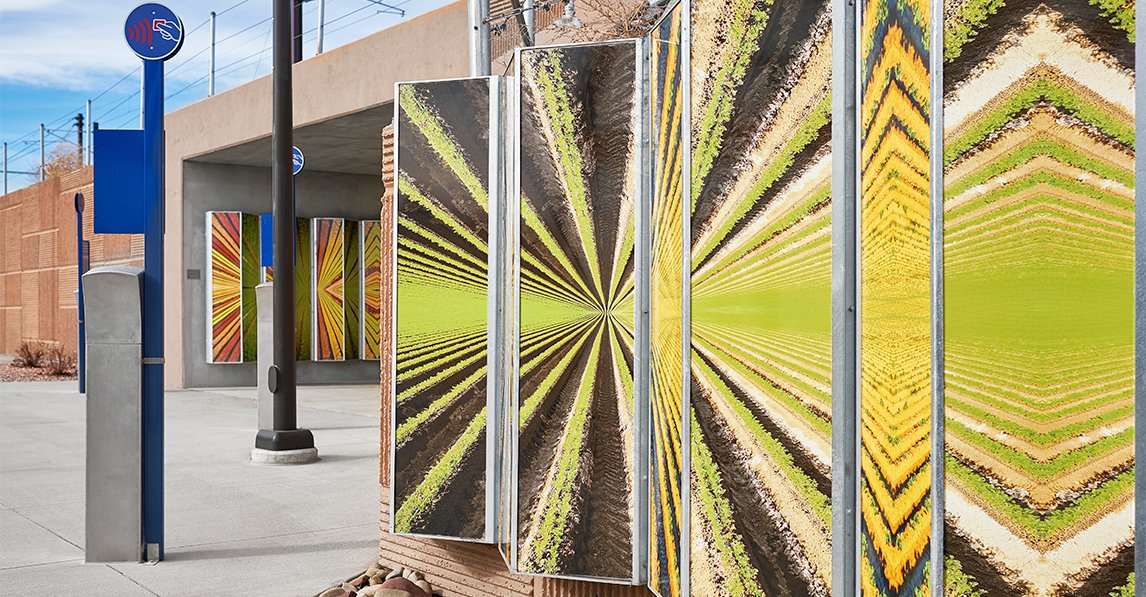
As a materials manufacturer, Polyvision plays an active role in public art by collaborating closely with artists, designers, and commissioning partners to transform creative vision into durable, large-scale surface design. Through projects such as the Joining Hands installation in Tulsa, Oklahoma, and the lenticular-style pieces at the Tampa Riverwalk and the Arvada Ridge Train Station in Colorado, Polyvision surfaces translate visual narratives into architectural elements that enliven transit hubs and civic spaces.
These custom panels and surfaces extend the artist’s intent beyond traditional media, allowing color, pattern, and imagery to interact seamlessly with the built environment. By combining technical expertise with creative interpretation, Polyvision helps ensure that public art is visually impactful, long-lasting, and meaningfully integrated into the daily experience of the communities it serves.
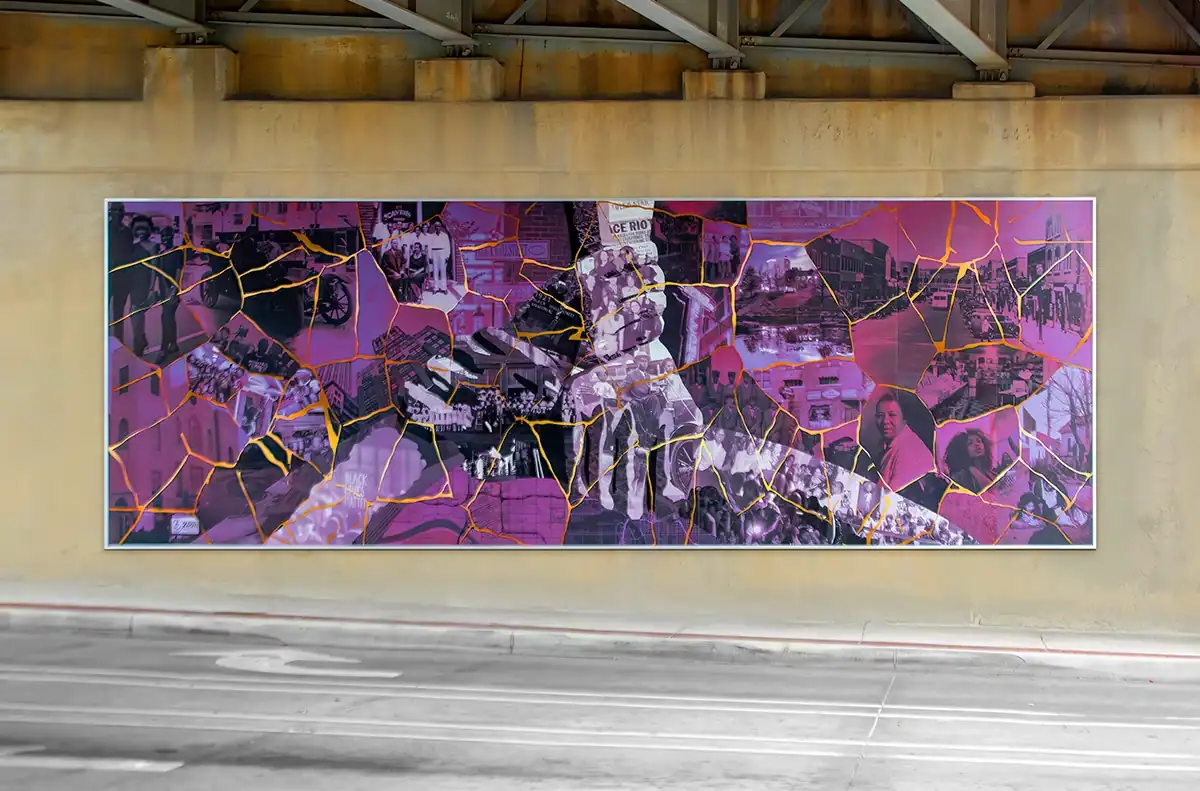
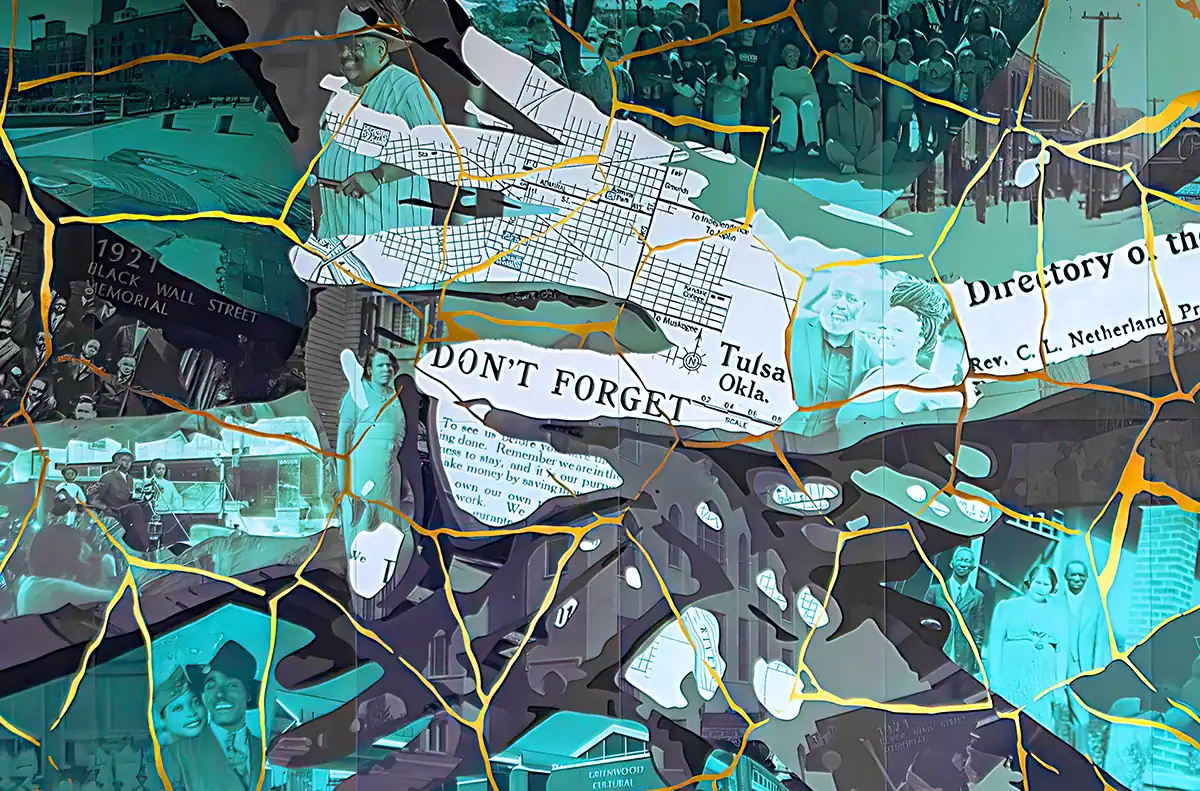
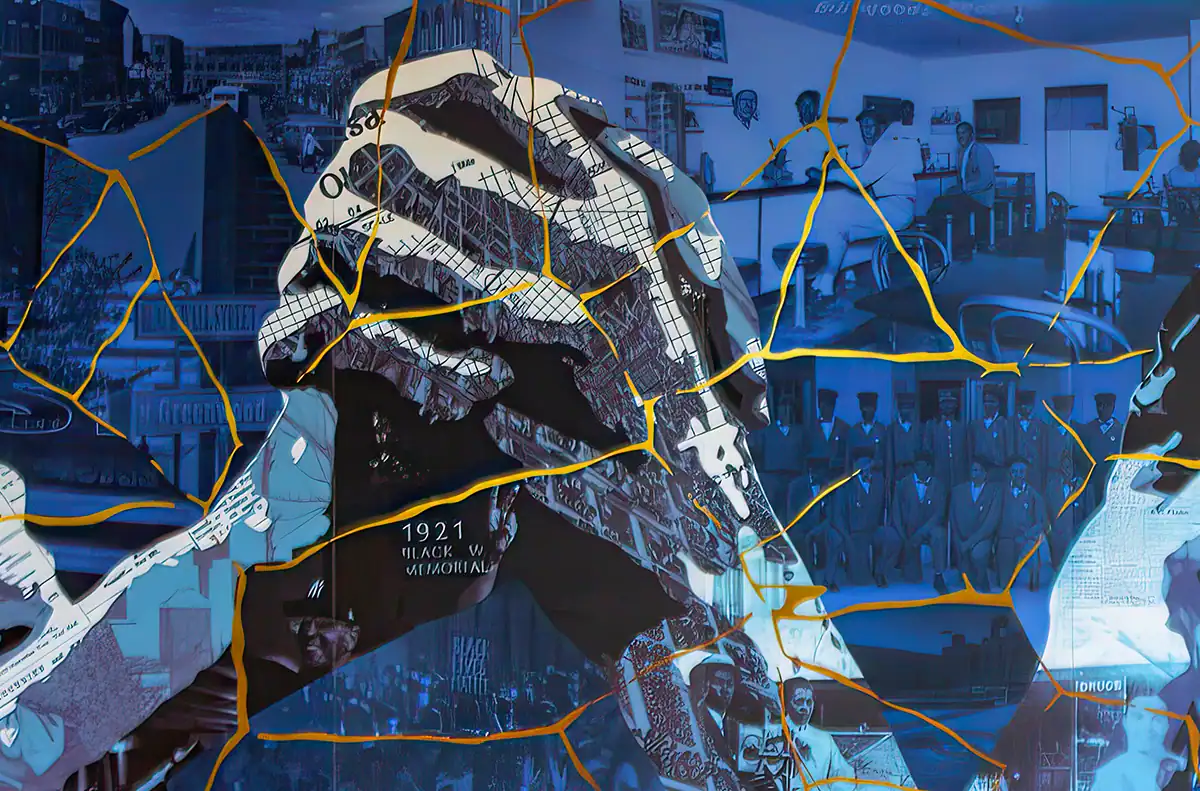
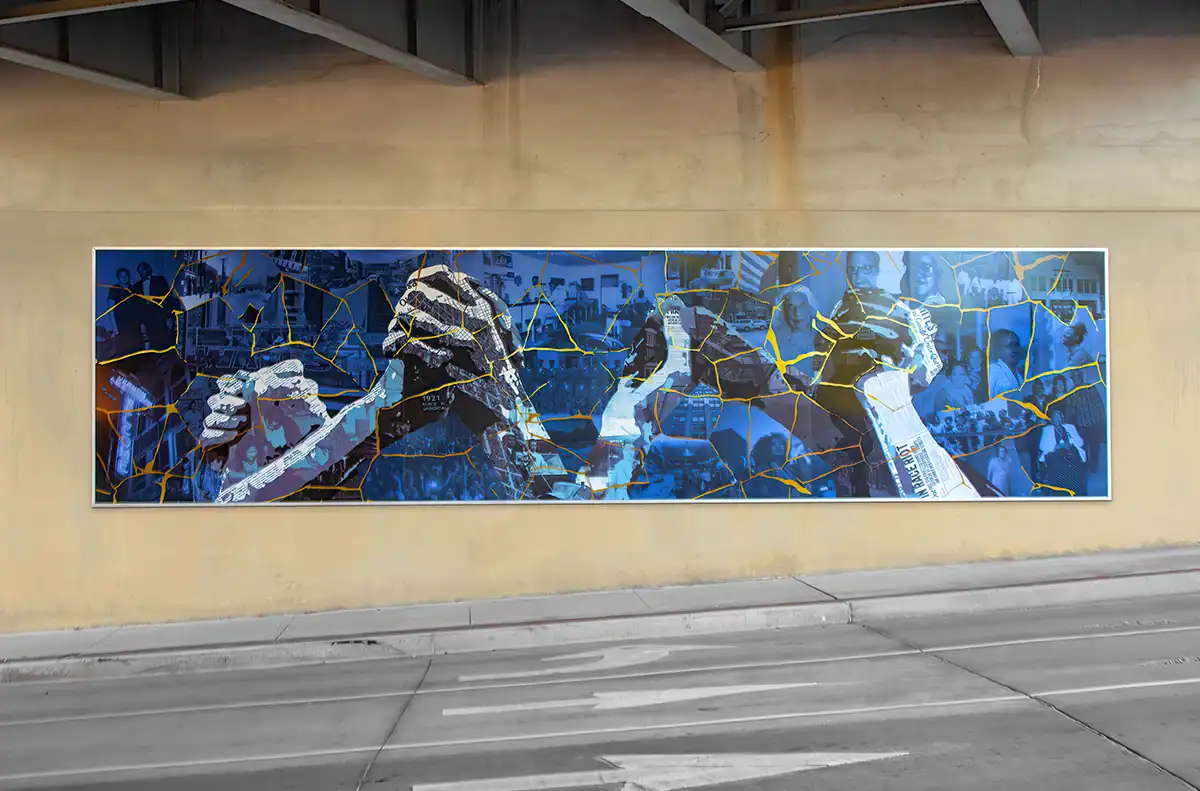
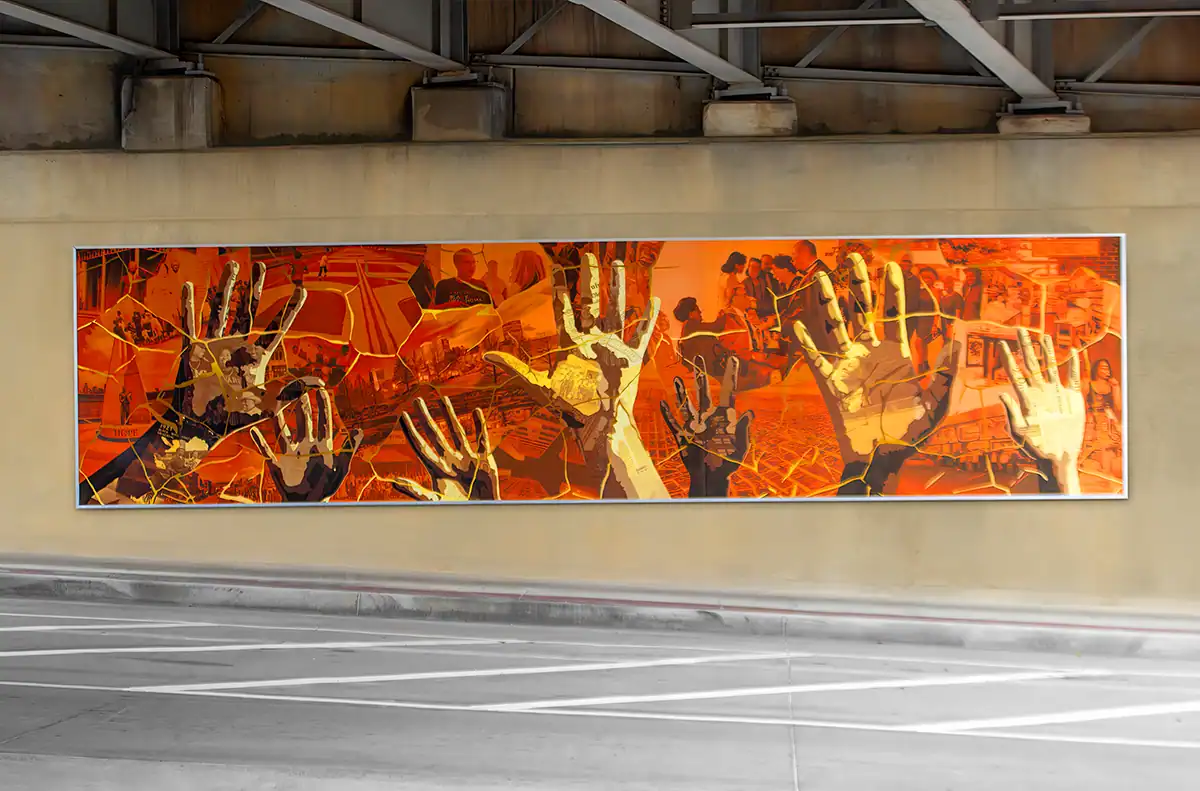
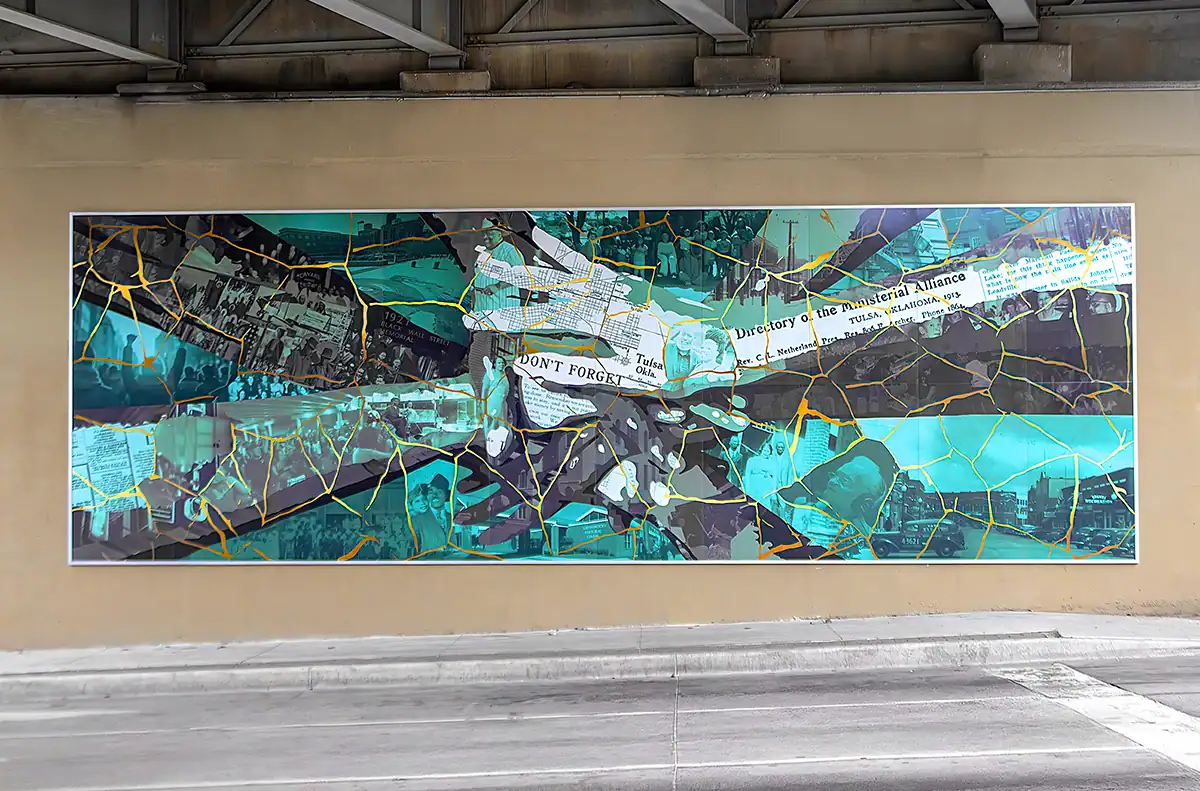
Through a multi-faceted partnership between Polyvision, RE:site Studios, the Oklahoma Arts Council, local cultural history organizations and photographers, and the Oklahoma Department of Transportation, four vibrant murals sprang to life on the walls of the Detroit Avenue underpass in Tulsa, Oklahoma.
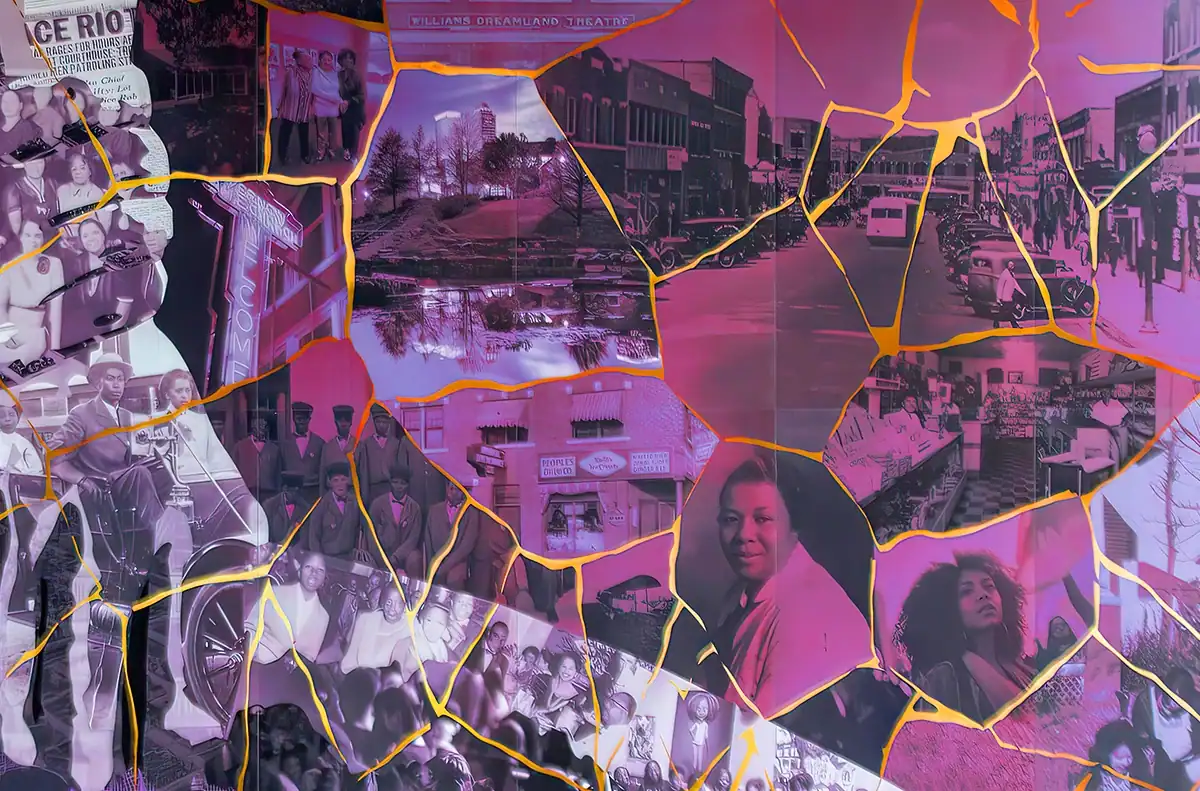
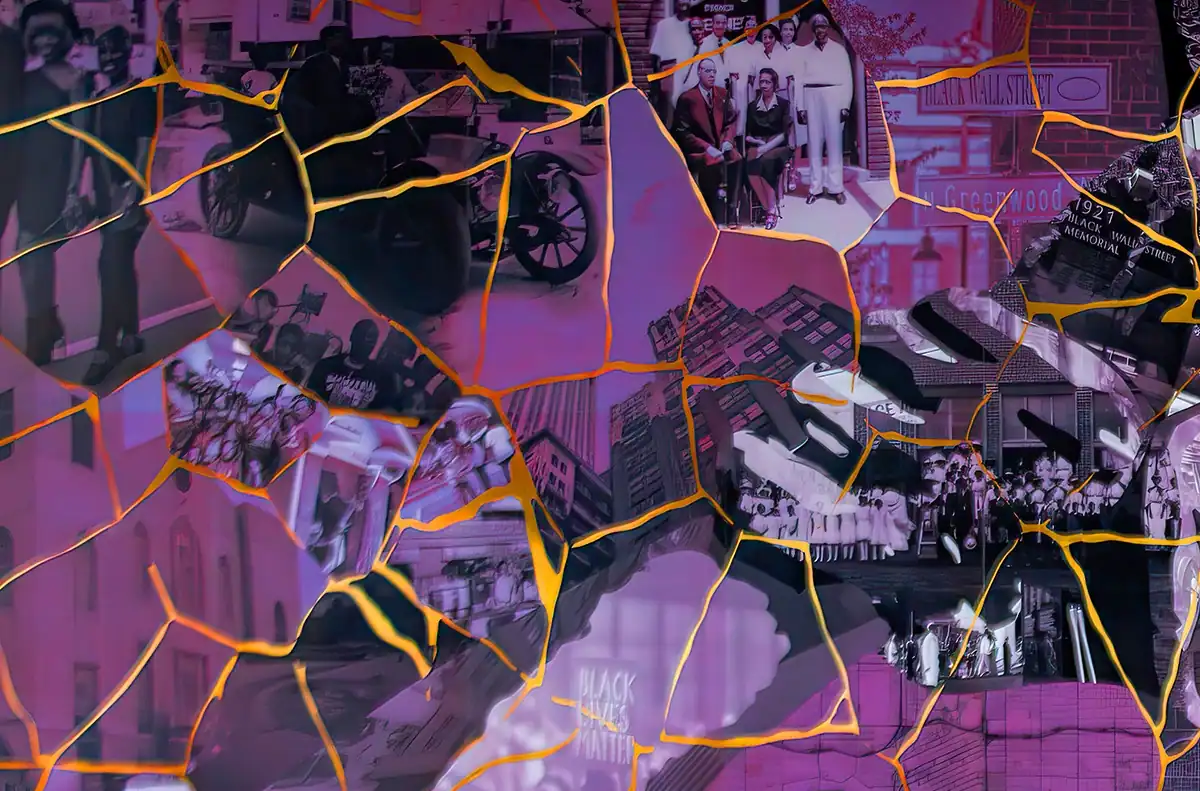
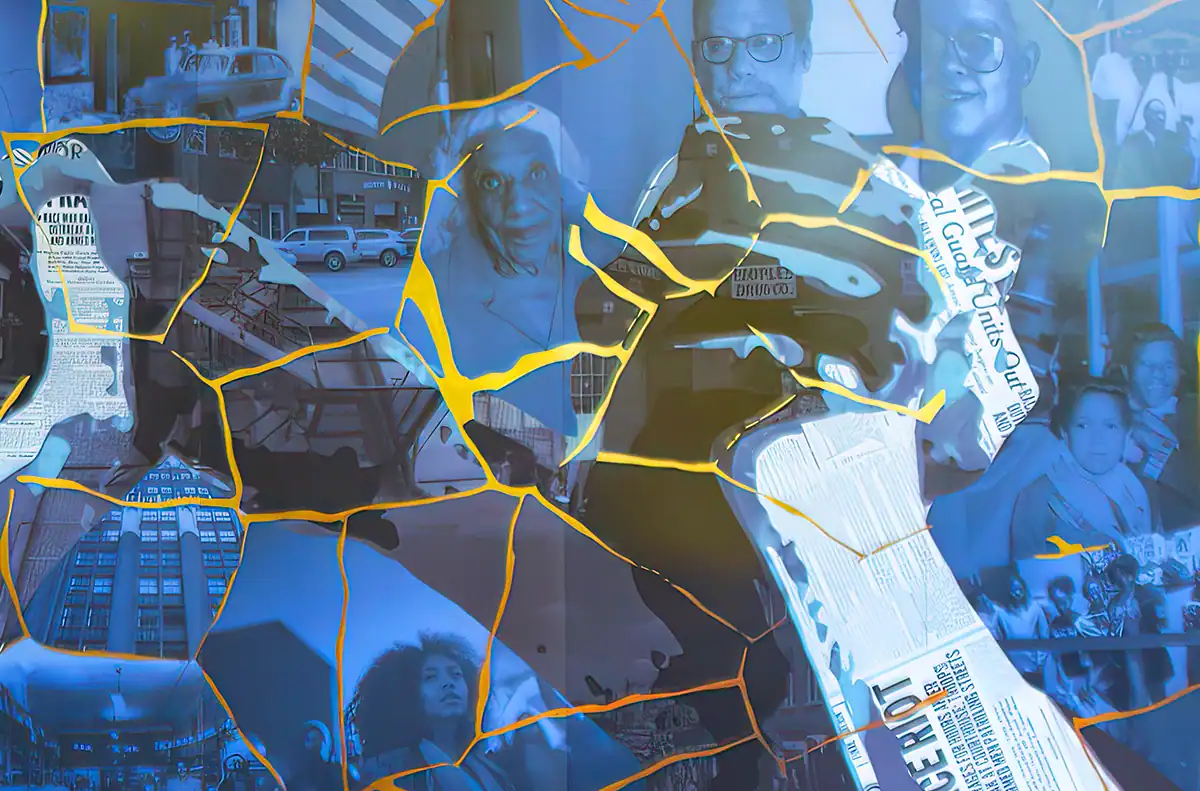
The 30-foot-wide murals honor the historic Greenwood neighborhood’s resilience following the 1921 Tulsa Race Massacre, celebrate its vibrant history, and inspire progress toward a united, equitable community. Historical photographs that celebrate life in the Greenwood community are collaged across 60 digitally printed CeramicSteel panels and toned with pleasing colors: fresh greens, rich purples and violets, calming blue shades and vivid orange hues.
Partner RE:site Studios
Completion Date 2024
Area 1512 ft2
Client Oklahoma Arts Council
The collages are tied together with gold veins, reflective of the ancient Japanese kintsugi technique where broken pottery is joined back together and highlighted with gold pigment, symbolizing beauty in what was once broken and the resilience of becoming whole again.
The colorful artwork illuminates otherwise generic, gray concrete transportation corridor, transforming it into a dazzling atmosphere that can be viewed by foot or car, each mode offering a different experience of color. When viewed at a distance, the joined hands that inspired the title stand out become visually prominent, solidifying the artwork’s intent. The murals serve as a beacon of pride, healing, and hope for Tulsa, engaging the community in reflection and conversation about its past and future
Polyvision’s CeramicSteel panels were chosen for their durability, resistance to weather, and colorfast printing technology, ensuring the murals will inspire current and future generations. The panels were designed to be lightweight yet sturdy for easy installation on uneven surfaces, framed in custom stainless steel. The additional qualities of graffiti- and bacteria-resistance are helpful in maintaining the surface in a busy transportation corridor.
As a result of collaboration, innovative materials, and thoughtful design, the project honors history while projecting a vision of unity and progress. The project highlights the power of public art to educate, inspire, and create a sense of belonging, so important in our modern world.
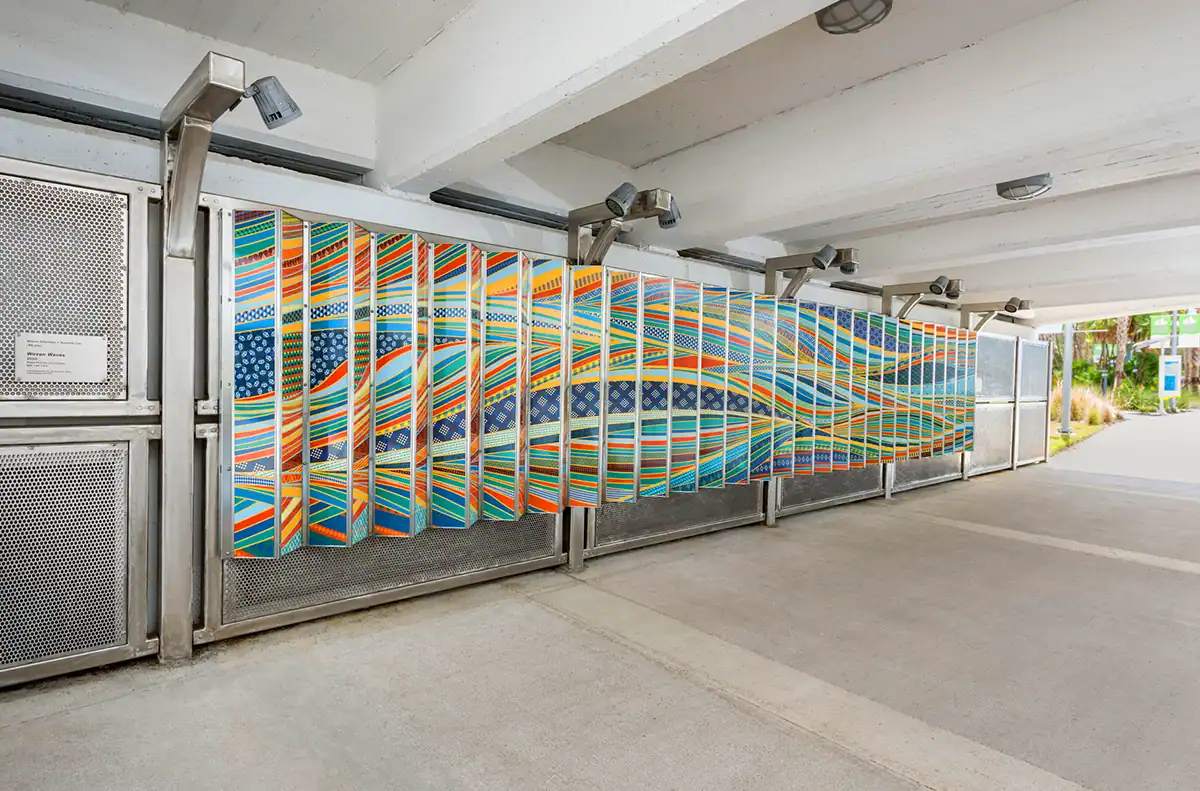
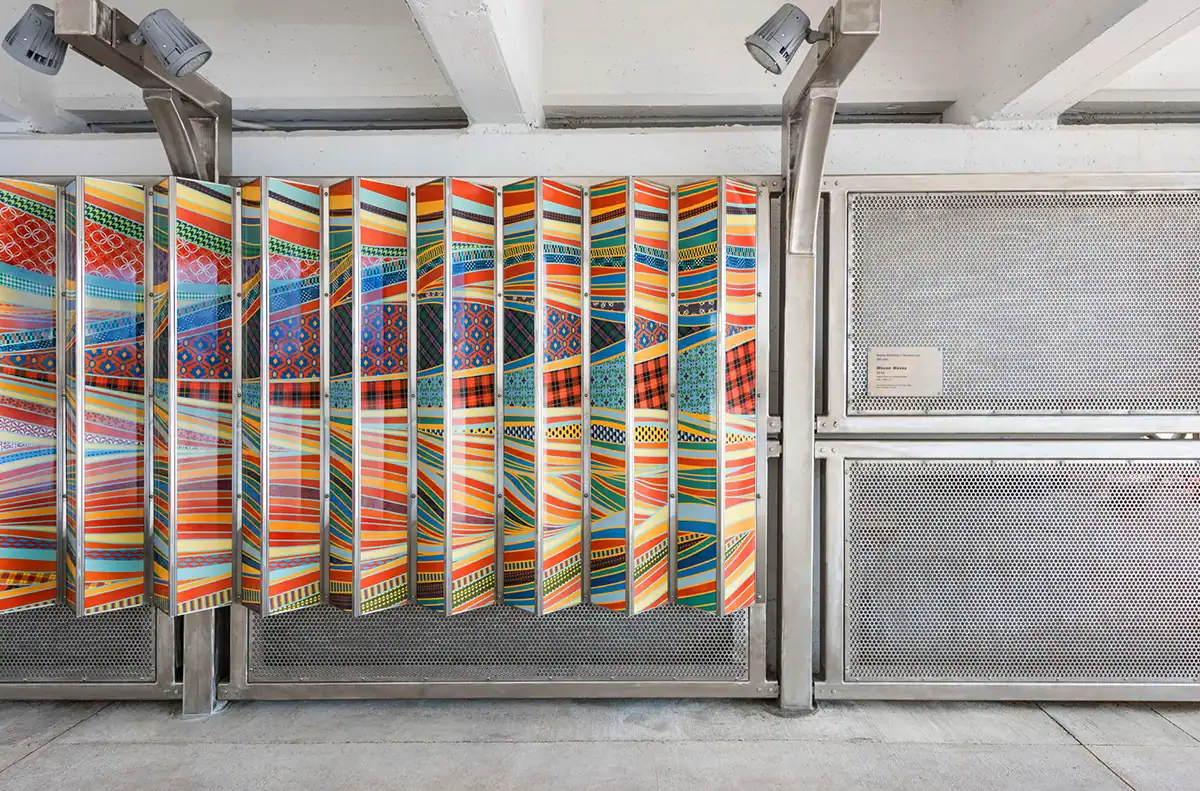
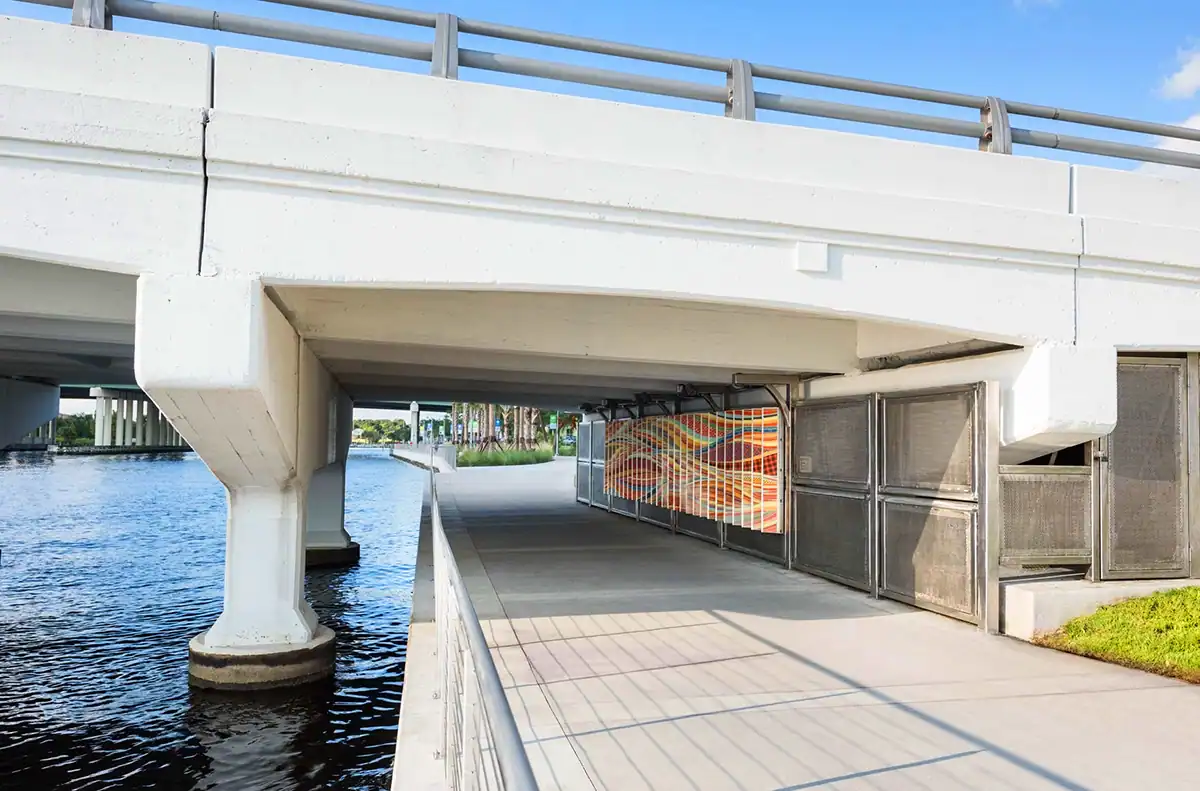
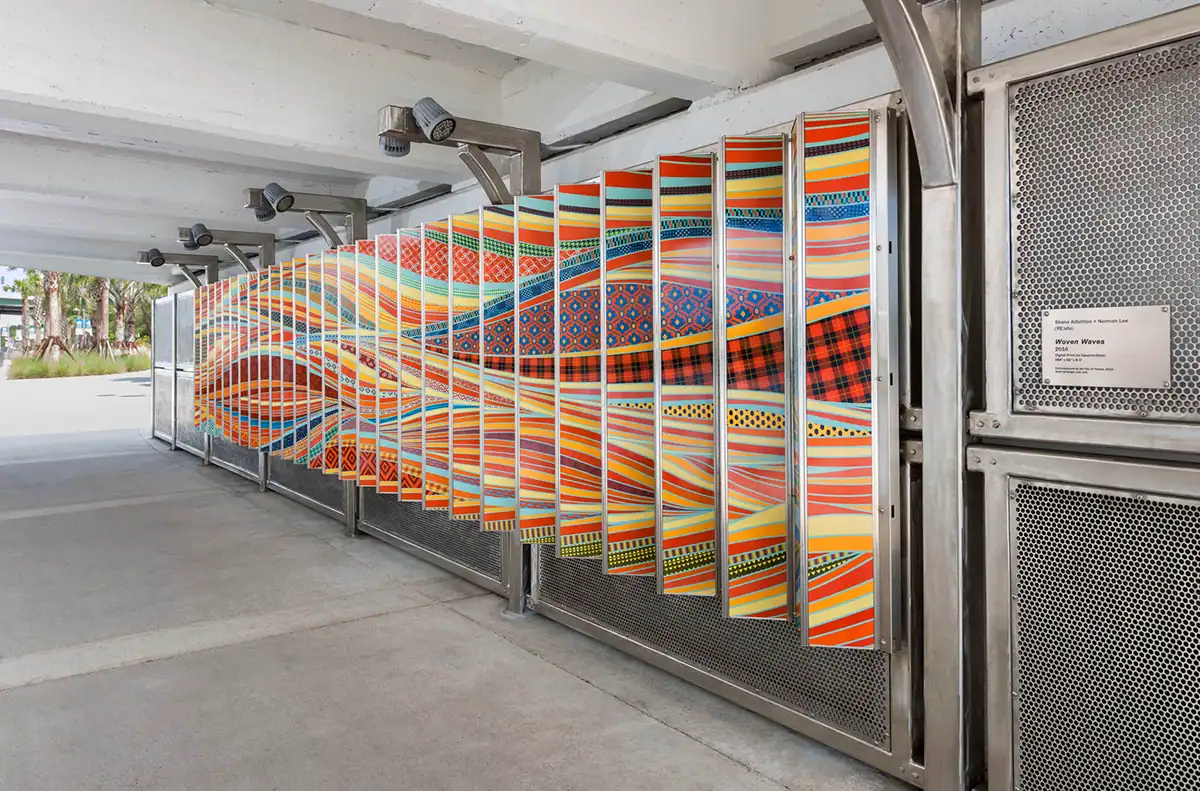
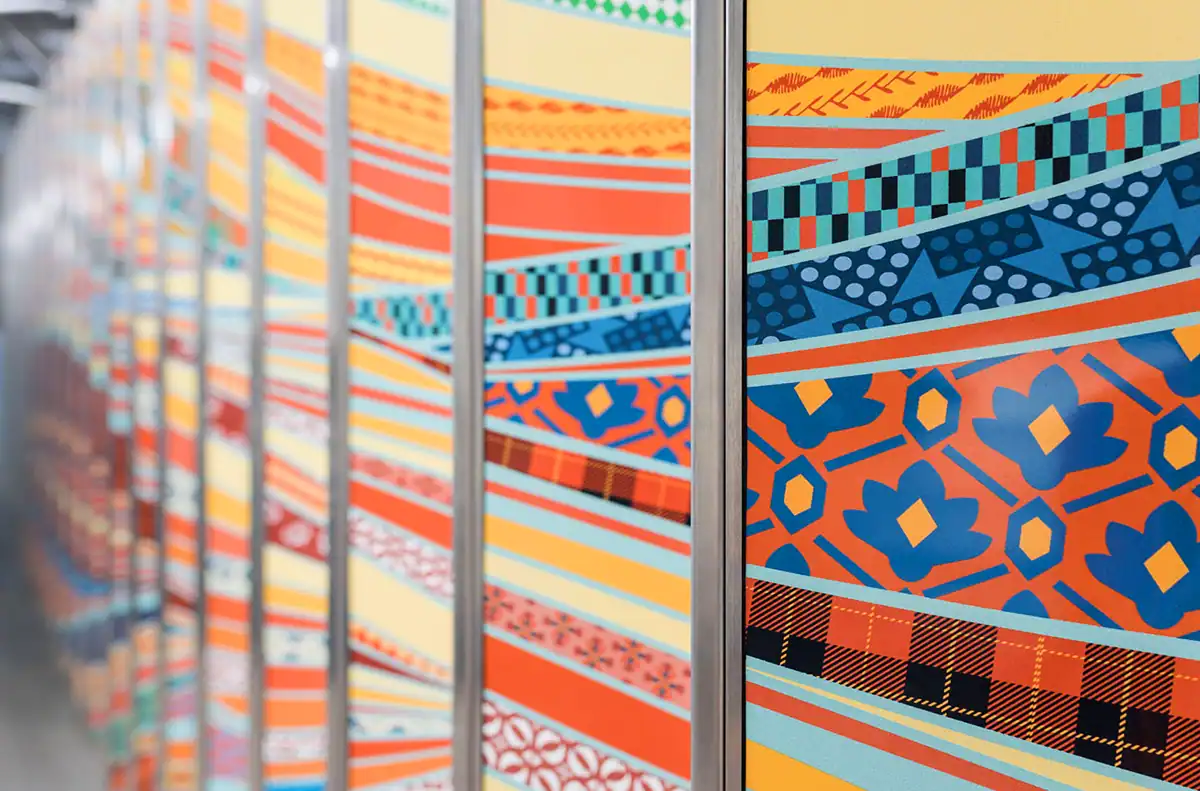
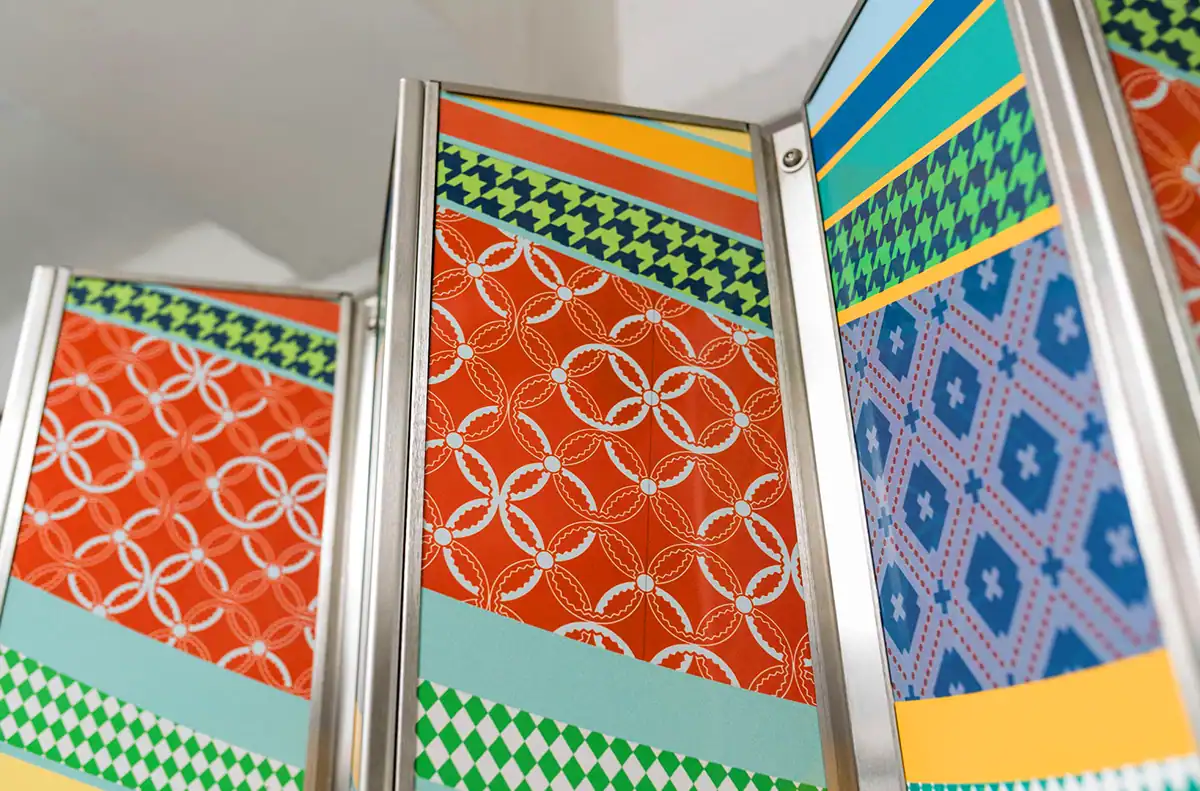
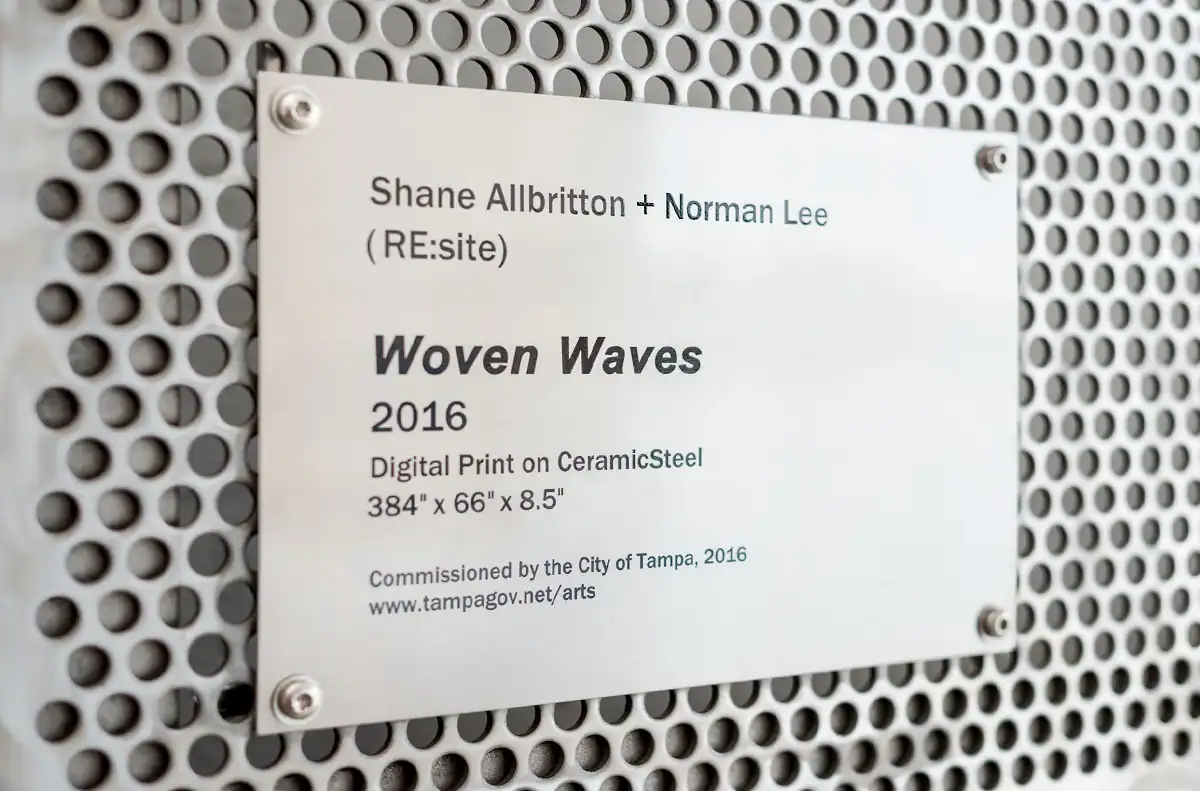
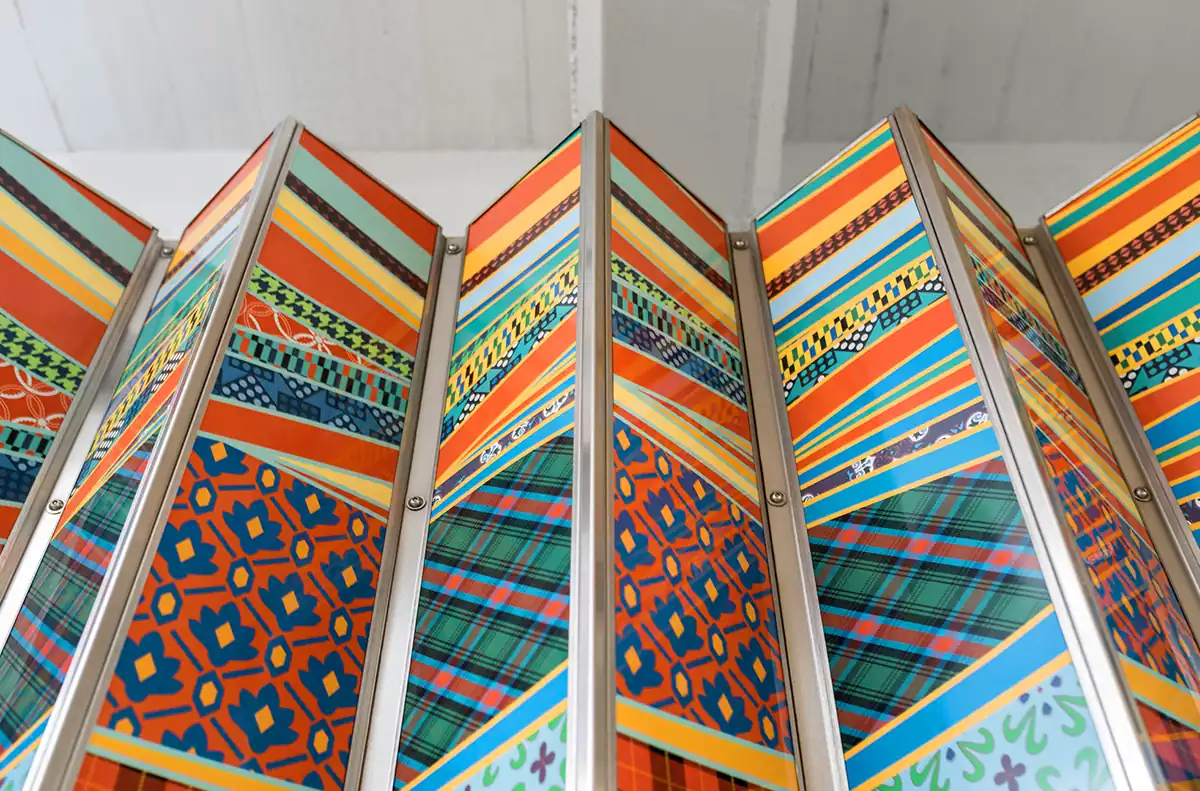
The City of Tampa developed a 2.6-mile waterfront walkway along the Hillsborough River and Tampa Bay to create a vibrant, pedestrian-friendly destination connecting parks, museums, and cultural sites. As part of this initiative, artists Shane Allbritton and Norman Lee designed Woven Waves, a public art installation beneath the Laurel Street Bridge.
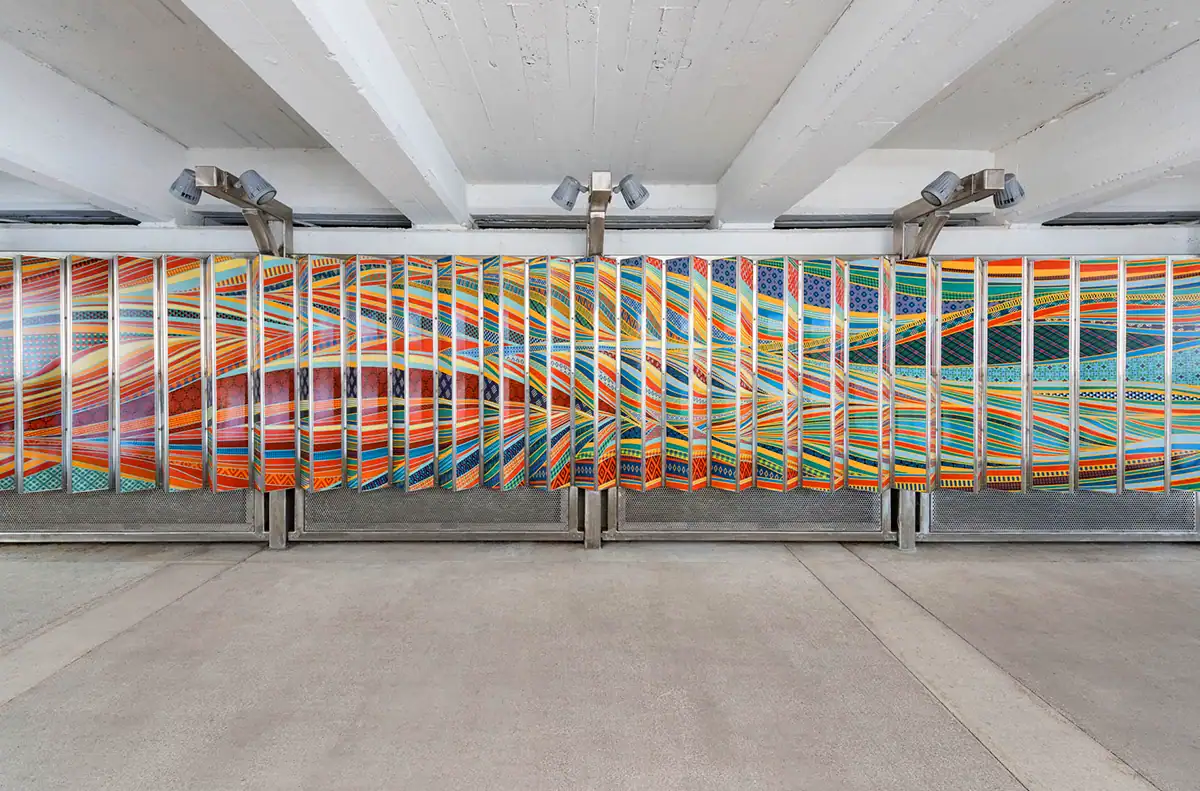
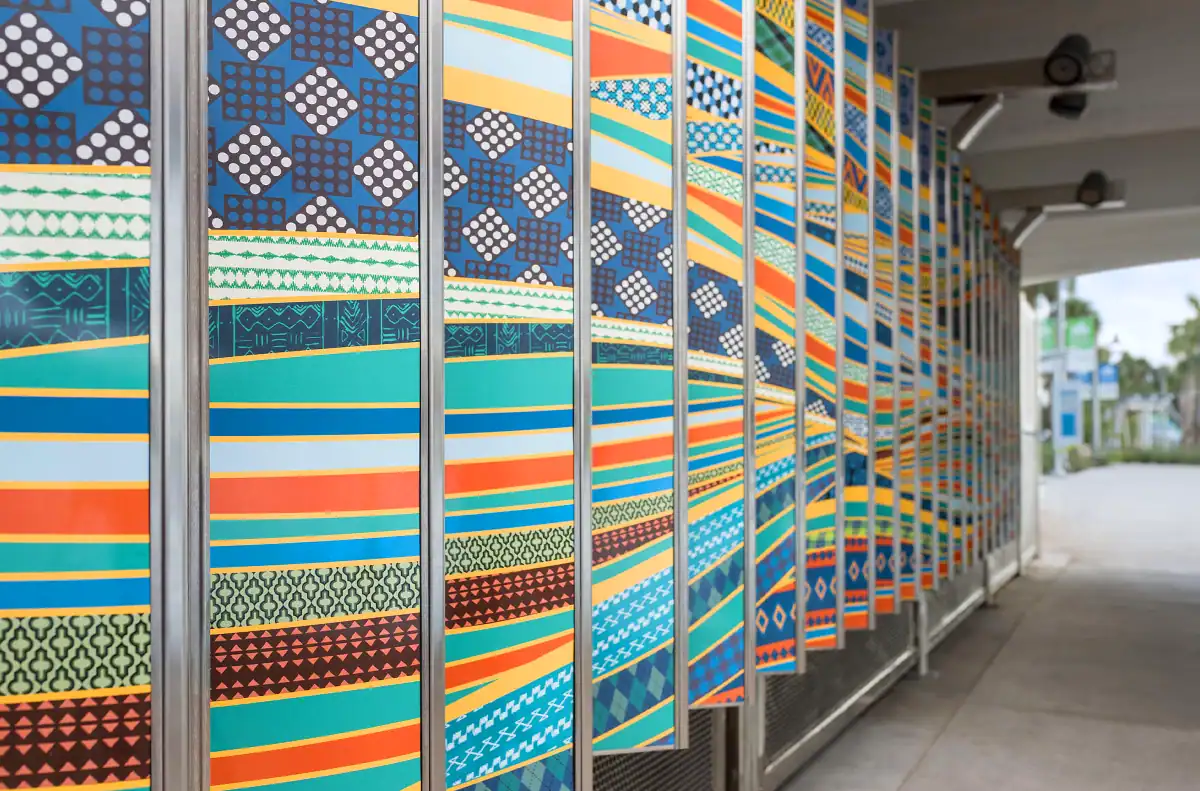
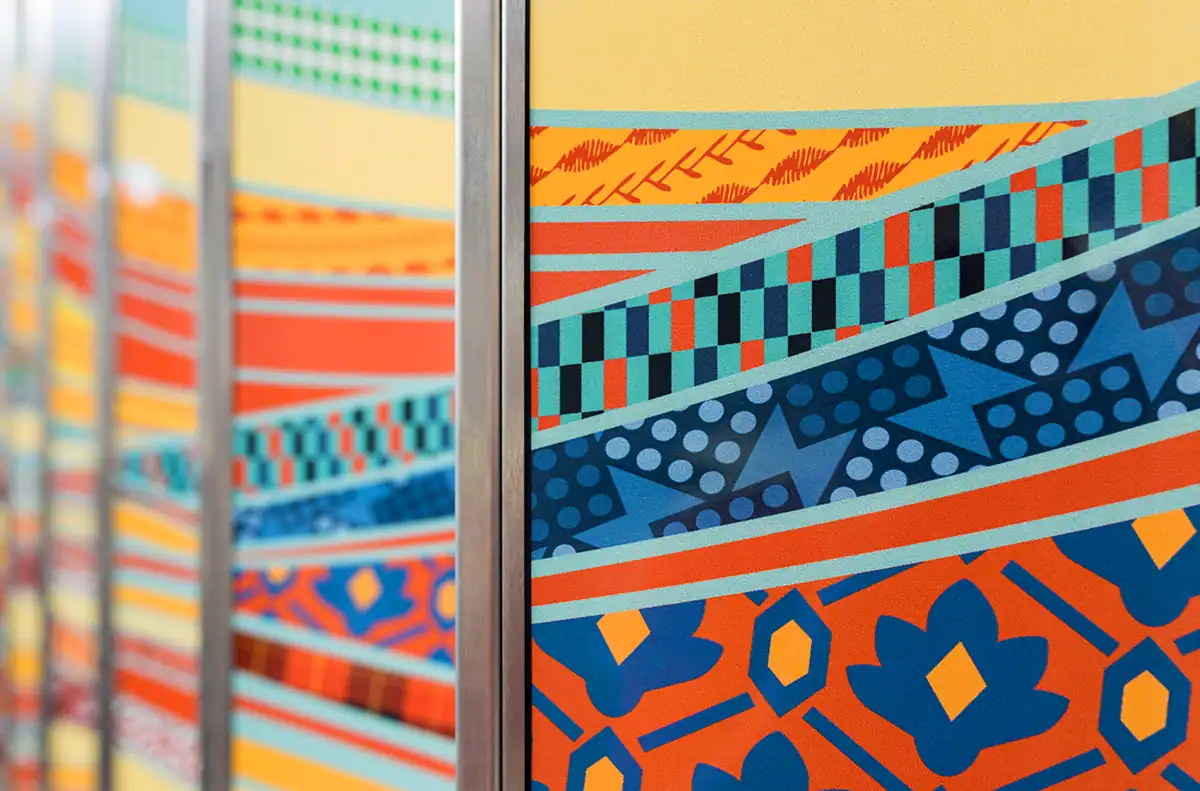
The installation consists of 54 folded CeramicSteel panels organized in a lenticular stainless-steel framework, creating a dynamic, shifting visual effect as viewers move past on foot, bike, or water. The artwork draws on the site’s multicultural history, referencing the former Fortune Street Bridge and its namesake, local historical figure Fortune Taylor, and incorporates patterns inspired by West African, Cuban, and Scottish traditions to symbolize Tampa’s diverse communities.
Partner Designtex
Completion Date 2016
Area 201 ft2
Client City of Tampa, FL
Designer RE:site Studios
Artist RE:site
Fabricated by Polyvision and supported by Metalab Studio and Designtex, the panels use durable, UV-resistant CeramicSteel with digitally printed imagery fused into the surface that will remain colorfast indefinitely. Other benefits of porcelain enameled steel include a non-porous surface which makes the material impervious to water, dirt, bacteria and even vandalism, ensuring longevity, easy, minimal maintenance, and resilience in a harsh waterfront environment.
A colorful and energetic addition to the riverfront, the project successfully integrates art, history, and infrastructure, enhancing the Tampa Riverwalk experience while fostering cultural connection and community engagement.
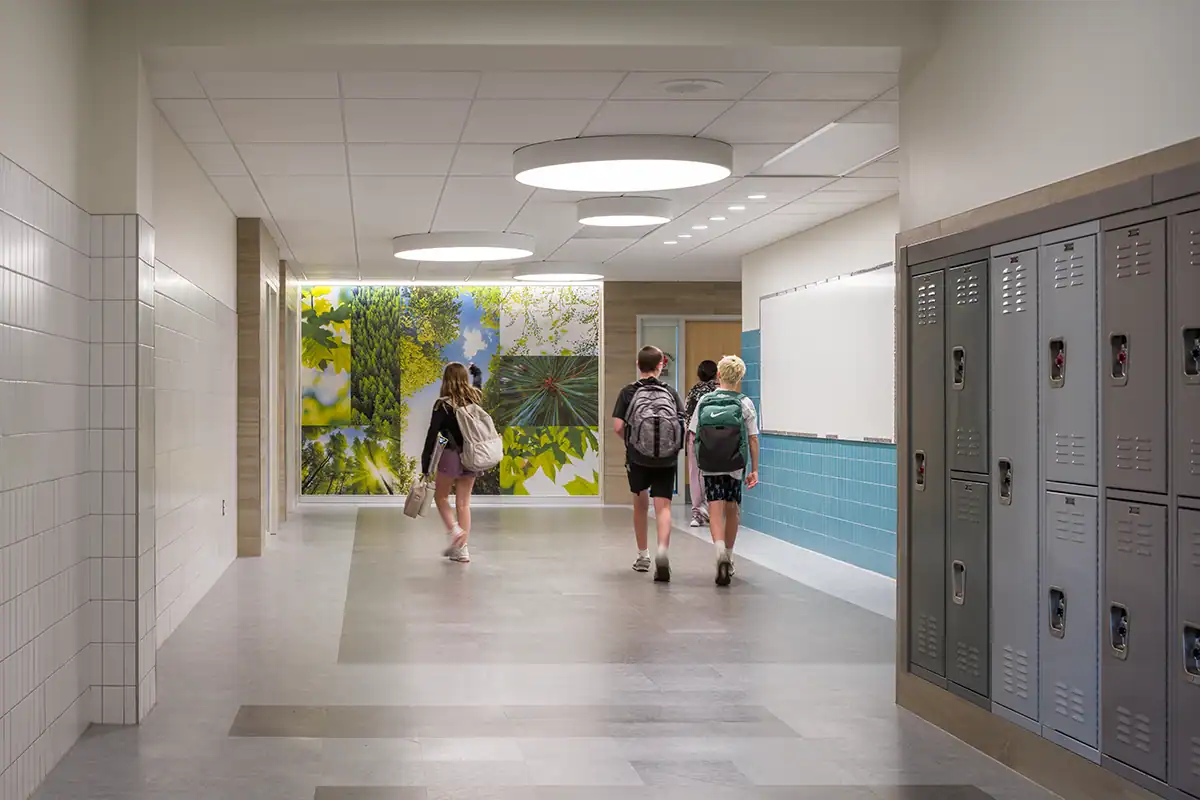
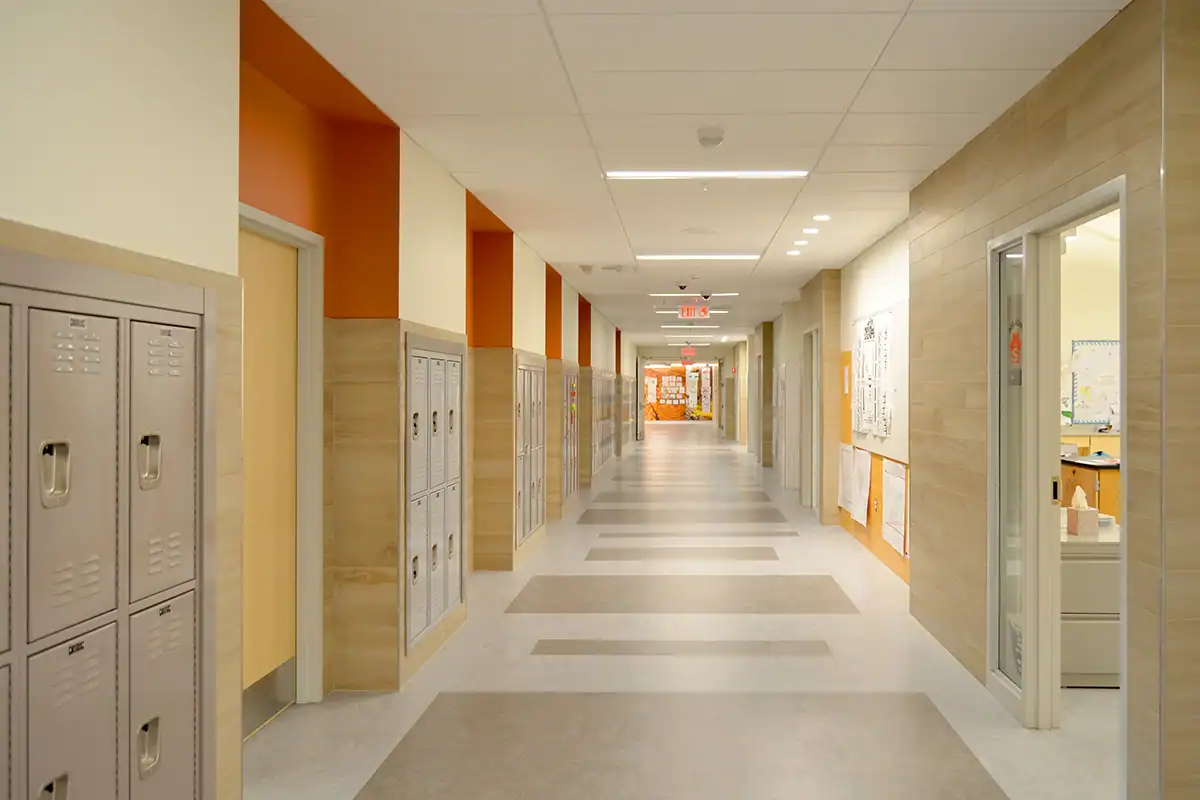
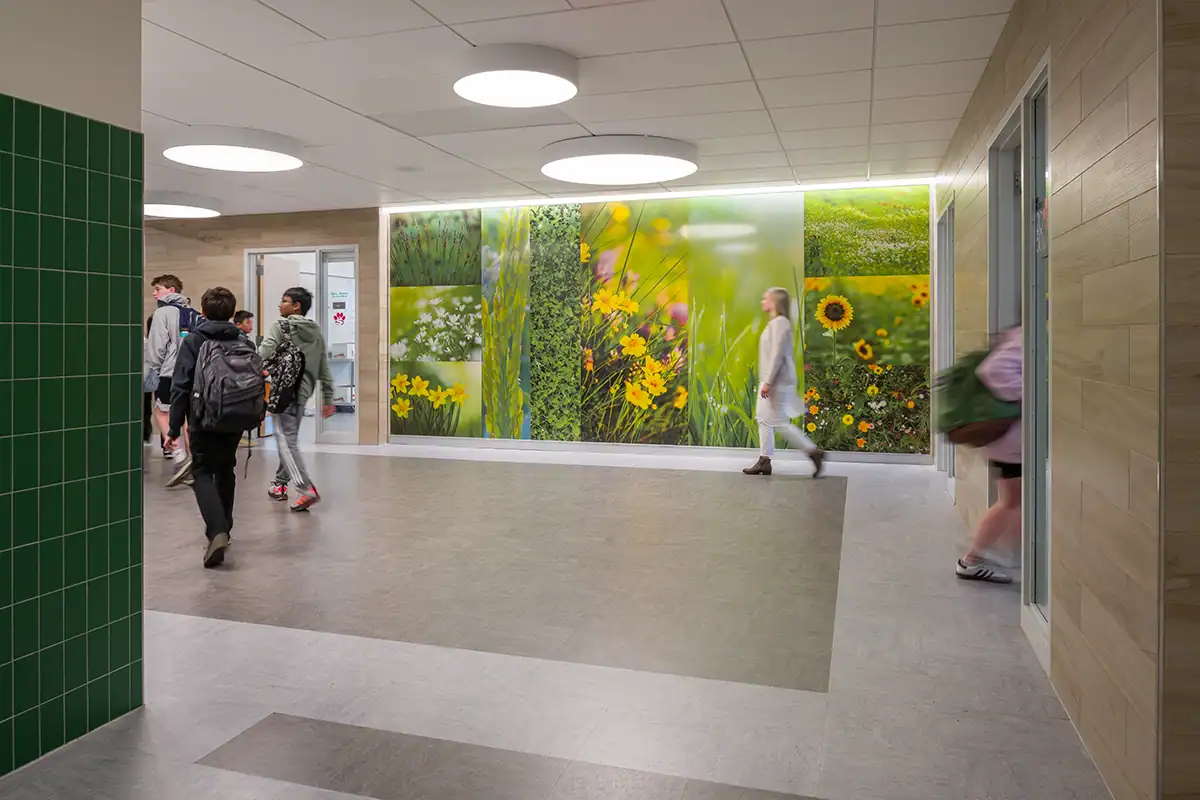
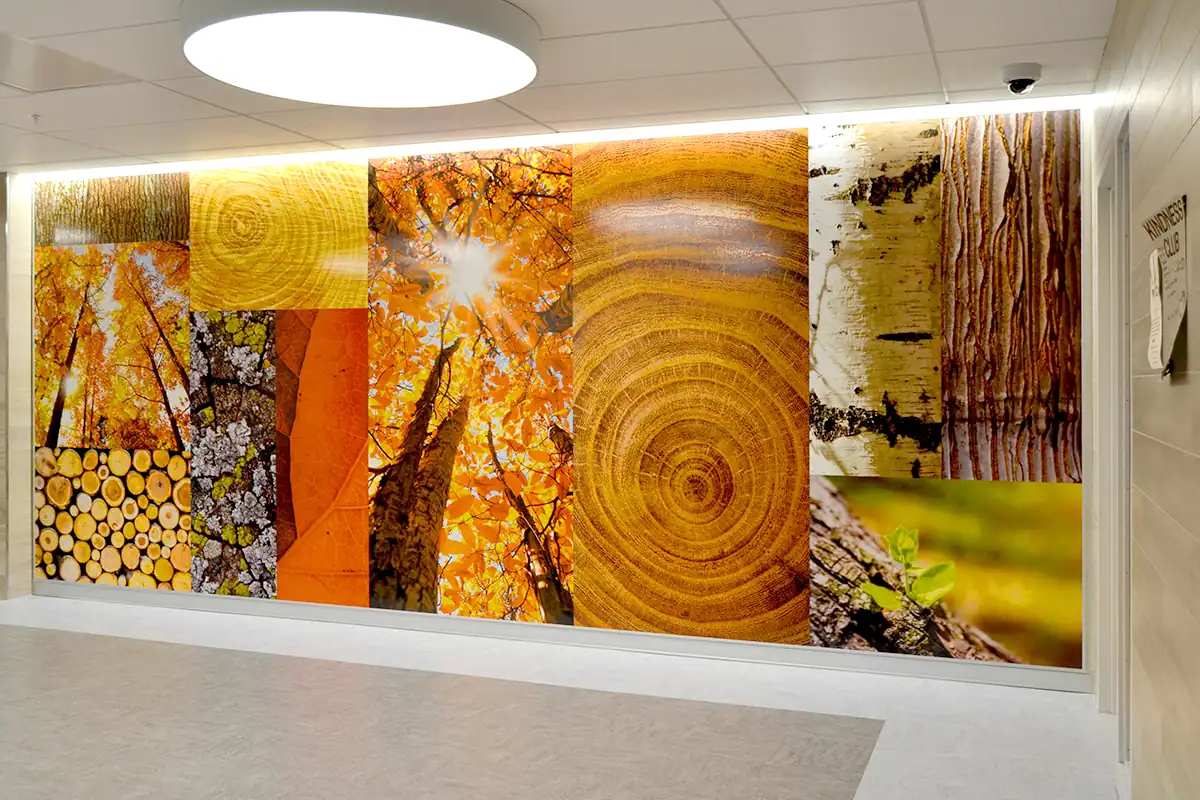
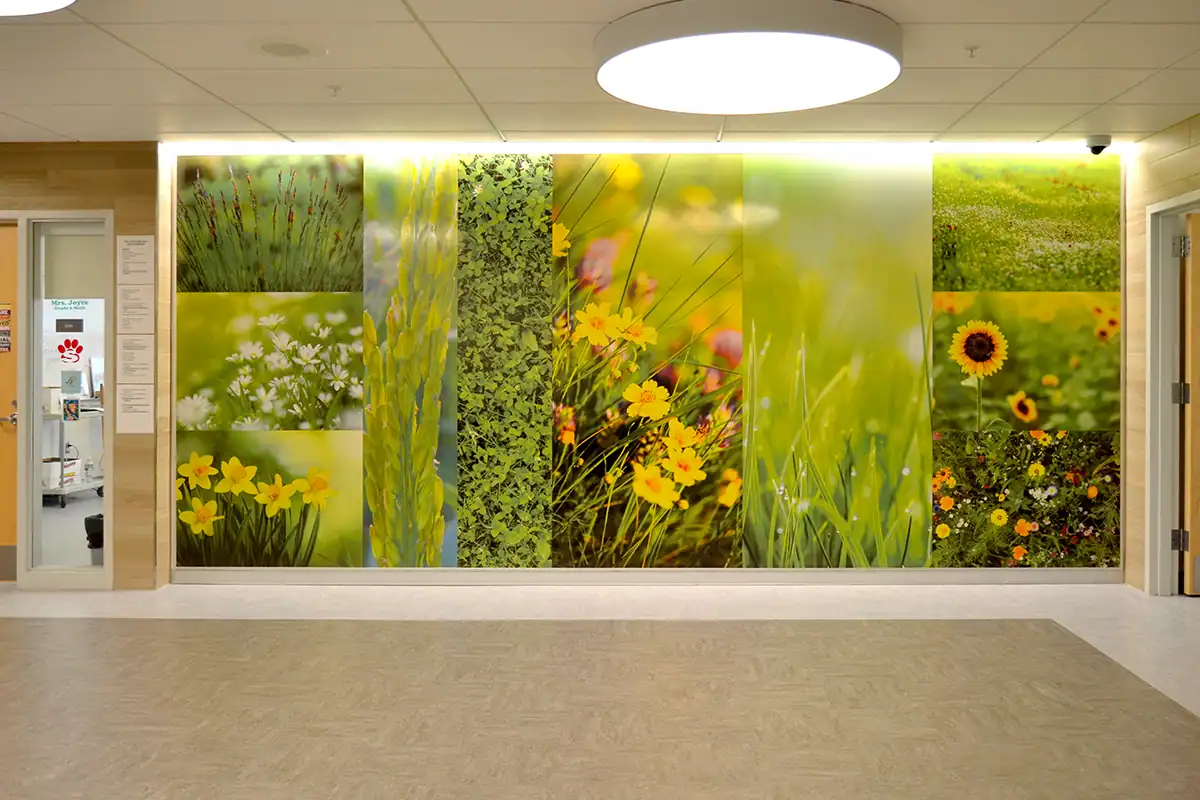
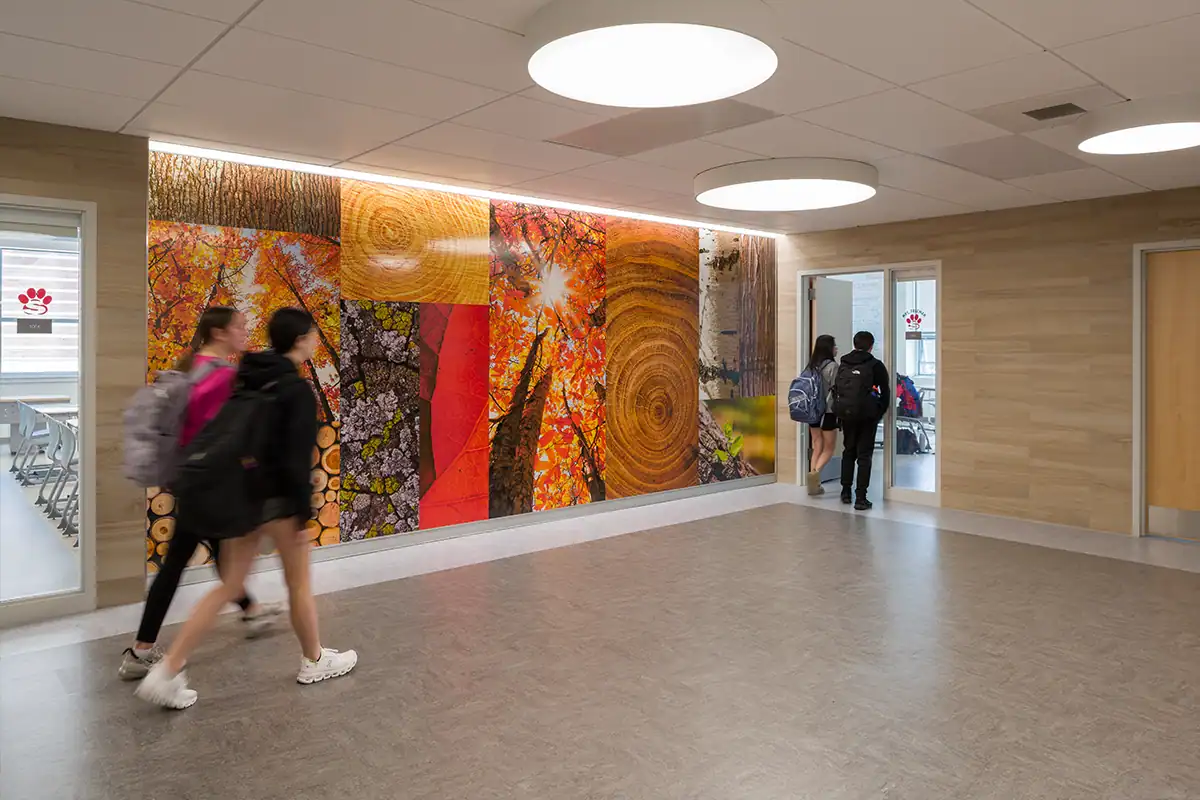
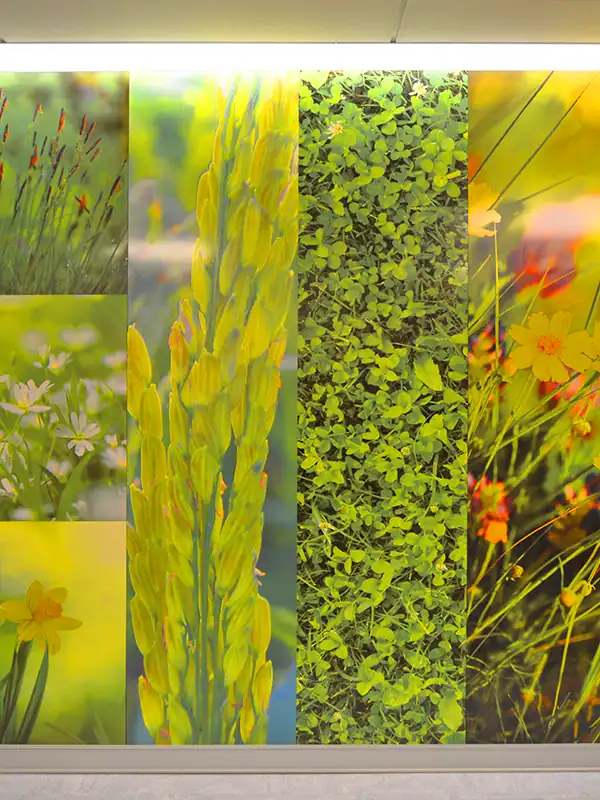
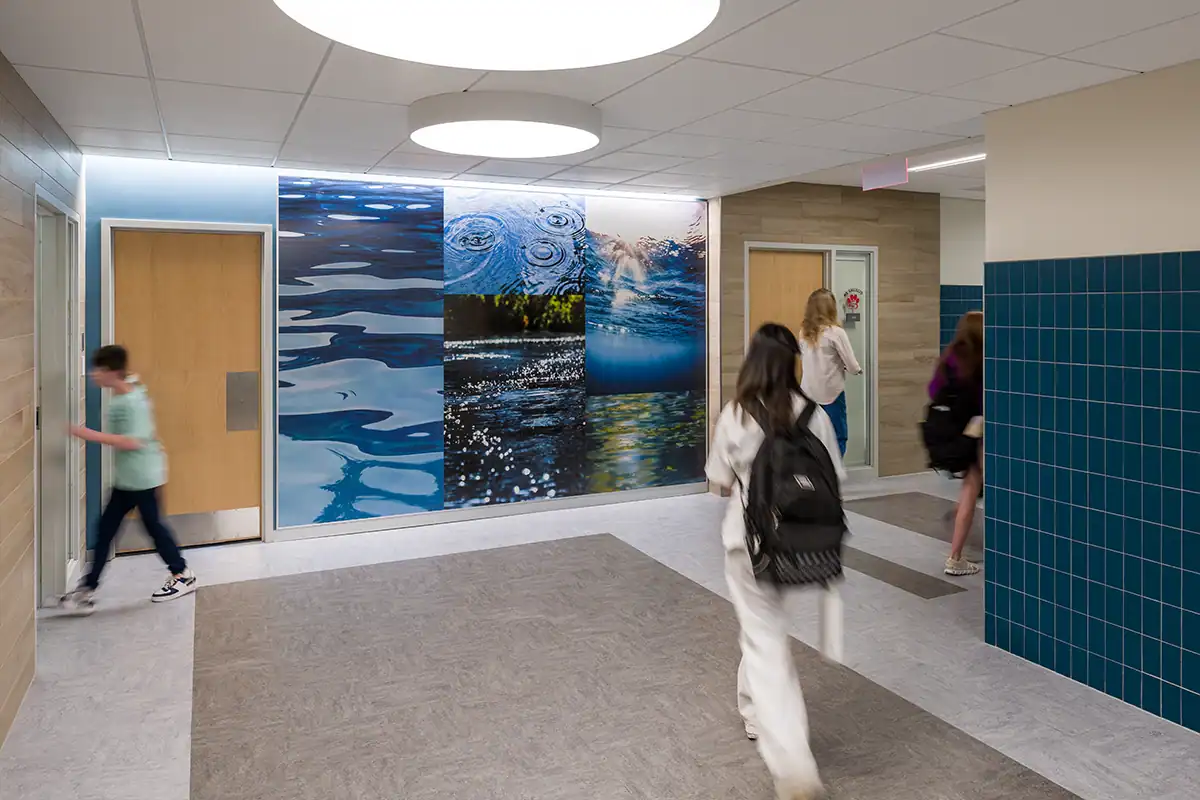
Bright, collaged images of nature from floor to ceiling grace the hallways at South Middle School.
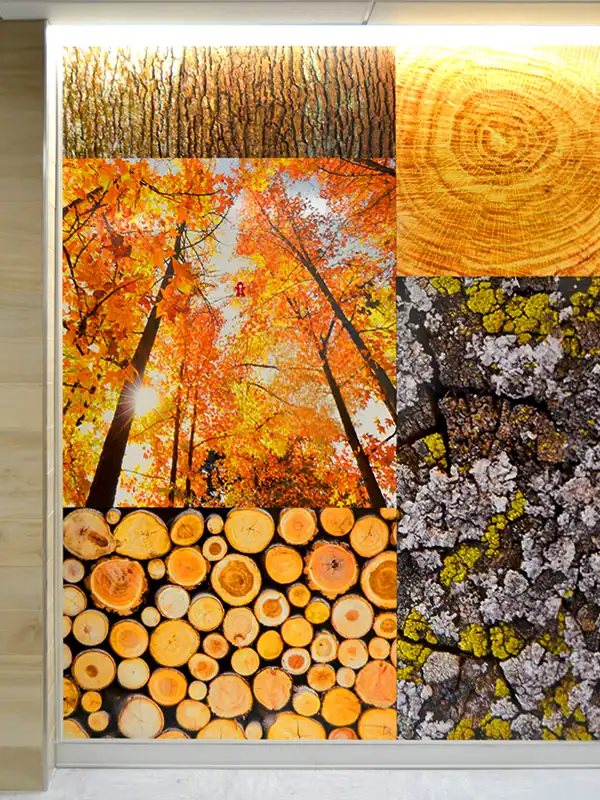
MDS Architects designed each of the four murals highlighting a prominent feature in the natural world: Water, Woods, Trees and Grass. Polyvision Surface Imaged CeramicSteel fits in perfectly with the environmental theme: certified Air Advantage Gold and Cradle-to-Cradle Bronze, healthy indoor air is maintained with zero VOC emissions and ecologically sustainable with a product lifecycle that exceeds most other interior decorative and functional wall cladding materials, keeping material out of landfills.
Along with Polyvision’s “Lifetime Warranty” that guarantees the surface gloss level and fadeproof color for the life of the building or as long as the product is in use, these features are ideal for schools, where conservative budgets appreciate quality and performance.
Photography by Gordon Grisinger
Another key feature of CeramicSteel is its durable surface, which is impact- and graffiti-resistant, important in schools where class changes can be hectic and sports equipment or other objects may accidentally contact corridor walls. Sanitation, as critical as ever to maintain, is easy with Polyvision’s non-porous surface, which is inherently resistant to bacteria growth. School staff can use the most potent cleaning agents repeatedly knowing that the surface was built to withstand chemicals and resist staining.
The collaged images are striking, with various hues of red, orange, green, brown, blue and even a few pink flowers creating a colorful reminder of the abundance of nature, a sense of wellbeing for students, faculty and staff as they move through their day at the school.
Partner Designtex
Completion Date 2023
ClientBraintree Public Schools, South Middle School
A local cultural center in Oklahoma reached out to Steelcase to replicate a painted wall mural that is a focal point in their facility.
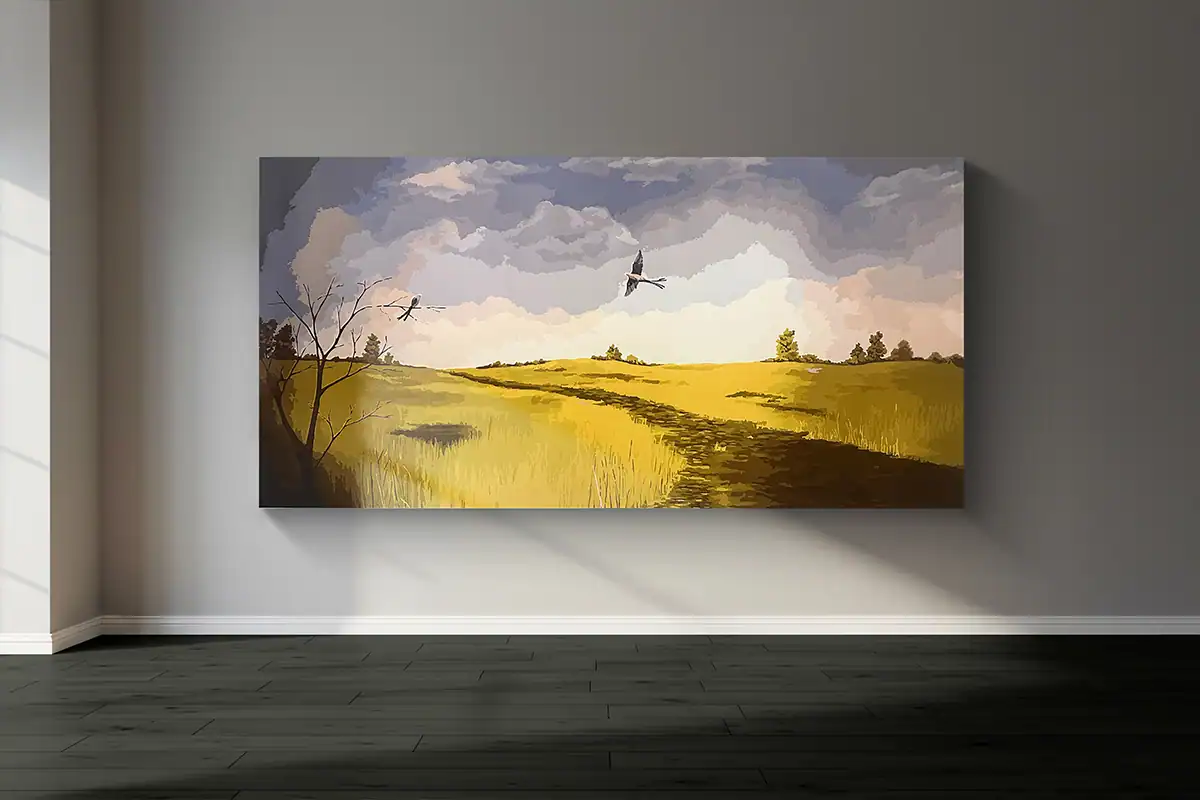
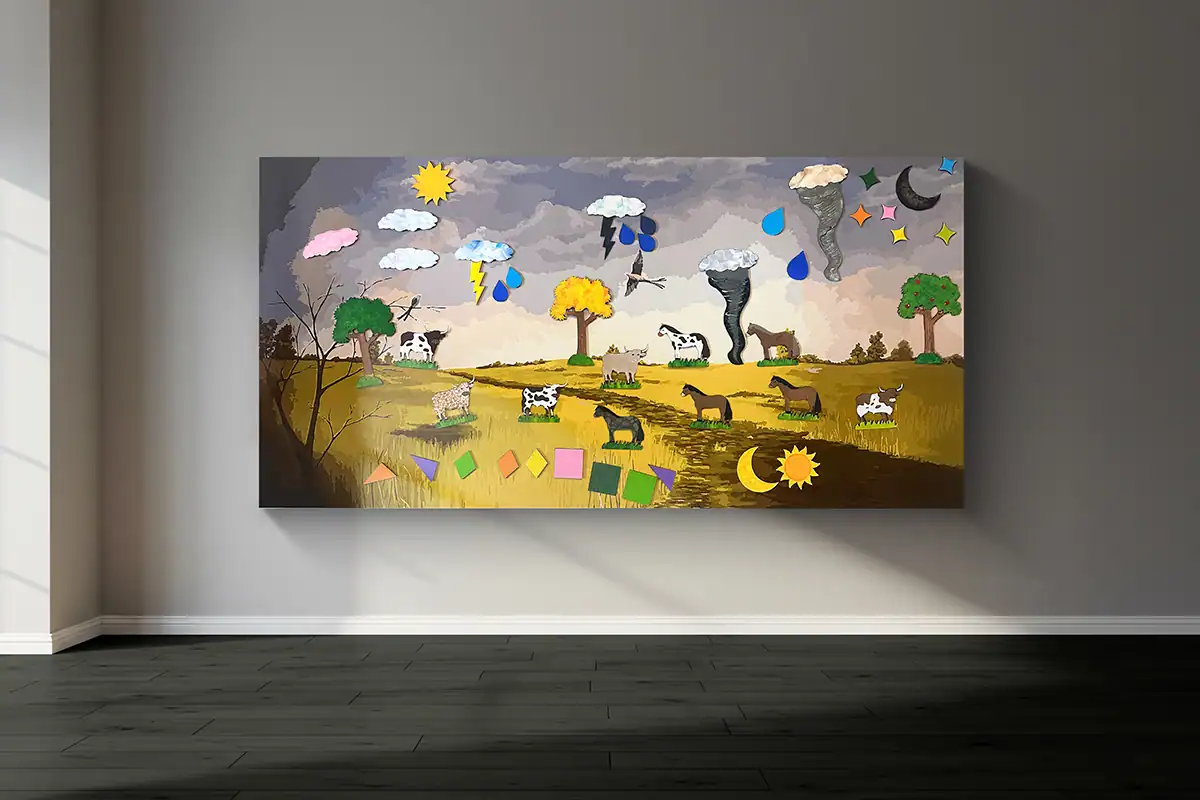
Their goal was to make a version of the mural accessible and with interactive features for the Center’s younger crowd, and Polyvision Surface Imaging on CeramicSteel was the perfect solution. The original artwork is a dramatic view of a grassy field and sky with a bird in flight in soothing earth-tone colors.
The smooth surface is inherently magnetic, so children can play directly with the colorful surface, adding shape magnets and moving them around infinitely without any risk of surface damage. The 8-foot-wide panel is large enough for several children to play at the same time, and witnessing their enjoyment makes the mural artwork even more special for the Center’s staff. In addition to beautifully rendered color, CeramicSteel is ideal for settings that cater to children as the product is Indoor Advantage Gold certified, emitting no harmful VOCs into the air.
with magnets
without magnets
↔
The durable, non-porous surface is also a big plus in public spaces that see high visitor traffic. CeramicSteel surfaces can be cleaned with simple water or medical-grade disinfectants as often as desired. This quality makes CeramicSteel a sustainable and eco-conscious choice. The porcelain enamel surface is fadeproof and outlasts all other typical interior decorative materials, accompanied by Polyvision’s “Forever Warranty”. Little visitors will delight in this beloved artwork for decades to come, joyfully playing and letting their imaginations run free.
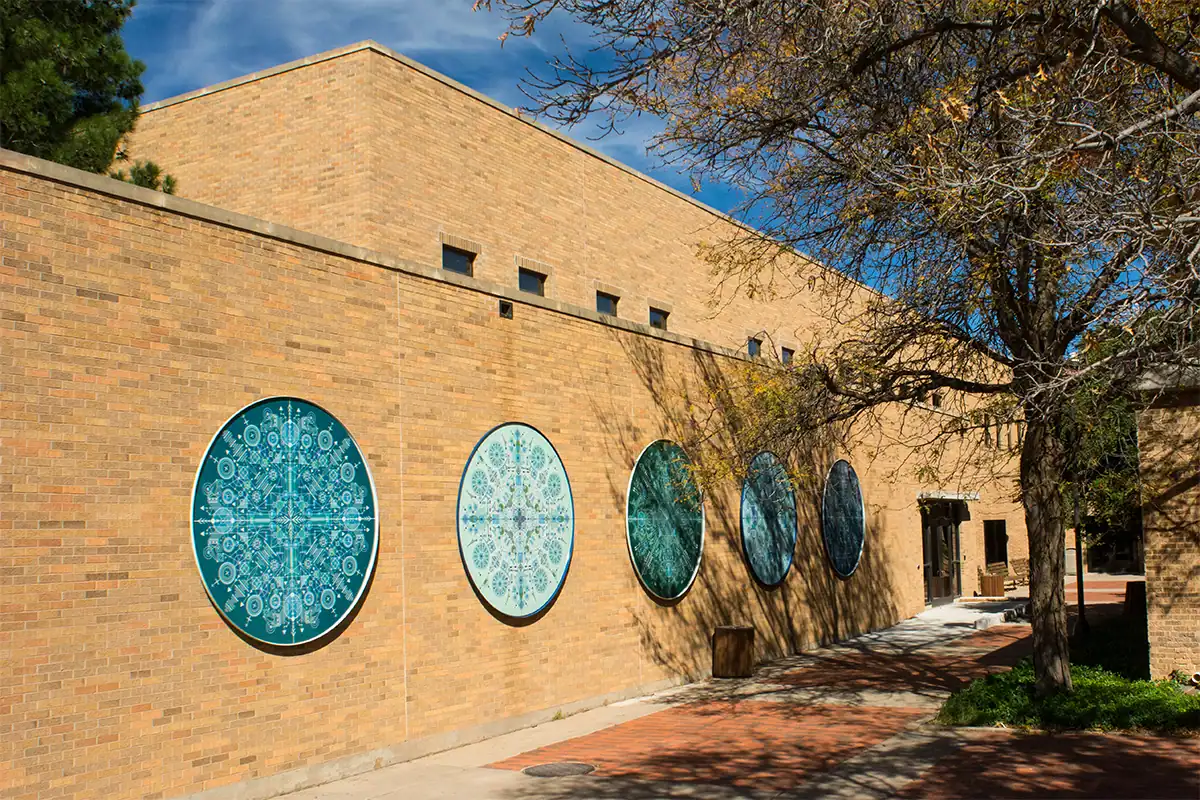
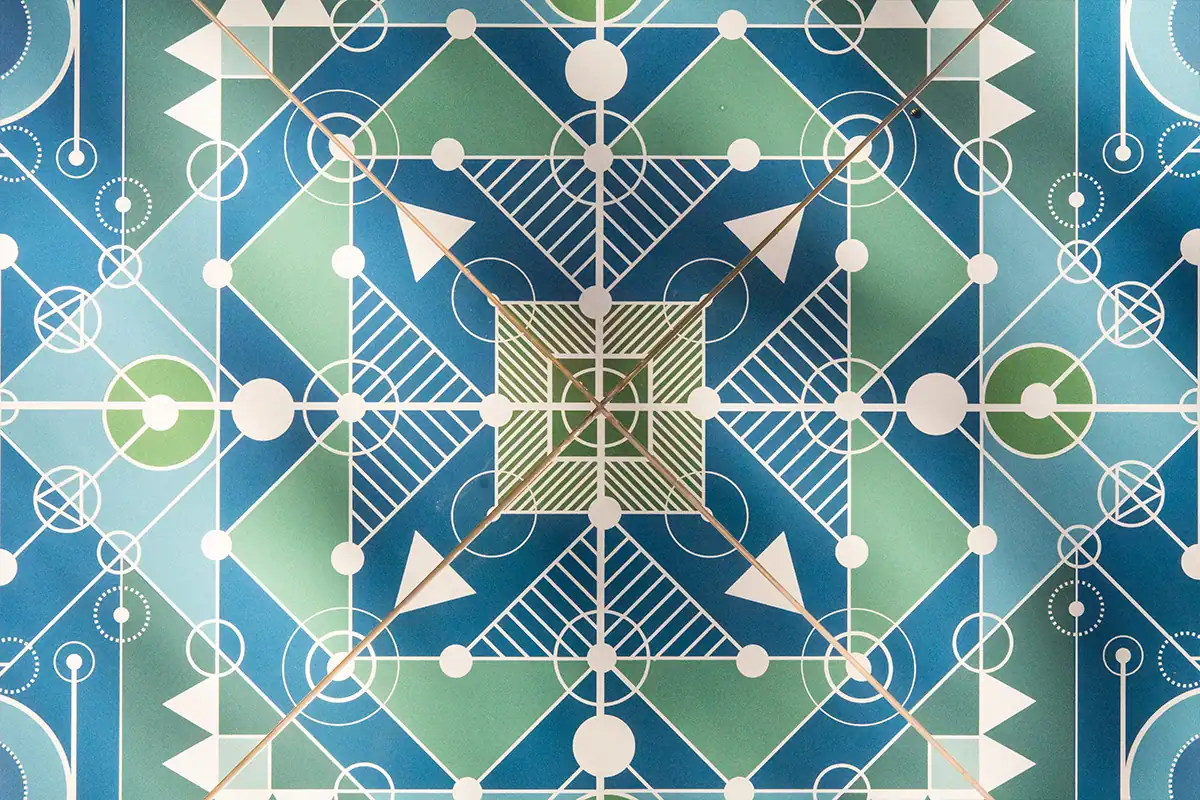
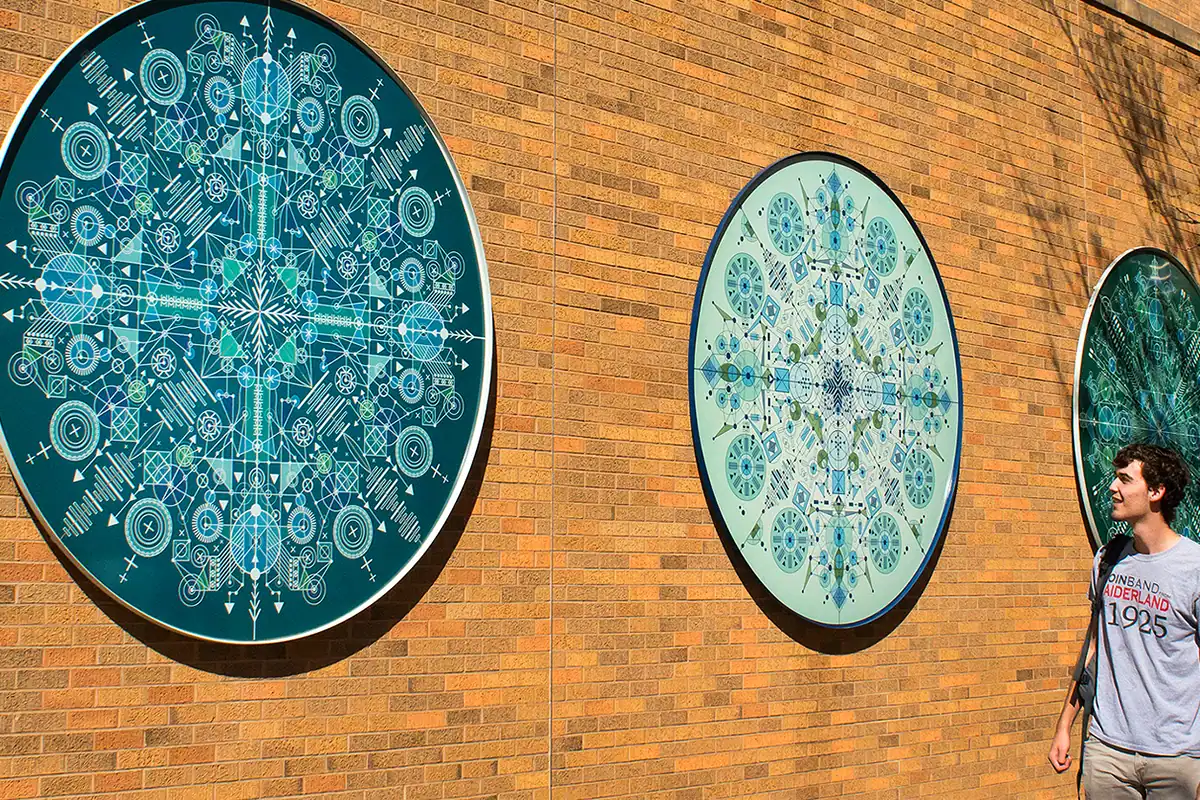
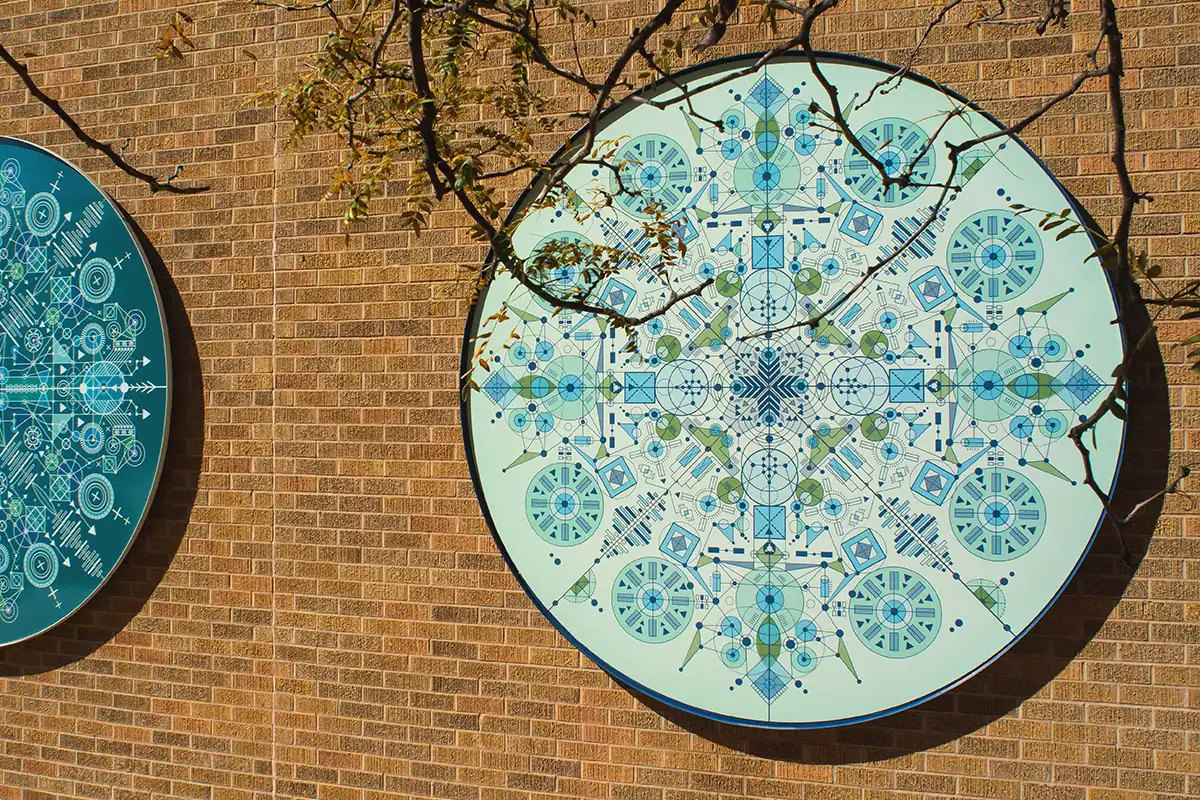
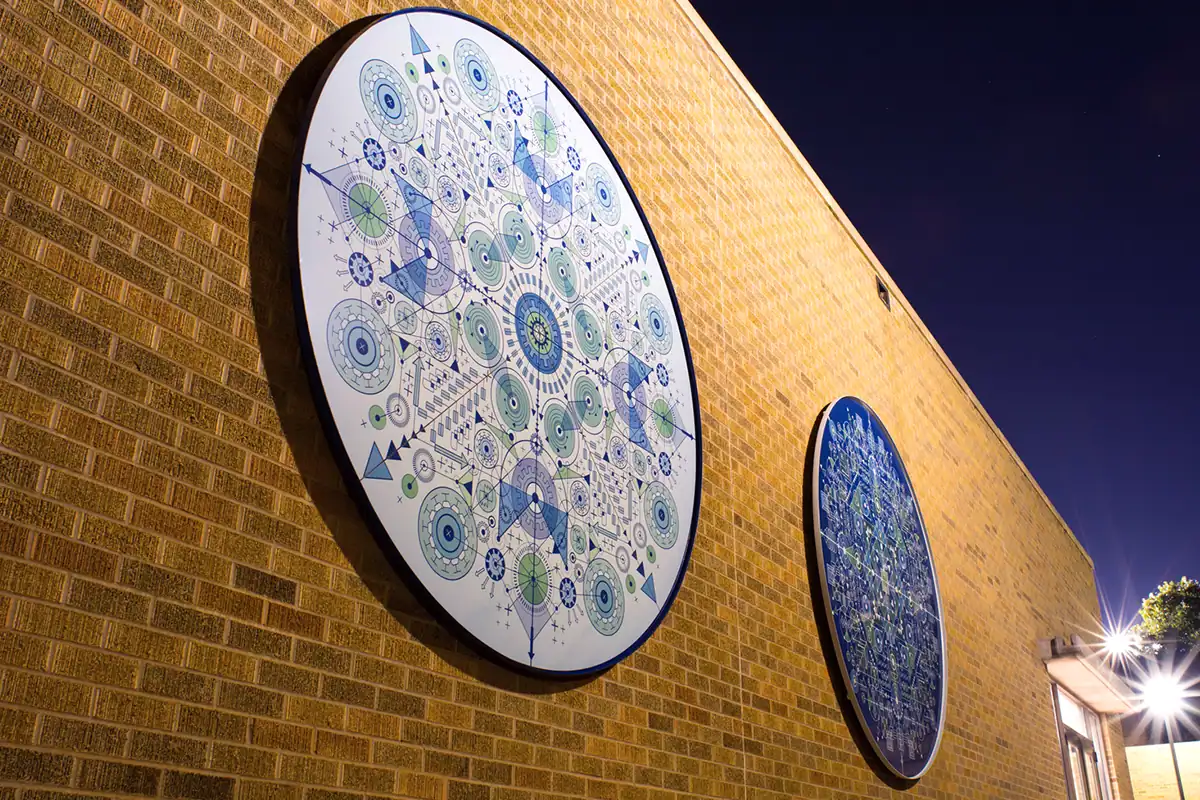
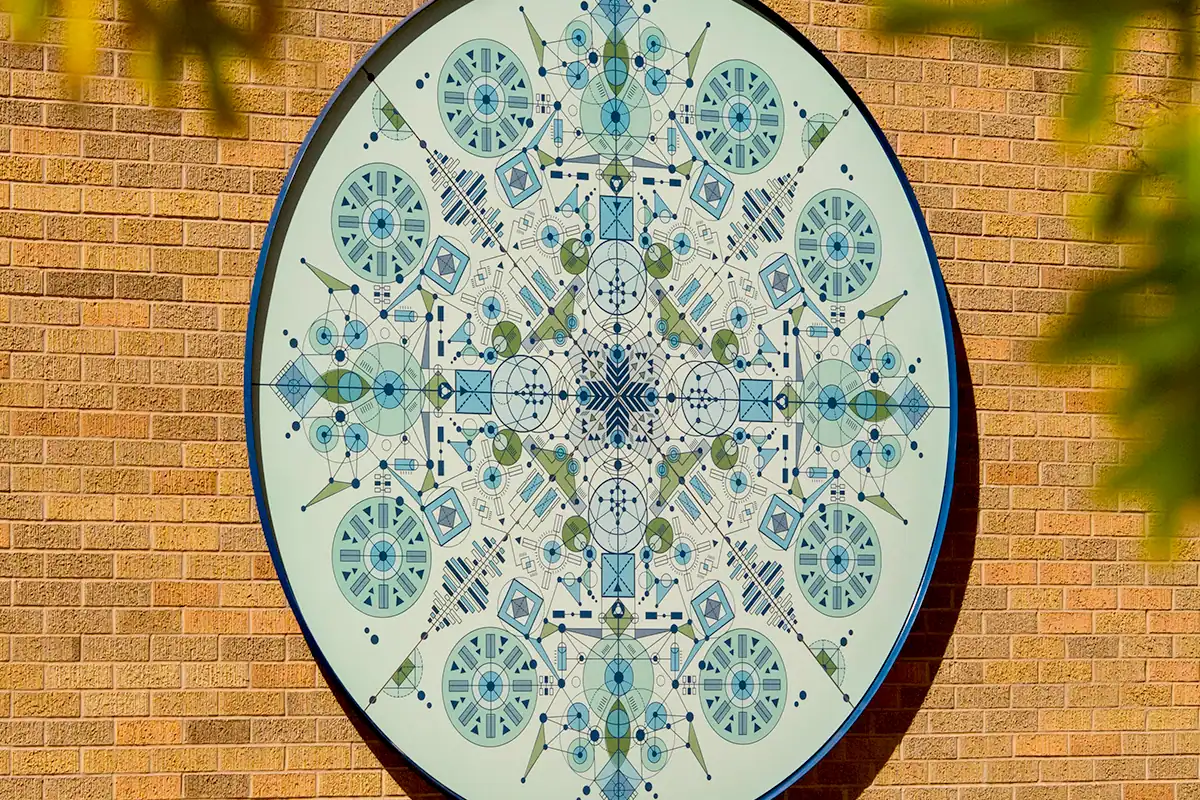
A series of five mandala-inspired panels in eye-catching blue and green hues grace an exterior wall of the Industrial Engineering building at Texas Tech University.
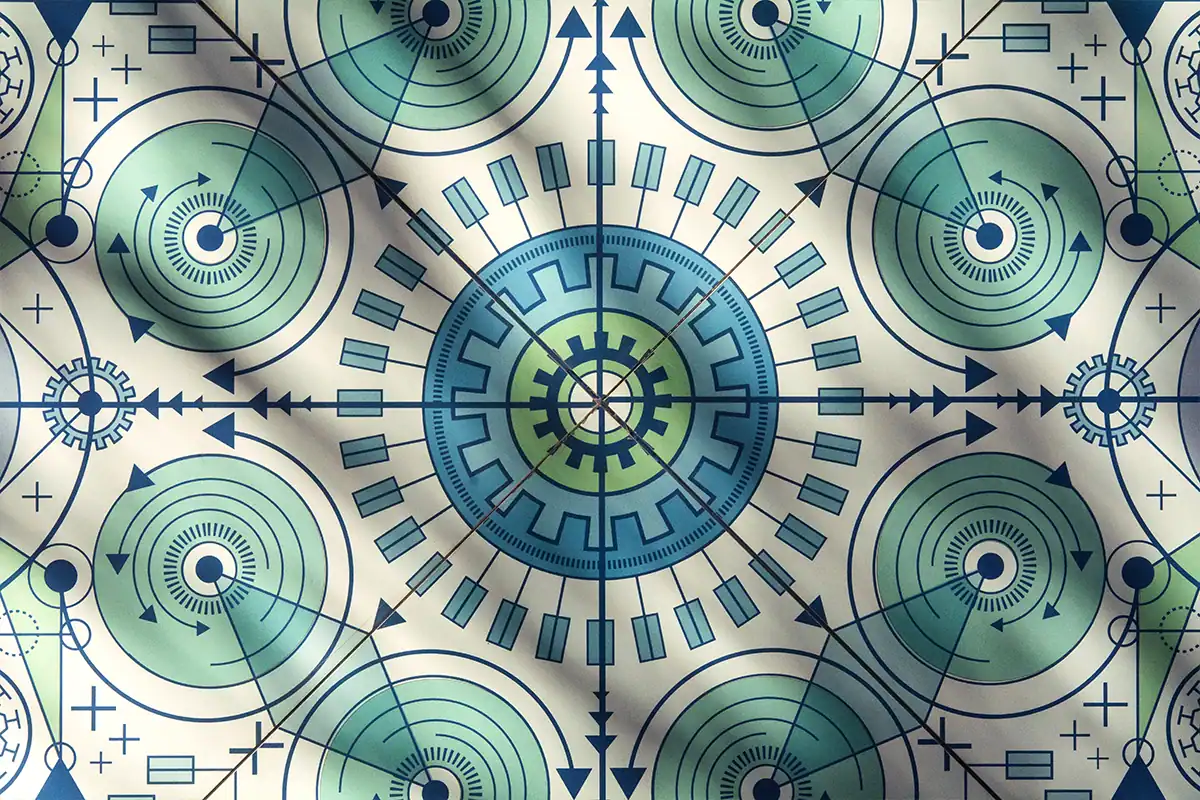
Paying homage to the building’s purpose, various symbols and elements found in formulas, diagrams, calculations, blueprints, and the science of physics, are combined in unique ways to create interesting and complex graphic patterns that invite contemplation.
Polyvision’s digitally printed CeramicSteel was an ideal product for the artist to effectively convey the design intent and provide superior performance over the long term. The specialized technology delivers fadeproof, rich color and visual texture on a durable, weather resistant surface, ensuring years of enjoyment by the university community. Having used printed CeramicSteel on other public art projects, RE:site artist-founder Shane Allbritton “loved the results in terms of color, clarity, and especially durability” and it was these qualities that helped her win the project.
One of the most appealing advantages of printed CeramicSteel is its sustainable and eco-conscious profile. The durable porcelain enamel surface far outlasts many other typical decorative exterior materials and is designed to retain its gloss level and color consistency for decades without fading, cracking or flaking. The long product lifecycle means a relatively low cost of ownership – an important consideration for educational facilities.
At over 7 feet in diameter, the panels are awe-inspiring and a beautifully striking tribute to the close relationship between art and science.
Visita de trabajo del Ministro de Educación
Zuhal Demir a Polyvision
Una visión para el futuro de las aulas
La visita del Ministro de Educación Zuhal Demir al centro de producción de Polyvision comenzó con una cálida e informal bienvenida. Aunque la conversación versó sobre los éxitos internacionales de las compañías belgas y la influencia de Bart De Wever en el panorama político, rápidamente se conectó con el tema central del día: la calidad de nuestra educación.
En un momento en que el rendimiento está bajo presión y la IA está remodelando el mundo, la ministra fue clara Nosotros su misión: hay que restablecer el orden volviendo a lo esencial, el conocimiento y la disciplina.
Esa idea de disciplina cobró vida inmediatamente al compararla con los Sistemas de educación de Hong Kong. Silvie Vermoote, Directora de Ventas EMEA/APAC, describió cómo la concentración y la estructura son la norma allí, un enfoque que se asemeja mucho a cómo solía funcionar la educación en Bélgica. La ministra reconoció su potencial y compartió que hay una propuesta sobre la mesa para anclar de nuevo estos valores en nuestras escuelas.
Durante la presentación y la visita a la fábrica que siguió, quedó claro cómo Polyvision y Vanerum responden a esta visión. Demostramos que una clase moderna no tiene por qué ser una copia digital del mundo exterior. La ministra se mostró muy de acuerdo con la afirmación de que los alumnos no deben mirar una pantalla durante 8 horas al día.
Bajo su lema "los que escriben, perduran", abogó por la vuelta a la pizarra. Expresó su preocupación por el declive de las habilidades motrices de los niños, ya que cada vez son menos los que aprenden a escribir correctamente, e hizo hincapié en que, especialmente en la educación primaria, el iPad no debe convertirse en una necesidad.
La visita permitió a la ministra conocer en profundidad el trabajo artesanal que se esconde tras las superficies esmaltadas. Desde la sala del molino y los rollos hasta el calor de los hornos y la inspección final, la precisión técnica y la garantía de durabilidad de las Superficies causaron una fuerte impresión. Esto dio lugar a un interesante diálogo sobre la competencia de otros productos y el importante valor de exportación de nuestras soluciones, que llegan a estaciones de metro y aulas desde Bruselas hasta Singapur. El ministro mostró especial interés por la sostenibilidad de los productos, señalando que muchos de estos tableros permanecen en excelentes condiciones en las aulas después de más de 50 años.
También se debatió el diseño de los edificios escolares. La ministra compartió su observación de que la tendencia de los grandes espacios de aprendizaje abiertos está desapareciendo. Los estudios son claros: estos espacios crean demasiado ruido y poca concentración. Por ello, está trabajando para volver a unas aulas más tradicionales y bien estructuradas. Vanerum demostró cómo sus sistemas deslizantes y sus soluciones acústicas crean el ambiente de calma necesario para una interacción significativa entre profesor y alumno.
La visita concluyó con una reflexión más amplia sobre la generación más joven. El ministro estableció paralelismos con la prohibición de los teléfonos móviles en Suecia y el estricto enfoque de Australia respecto a los comportamientos nocivos de imitación en las redes sociales. Su opinión es que debemos volver a ofrecer a los jóvenes una estructura y protegerlos de las barreras sociales y de una disminución de las habilidades motoras.
Para el ministro Demir, la visita a Polyvision reforzó una convicción clara: que la educación de alta calidad comienza con un entorno físico de aprendizaje bien diseñado. En un mundo cada vez más dominado por las pantallas y la distracción, el tablero sigue siendo lo que siempre ha sido, un punto central de calma, concentración y conexión humana.
Es aquí, en el aula estructurada, donde se transmiten los conocimientos, se aprende disciplina y se sientan las bases para el futuro. Y son compañías como Polyvision y Vanerum las que siguen haciéndolo posible a través de una artesanía que perdura durante generaciones.
Cuando la gente recuerda sus días de escuela, a menudo se imagina primero una cosa: la pizarra. Pizarrón de tiza, pizarra blanca, pizarra deslizante. Era el lugar donde el profesor empezaba y terminaba, donde los temas difíciles se desarrollaban paso a paso y donde se podía aplicar el borrado de los errores y volver a intentarlo.
Hoy en día, las aulas son más modernas que nunca. Hay ordenadores portátiles, tabletas, plataformas digitales y ejercicios en línea. Pero hay algo que llama la atención: en casi todas las aulas, la pizarra sigue siendo el punto de anclaje. Lo que importa acaba allí. No en una pantalla aparte, no detrás de un Ingresar, sino visible para todos.
En todas partes, la pizarra desempeña el mismo papel central: es la memoria visual del aula.
Los términos clave se escriben allí.
Los planes paso a paso se dibujan allí.
Las ideas se reúnen allí en un diagrama o mapa mental.
El resumen de la lección permanece allí un poco más de tiempo, para que pueda asimilarse.
La pizarra hace que el aprendizaje sea colectivo. En una clase en la que algunos alumnos son fuertes con las herramientas digitales y otros tienen menos acceso o experiencia, la pizarra crea igualdad. Todos miran lo mismo; todos pueden seguirlo, hacer preguntas y añadir cosas. Sin contraseña, sin cuenta, sin dispositivo, sólo un rotulador y una superficie que invita a escribir.
Los tableros que desarrolla Polyvision se basan en esa realidad. Nuestras superficies CeramicSteel combinan el poder de la escritura clásica con la flexibilidad actual:
Pueden utilizarse como superficies para escribir con rotulador o tiza.
Son magnéticas, por lo que los profesores pueden trabajar fácilmente con tarjetas, dibujos o tablas de planificación.
Son aptas como superficies de proyección, por lo que la pizarra también funciona con herramientas de aprendizaje digital.
La tecnología que rodea a la pizarra puede cambiar, pero la esencia permanece: es el lugar donde el pensamiento se hace visible.
Al escribir en la pizarra, el profesor piensa en voz alta. Los alumnos no sólo ven el resultado final, sino también el proceso: borrado, reformular y simplificar. Esa transparencia es difícil de captar en pantallas individuales, pero se produce de forma natural cuando todos miran a la misma pizarra.